


David Poland, General Manager for the Carolinas and Tennessee, Industrious
In an interview with Invest:, David Poland, general manager for the Carolinas and Tennessee at Industrious, highlighted significant milestones over the past 12 to 24 months, including expansions in Chapel Hill and Charleston, as well as the resurgence of Uptown Charlotte.
What are the key highlights and milestones for Industrious in the Carolinas and Tennessee over the past 12 to 18 months?
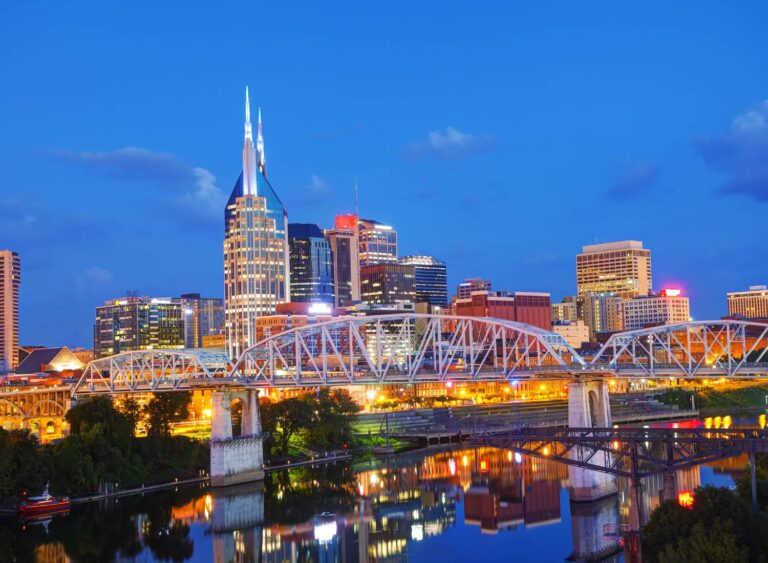
Over the past 12 to 18 months or closer to 24 months, if we look back, we’ve had some significant developments. Tennessee has always been a hot market for us, and that’s only become even more true in the past few years. We’ve recently doubled our presence in Nashville going from two locations to four with very exciting additions at the Neuhoff District in Germantown, and the other at Nashville Yards.
Here in the Carolinas, we took major steps in expanding our presence in late 2022 with new locations in Chapel Hill and Charleston. While some consider Chapel Hill part of the Raleigh market, once you’re on the ground, you quickly realize they are two completely distinct towns with unique identities and cultures. It feels like we’ve captured an entirely new market that complements Raleigh well while also putting us close to the amazing growth in RTP and Durham.
Charleston, on the other hand, was very eager for coworking spaces. It gave us a South Carolina address, which is crucial for companies using us to establish a hub-and-spoke model across multiple states. Many of our members in Charlotte needed a South Carolina address, and Charleston provided that. This location has been a strong market for us from the start, significantly contributing to our overall growth in the Carolinas and the broader Southeast region.
Here in Charlotte, the diversity of our product has been the key story. Our NoDa location opened just two weeks before COVID hit, on March 2, 2020. Despite the pandemic, it continued to thrive due to its unique setting — a standalone, adaptive reuse warehouse in the arts and entertainment district with on-site parking and direct access. Our members felt comfortable coming in which has helped NoDa succeed since day one. Uptown, which was highly successful pre-COVID, took a hit during the pandemic. However, in the past few years, with banks and more companies returning to the office, we’ve seen a significant rebound. While occupancy rates in traditional office spaces continue to improve at a slower rate, our CBD locations like Uptown have bounced back much faster as companies are downsizing from full-floor leases into something more flexible, and fully managed like Industrious.
Can you give an overview of the different workspace solutions trending in the market and the advantages that flex spaces provide to companies?
In the Charlotte market, we offer a range of workspace solutions that cater to different needs. For example, we have Uptown in The Plaza at One South on the 27th floor and an adaptive reuse warehouse in NoDa. This gives us a yin and yang when it comes to office space and flex office space.
NoDa addresses one of the most common situations we see today—individuals looking to get out of their homes. We have many members who, maybe after significant life changes like having a second child, find they can’t work from home anymore. They need a productive workspace that they enjoy going to, and that’s exactly what NoDa provides. It attracts a lot of individuals and smaller companies seeking to reconnect with the community and reestablish a daily routine.
Conversely, Uptown tends to attract larger teams and companies moving into Charlotte, looking to establish and grow their presence. Since the demand for Uptown has returned, we’ve seen companies using our flex spaces to grow and expand within our walls until they’re ready to take on a traditional long term lease. Once they’re ready, they often move up a few floors in our building which is a great value add to our landlord partners.
At Industrious, we go a little overboard providing daily breakfast, snacks, stocked beverage options, weekly happy hours, and community events to go with our turn-key office solutions while hanging our hat on excellent customer service. It’s a place you’ll enjoy coming to work and showing off to others.
How does Industrious engage with the community it serves and participate in philanthropic activities?
This is a topic close to my heart. I spent a few years as the vice president of the NoDa Neighborhood and Business Association and have aimed for Industrious to serve as a home base for the broader community — almost like a NoDa community center. We enjoy extending our common spaces, conference rooms, and office resources to the outside community when possible. We’ve hosted a number of non-profit events and fundraisers over the years.
The same amenities that allow businesses to be productive at Industrious during the day are valuable resources for organizations like the NoDa NBA to use for their board meetings or events. We strive to build a strong community both within our four walls and outside of them by sharing our resources with those groups who need them.
How is the economic environment, with uncertainty, inflationary pressures, and higher interest rates, affecting coworking spaces?
The current economic uncertainty has been somewhat of a silver lining for us. Many companies are now rethinking long-term leases — five, 10, or 15 years — and looking to save the expense of investing in office build-outs. With Industrious, we’re providing beautiful, fully managed, and all-inclusive spaces full of perks and amenities for your team. Our shorter agreement terms, ranging from month-to-month to three years, offer the flexibility to grow at your own pace without taking on a significant expense for unused space.
The same is true for our own growth. Different from many of our competitors, Industrious uses a management agreement model where we share profit with our landlords versus a traditional lease. It can limit our upside when the market is hot, but reduces the downside when fewer people need space. This approach has allowed us to consistently grow while offering our customers confidence in our stability.
Are there any expansion projects in the pipeline for the near future?
We’re a growing company with over 200 managed locations globally, and the Carolinas, particularly Charlotte, has been a great market for us. The occupancy rates at our two locations in Charlotte average around 92-93%, which is fantastic. There are times I wish I could snap my fingers and double our availability. We’re always looking for opportunities to expand in our existing neighborhoods, as well as adding new submarkets around Charlotte to see where we can plant our flag next. For the building owners reading this, we’d love to tell you more about our management agreements.
What are your top priorities for the next few years?
My personal priority is adding more space right here in Charlotte. Our members range from individuals who can’t work from home anymore — maybe because of distractions like dogs barking during Zoom calls — and large companies looking to deploy and grow teams quickly in the market. These groups have very different space needs, but our job is to deliver a consistent, high-quality experience to both. I hope to see us add larger units and suites to our inventory to better support the companies looking to expand their footprint here, as well as a few more options in some of Charlotte’s awesome neighborhoods catering to the individuals who live nearby.