
Jennifer Scripps, President & CEO, Downtown Dallas Inc.
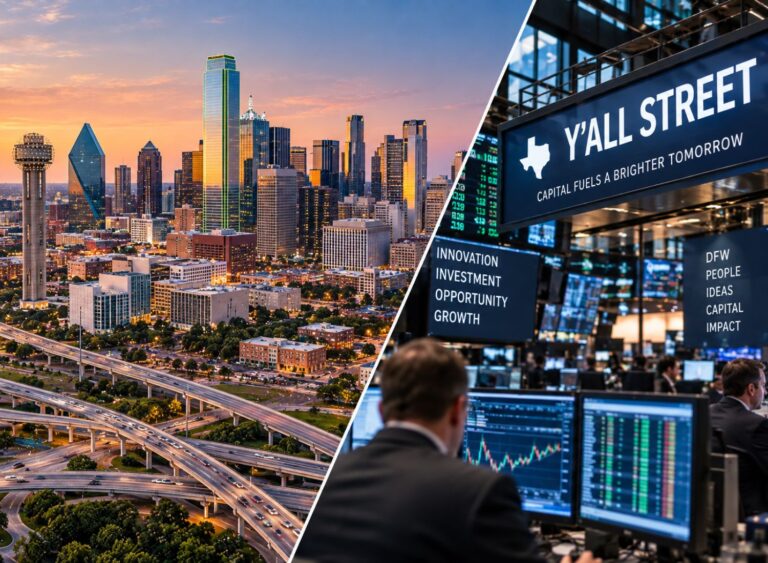
Invest: sat down with Downtown Dallas President and CEO Jennifer Scripps to discuss the transformative growth in downtown Dallas, covering major development projects, the city’s increasing role as a hub for finance, sports, and tourism, and how these initiatives are shaping the region’s future, touching on preparations for the 2026 FIFA World Cup.
Could you highlight some of the organization’s most transformative projects and how they are shaping the future of the region?
Downtown Dallas is truly at the epicenter of growth. Two years ago, the residents of Dallas passed Prop A to redevelop our Convention Center, the Kay Bailey Hutchison Convention Center. The center had been expanded in a piecemeal fashion over the years, but now we are undergoing a complete redevelopment to modernize it, making it more efficient for meetings and vastly improving customer amenities. We want visitors to feel they’re in a special place when they’re here, and we believe this project will help us do just that.
This redevelopment will transform over 30 acres of downtown Dallas, especially the southwestern quadrant. We’ve selected the architects, led by Perkins + Will, a long-standing Dallas firm, in collaboration with the internationally renowned firm Populous. The Convention Center will also be close to the high-speed rail station, which is a cutting-edge project for Dallas. This proximity will help drive tourism and business, as we expect to need 3,000 to 3,500 more hotel rooms to meet demand.
We are also hosting the FIFA World Cup in 2026, with nine games in our region — the most of any North American city. We didn’t get the finals, but each game is essentially the equivalent of a Super Bowl. Although many of the games will be in Arlington, it’s a regional effort, and Dallas will be the host city. This event will put us on the international map in a significant way, especially since DFW Airport is such a major international hub. Fans can fly to Dallas for a game and easily travel to other cities like Kansas City or Boston to see more.
Additionally, we are excited to announce that the Dallas Wings, our women’s professional basketball team, will be moving downtown. The focus on sports, entertainment, and tourism continues to be a key theme in our growth. Moreover, we remain a crucial corporate hub, particularly for finance, technology, and telecommunications, with AT&T and Comerica Bank based here, along with the recently announced Texas Stock Exchange. While the exact location for the exchange hasn’t been decided yet, we hope it will be downtown.
Our diversified economy is driving real estate investment and population growth. We now have over 15,000 residents downtown, a milestone we’ve been working toward for some time. Several major residential projects are in the pipeline, with one set to begin leasing in the fourth quarter of this year.
How are you continuing to stimulate growth beyond what you’ve already put in place?
The Convention Center redevelopment will definitely elevate our offering. Right now, we attract conventions because of our central location, excellent airport, and strong infrastructure. But we want to enhance the experience for conventioneers, encouraging them to stay longer and spend more. There’s more to do in Dallas than ever before. Even beyond downtown, Dallas is still a shopping and healthcare hub. Medical tourism is growing, with people visiting for specialized healthcare and then staying longer to explore the city. Houston has led the way in medical tourism, but Dallas is quickly catching up, especially with outreach programs from hospitals like our Children’s Hospital.
We’re focusing on expanding our offerings in sports, entertainment, and shopping — everything you’d expect from a major city. Dallas provides visitors with exceptional parks, luxury accommodations, and the sense of being in a special place.
How are you addressing office space vacancies?
Office vacancy is still a challenge. While we hoped employees would return in full force by 2022, that hasn’t quite happened. However, we’re starting to see progress, with companies notifying us that they’re bringing back more workers.
Many companies delayed bringing back staff because they needed to renovate or expand their leases to accommodate everyone. Fortunately, we have building owners who are committed to making significant investments in their properties. Some buildings need updates and additional amenities, and several ownership groups are actively securing funding to make these changes.
We’re focusing on creating environments that make returning to the office more appealing. People want more than just a desk — they want amenities like client entertainment spaces, fitness centers, and nearby services such as dental care or mental health facilities. By bringing these conveniences close to the workplace, we can make coming into the office more attractive.
We’re working with DART to improve public transit options and reduce parking and traffic concerns, which have returned to pre-pandemic levels.
How do you plan to sustain enhancements in walkability and amenities in Downtown Dallas?
Our focus on walkability is crucial. We’ve added over 20 acres of green space in the urban core, which is fantastic for both residents and workers. Being able to step outside for a break or a meeting in a beautiful park adds to the vibrancy of the city. We’re also working on expanding retail and dining options. A lot of our younger workers have told us they need more fast-casual lunch spots, so we’re working with consultants to bring in more of those offerings.
Our goal is to create a virtuous circle — by adding amenities, we attract more people to live and work downtown, which in turn supports further growth. We’ve stabilized office attendance enough that we can now focus on filling vacant storefronts with the right businesses, making downtown a more appealing place to be.
How are you managing public safety and cleanliness?
Cleanliness and safety are non-negotiable for us. We have nearly 100 employees, and more than two-thirds of them are in field operations. We encourage everyone downtown to use the See Say app to report any quality-of-life concerns. The app has been incredibly effective. For example, I once saw a dead bird on the street, reported it through the app, and it was gone by the time I finished my breakfast!
We have a dedicated homeless outreach team that operates five days a week, helping individuals in need while maintaining the quality of life for residents and visitors. As for safety, we work closely with the police department. While we don’t handle major violations, we ensure the police have the information they need to respond effectively.
With major companies like Goldman Sachs relocating here and the Texas Stock Exchange on the horizon, what impact do you expect on the local economy?
Dallas has long been a banking and insurance center, and Goldman Sachs’ decision to build a major headquarters here is transformative. They already have a significant presence downtown, and this new development will solidify their role in the region. The Texas Stock Exchange is still finalizing its plans, so I can’t speak in detail about that yet, but it’s an exciting prospect. These financial services will further strengthen our economy, which is already growing rapidly due to sectors like biotech, infrastructure, and construction.
How is the organization working to ensure workforce readiness?
We believe education is key to the future of our region’s workforce. We’ve been working closely with the Dallas Independent School District to build a new pre-K through high school facility downtown. This is the first of its kind in a long time and will provide an incredible opportunity for our young people to directly connect to the economic success of the region.
With the FIFA World Cup coming in 2026, what preparations are being made to showcase Dallas on the world stage?
Monica Paul, head of the Dallas Sports Commission, is leading the charge on preparations for the World Cup, and we’re incredibly fortunate to have her. The planning covers everything from hotel accommodations and transportation to art installations and security. We’re coordinating with various partners to make sure everything is in place, from clean and safe public spaces to efficient transportation. It’s a huge effort, and we want to make sure visitors leave with an unforgettable impression of Dallas.