Spotlight On: Bill Heller, COO, CHG Healthcare
Key points:
- • CHG Healthcare is leveraging AI, clean data, and flexible staffing models to address physician shortages and hospital efficiency pressures.
- • Hospitals are rethinking workforce strategy to prioritize physician engagement, reduce burnout, and integrate long-term planning beyond short-term coverage.
- • Rural access, telehealth innovation, and culture-driven advisory support are central to improving care delivery and sustainability.
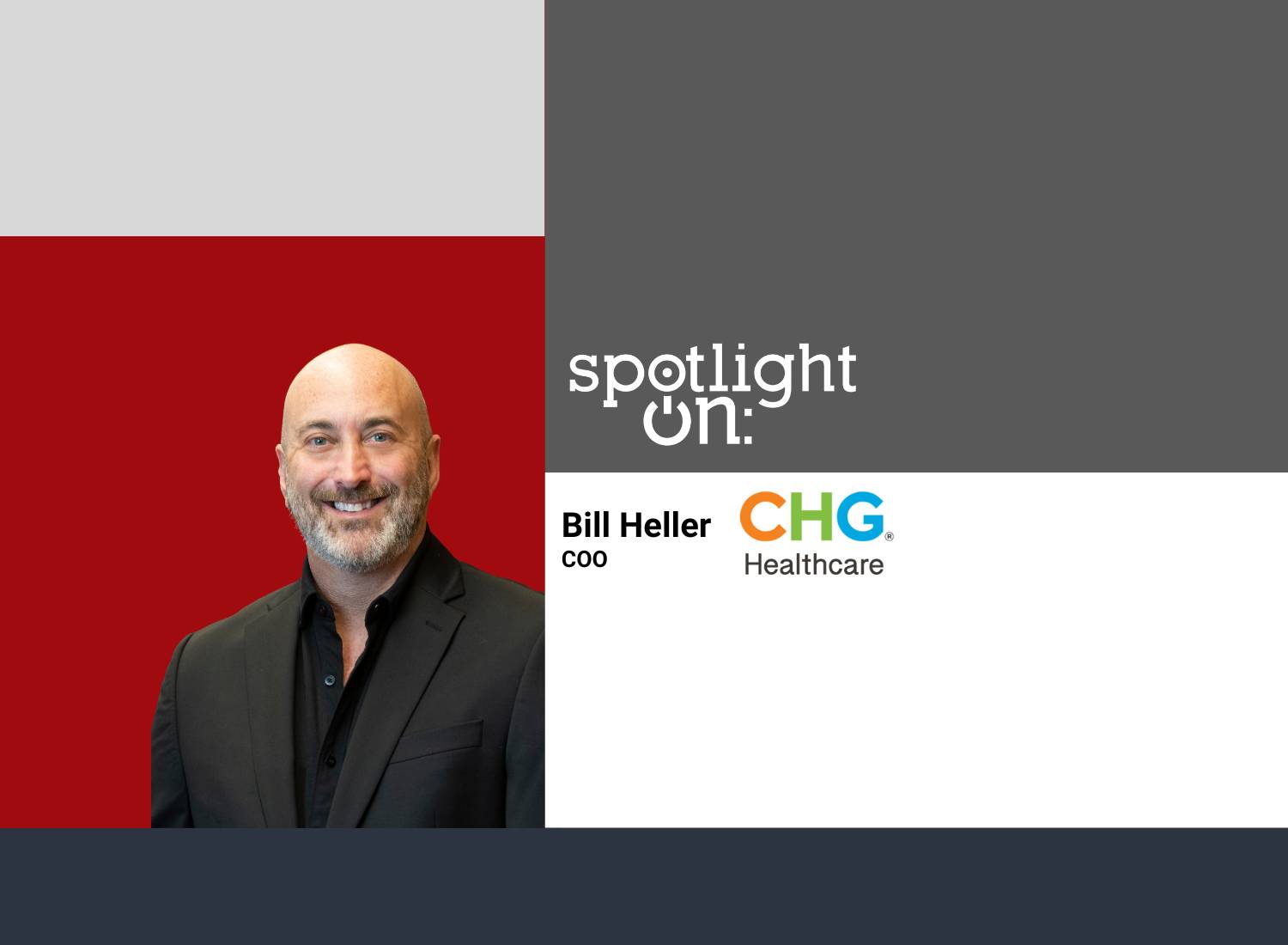 March 2026 — Invest: spoke with Bill Heller, COO of CHG Healthcare, about how AI, flexible workforce models, and physician engagement are changing the way hospitals plan for coverage, access, and long-term performance. “It is about helping our clients be better tomorrow than they are today,” Heller said, describing CHG’s shift from filling immediate gaps to supporting broader workforce strategy.
Join us at caa’s upcoming leadership summits! These premier events bring together hundreds of public and private sector leaders to discuss the challenges and opportunities for businesses and investors. Find the next summit in a city near you!
What have been the most meaningful changes across your business or the industry in the past year, and how are these shaping your priorities?
CHG is a physician workforce solutions company. At our core, we focus on physician staffing nationwide across every specialty, primarily serving hospitals, but also many other types of clients. Beyond staffing, we are focused on helping hospitals address some of the most challenging problems they face today. That includes technology solutions, advisory services, and operational support designed to help them become more efficient and effective.
One of the biggest changes has been the growing influence of technology, particularly AI. Healthcare is ripe for it. We are still at the very beginning, but technology and AI have come to the forefront in a big way. There is a dramatic physician shortage in this country and globally, and technology has the potential to make a real dent in that challenge over time.
Internally, we are leaning into technology and AI to support our workforce. We have about 1,000 employees in Fort Lauderdale and more than 4,000 across the company, not including the physicians we place nationwide. These employees support physicians through credentialing, placement, and ongoing engagement. We are investing in tools that reduce repetitive tasks and allow our teams to focus on more meaningful, complex work.
Another major focus is data. It is hard to do good tech and good AI without really clean data, so everyone is racing to make sure their data is clean and standardized. For years, organizations relied on inconsistent text fields and different processes across teams. Getting the data right is one reason progress can feel slower than expected, but it is foundational.
Healthcare also continues to be a challenging business. Hospital profitability is under pressure, legislation continues to evolve, and physician shortages are becoming more acute. We have seen concerns tied to Medicaid reimbursement and the impact those changes can have on rural hospitals in particular. All of that makes the landscape more complex, and it reinforces why technology and workforce innovation are important right now.
How are healthcare organizations rethinking long-term workforce strategy to improve access, efficiency, and patient experience?
Patient care is always the top priority for healthcare organizations. At the same time, there has been a growing recognition over the past decade that flexible workforce solutions matter. Hospitals do not want the majority of their workforce to be contingent, but flexibility is essential to managing demand and maintaining quality care.
Physicians want flexibility just like everyone else. They want more control over schedules and a better experience when they are not physically in the hospital. Hospitals are increasingly focused on designing workforce models that put the patient, the facility, and the physician at the center together.
For a long time, the focus was primarily on patients and facilities, and physicians were burning out. Burnout is one of the biggest contributors to the physician shortage. Many physicians are choosing to retire earlier or leave clinical practice because the system has become so demanding. Organizations are starting to realize that if physician satisfaction is not prioritized, the cycle will continue.
Engagement, retention, and listening to staff are becoming more important. Hospitals are improving, but they are still early in that journey compared to other industries.
Beyond short-term staffing needs, how are you supporting strategic transformation and innovation for healthcare organizations?
We are very intentional about being a workforce solutions company rather than just a staffing company. It is not simply about filling a shift. It is about helping our clients be better tomorrow than they are today, and that can show up in several ways.
That includes advisory services for hospitals that want help rethinking workforce strategy, improving scheduling models, or addressing credentialing challenges. Credentialing alone can take six to eight months in many cases. We credential thousands of providers across all specialties and can help hospitals reduce that timeline significantly.
We also partner with clients on innovation pilots. We meet them where they are and design creative programs together. That might mean longer-term staffing models that integrate physicians into a community over 12 to 18 months, rather than only short-term placements. We work collaboratively to build solutions that fit each organization’s unique needs.
Culture is another area where we help. CHG has been recognized on Fortune’s Best Companies to Work For list for many years, and we bring that experience into our advisory work. Hospitals are increasingly asking for guidance on engagement and retention, and there are often straightforward steps that can make a meaningful difference.
Where do you see opportunities to improve access to care in underserved or rural markets?
Rural healthcare remains one of the most challenging areas. These hospitals often serve populations with higher proportions of government insurance, which means lower reimbursement. At the same time, it costs more to attract specialized physicians to rural areas. That imbalance makes it difficult to sustain care delivery.
We help by providing access to specialists who might not otherwise relocate to those communities. Advisory services also play a role in helping rural hospitals think differently about staffing and operations.
Telehealth is another important part of the solution, though it is still early. Hospitals have not cracked the code on how to do telehealth the right way in a profitable, efficient model. But telehealth will continue to be a viable path for improving access to care over time, and the technology that supports telehealth will keep improving.
How are physicians thinking about flexibility, work-life alignment, and long-term career paths?
Physicians are burned out. They want to practice medicine, not spend their days buried in paperwork and bureaucracy. Many feel rushed with patients, even though what they really want is more time to provide quality care and build relationships.
They hope that advancements in AI and tech will not mean seeing more patients per day, but instead spending more time with the patients they already have, listening and delivering better care. For physicians who are on call constantly, the inability to unplug is a major issue. They are looking for creative solutions, and if they do not see those solutions soon enough, many leave clinical practice.
Some physicians move into leadership roles, become medical directors for corporate entities, or pursue entrepreneurial paths, including starting telehealth companies. Others leave medicine entirely.
One way we help is by offering flexible work arrangements through locum tenens, allowing physicians to work for defined periods and take time off in between. Another way is through medical missions. We organize dozens of medical and humanitarian missions each year to places like Guatemala, Costa Rica, Thailand, and Kenya. Those experiences reconnect physicians with why they chose medicine in the first place. There is no bureaucracy, and they get to focus on helping people, which can be incredibly rejuvenating. We also involve employees on some missions, selecting participants through nominations or applications, which builds pride and purpose across our broader team.
What is your vision for CHG and the healthcare industry moving forward?
We are deeply invested in South Florida and have grown alongside the region, starting with just a handful of employees in an airport hangar and building from there. South Florida has been great to us, and it has been a strong, symbiotic relationship.
Our focus moving forward is to continue leading with culture, employee engagement, and community impact. We encourage giving back locally and globally, including volunteer time off for employees and a wide range of team-led initiatives. We will also keep partnering with healthcare organizations to solve complex challenges through technology, workforce strategy, and long-term support.
The healthcare landscape is not going to get easier. The physician shortage will likely worsen, and the population will continue to age. But that also means the work matters. We are excited to keep doing work that makes a real difference.
Want more? Read the Invest: Greater Fort Lauderdale report.