Matthew Lee, Executive Director, Tucker-Northlake CID
 In an interview with Focus:, Matthew Lee, executive director of Tucker-Northlake CID, discussed placemaking, transportation improvements, and regional collaboration driving Tucker’s growth. “Our focus is to ensure people feel glad to spend time here and that more choose to do so,” Lee said.
What have been the most important changes across the district over the past year, and how have those changes influenced the area?
Over the past year, our progress has continued to focus on the express lanes that are coming, on placemaking within the area, and on increasing public safety. We’re careful in how we address public safety, but it has remained a top priority.
On the placemaking front, back in 2017, the Tucker-Northlake CID conducted a study with the Urban Land Institute on downtown Tucker. Out of that study came a recommendation for a parking area with a small amphitheater. After five years of collaboration with the city, they decided to purchase the land, and the Town Green opened this past November. The city has invested $8 million in the project, and it will serve as a great space for businesses and residents to gather in downtown Tucker.
It’s a beautiful area and a key milestone for Tucker’s regional visibility. In terms of placemaking and helping put Tucker on the map, it’s going to be transformative.
How has the role of the CID evolved as Tucker transitions from a suburban corridor to a more connected economic center?
I appreciate the word “intentional,” because if we’re not intentional, we’re just subject to whatever comes down the street. We must make sure we’re planning ahead.
Part of that intentionality is ensuring that this is a place where people want to spend their time. The more time they spend, the more money they spend, and the more the area is elevated. That includes preparing for the express lanes.
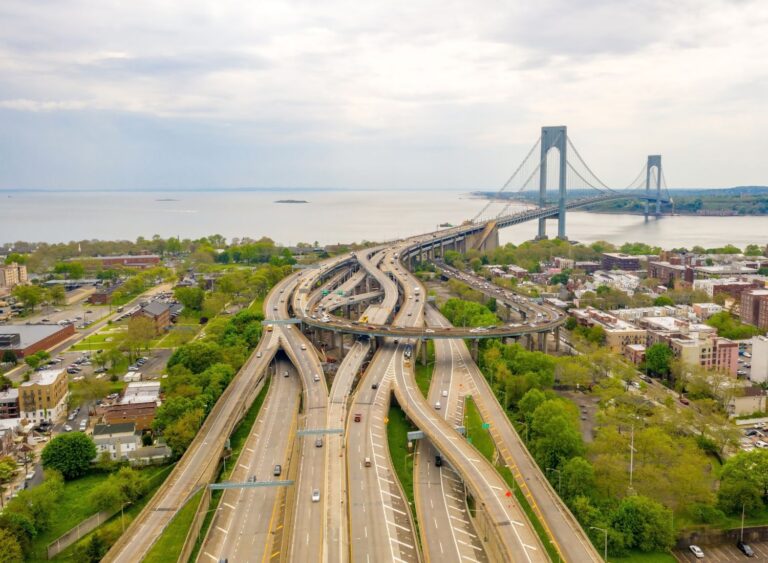
The express lanes are underway on Highway 400 and will extend across the top end of I-285. We’ve worked with the Georgia Department of Transportation (GDOT) to ensure there is a full express lane exit on Northlake Parkway. That will be significant as we strengthen our connections to the northern metro area and attract activity from further south into Tucker and Northlake.
How have these developments influenced the types of tenants, businesses, or industries choosing to locate in the district?
Across metro areas, we’re seeing what I call micro migrations. People move between neighborhoods for schools, jobs, or quality of life. Our goal is to ensure residents continue to see Tucker as a place of choice rather than necessity.
Thousands commute through Tucker daily to jobs further north. With the right conditions, many could work locally, saving commute time and improving quality of life. Communicating that opportunity is key.
Years ago, Northlake, Perimeter, and Cumberland were on similar footing, each centered around malls. Today, Cumberland has Truist Park and Perimeter has MARTA access. Over the next 20 years, Northlake must position itself to compete appropriately. We won’t have a stadium or heavy rail, but we can offer assets that appeal to employers and families.
The expanding trail network, which will link both sides of I-285, will help unify residential and commercial areas and strengthen Tucker’s sense of place.
What challenges or opportunities do you see as work patterns and consumer behaviors continue to shift?
We’re in a strong position, but broader shifts are creating new challenges. Even before the pandemic, remote work and online activity were growing; COVID accelerated that trend, leaving many business areas with more office space than they needed.
Consumer habits have also flipped. We used to dine in and shop out; now we shop in and dine out. As a result, there’s more retail space than demand, so adapting those spaces effectively is critical.
Maintaining connection will be vital. People weren’t meant to live in isolation, and collaboration drives innovation. We want Tucker-Northlake to be recognized as a place where that connection thrives.
The express lanes will also help stabilize the hotel market. A hotel doesn’t vanish; it just declines in quality if it loses demand. Ensuring accessibility and visibility helps protect those businesses. Many residents still drive to Buckhead to spend money that could be spent here. Encouraging local investment strengthens the entire community.
How is Tucker positioning itself to stay competitive while maintaining its local character, and how does it fit into the broader metro Atlanta landscape?
Local communities can sometimes focus too narrowly on themselves, but every city needs to understand its place within the broader region. That means knowing what neighboring jurisdictions are doing and finding ways to align and collaborate for shared success.
Communities have a responsibility to contribute to regional progress. Just as residents care for their own property out of respect for neighbors, cities must compete in ways that strengthen, not harm, their surroundings. Tucker has an opportunity to lift itself and, in doing so, help surrounding areas grow. People don’t have to live here to benefit; they can work, shop, or enjoy the area’s amenities. Most travelers passing through on I-285 aren’t thinking about city limits; they just want a comfortable experience. If their time here feels safe, enjoyable, and welcoming, that benefits everyone.
Our focus is to ensure people feel glad to spend time here and that more choose to do so. The challenges we face are common across communities: maintaining public safety, addressing vacancy, and managing vandalism and graffiti. Homelessness, however, is particularly complex. With more than 500 cities in Georgia, it’s unrealistic for each to create its own plan for individuals struggling with chronic homelessness, mental health challenges, or addiction. Temporary assistance helps in the short term, but it doesn’t address the root issues. A coordinated statewide approach is needed.
Most people want to help, but scattered efforts fall short. A unified strategy supported by state and federal leadership is essential. I share this not to single out Tucker; the issue is regional. Current laws make it difficult to compel treatment or housing, even when clearly needed, which perpetuates the problem. This is not a local matter but a regional challenge we all share.
When my wife and I visited Thailand, we rarely saw homelessness. Families there care for relatives in need, reflecting a culture of shared responsibility. In the U.S., independence often replaces that interdependence. I hope we can restore those family and community bonds that keep people connected and supported.
What trends are you seeing in the residential market, and how do they relate to Tucker’s long-term economic health?
Right now, the market is heavily tilted toward rentals. That’s where the investment is going, and developers who once built office towers are now focusing on residential projects.
The challenge is that in the United States, the traditional path to financial stability and intergenerational wealth has been homeownership. When housing development leans primarily toward rentals, those opportunities diminish. People remain consumers generating revenue for someone else rather than building long-term equity for themselves.
There will always be a need for rental housing, but ownership opportunities are equally important for a balanced community. I spoke about this recently on a housing panel with several mayors. When my grandparents married, they lived with their parents for the first 12 years and raised three children before buying a home for $12,000. That house was modest, three bedrooms and one bath, but by the time my grandfather passed at 95, the property had appreciated dramatically. The next owner tore it down, built a much larger six-bedroom, five-bath home, and sold it for $800,000 in 2017. Today, that same property is valued at around $1.25 million.
It shows how the entry point to homeownership has become increasingly unattainable. Living farther out used to be cheaper, but that’s not necessarily the case anymore. The landscape has shifted dramatically, and affordability remains one of the biggest long-term challenges for regional growth.
Looking ahead, what are your top priorities for Tucker-Northlake over the next five to 10 years?
Over the next decade, I expect to see continued progress on the express lanes in partnership with the Georgia Department of Transportation. Downtown Tucker will become an even more active and inviting space, supported by the new Town Green and expanding trail network that connects downtown to Northlake.
Tucker’s identity within the metro area and beyond will continue to strengthen. Businesses will see it as a desirable location because of its accessibility on I-285 and its small-town charm. People will enjoy its walkable downtown, outdoor spaces, and proximity to amenities throughout the region.
As these projects advance, the east side of the metro area will continue to rise along with Tucker.
What role do partnerships play in achieving that vision?
Tucker’s success depends heavily on partnerships, particularly between businesses and local government. That collaboration is at the heart of what community improvement districts do.
CIDs represent the business perspective and help ensure that the commercial tax base, which makes up about 50% of local revenue, has a voice in shaping development. Often, the vision of the business community aligns with that of local government; the CID’s role is to help connect those perspectives.
By showing how strategic investments can benefit everyone and by co-funding projects that improve accessibility, safety, and appearance, we help ensure that residents and business owners alike can see tangible results. That builds confidence and reinforces a sense of shared progress.
What inspires community engagement and helps people feel connected to the progress taking place in Tucker and across the region?
People are inspired by potential. They value progress, but they connect more deeply when they understand what’s possible and how they can contribute.
That’s what I appreciate about regional collaboration, as it helps people see how their efforts fit into a larger story. It’s important to share both successes and challenges because that’s where real growth happens.
We’re working with the Atlanta Regional Commission on a Livable Centers Initiative plan focused on transportation improvements ahead of the express lanes, and with MARTA to make Tucker an accessible commuter destination. Northlake Mall remains a key asset, with more than 200,000 vehicles passing through the district each day. Capturing even a small share of that traffic supports local business. Emory Healthcare’s presence on the mall property is a strong anchor, and ongoing development will expand both residential and commercial activity.
People want to feel part of success but also understand the effort behind it. Stories of growth and resilience resonate because they reflect real experience. As I often say, that shared journey of progress, through challenges, learning, and perseverance, is how communities truly thrive.