
Spotlight On: Kevin Howell, Chancellor, North Carolina State University
Key points:
- • NC State is strengthening research alignment with workforce needs while expanding access through programs like Wolfpack Connect.
- • Partnerships with industry and Centennial Campus help bridge education, research, and real-world job readiness.
- • Higher education remains central to economic growth, with a focus on ROI, talent development, and statewide impact.
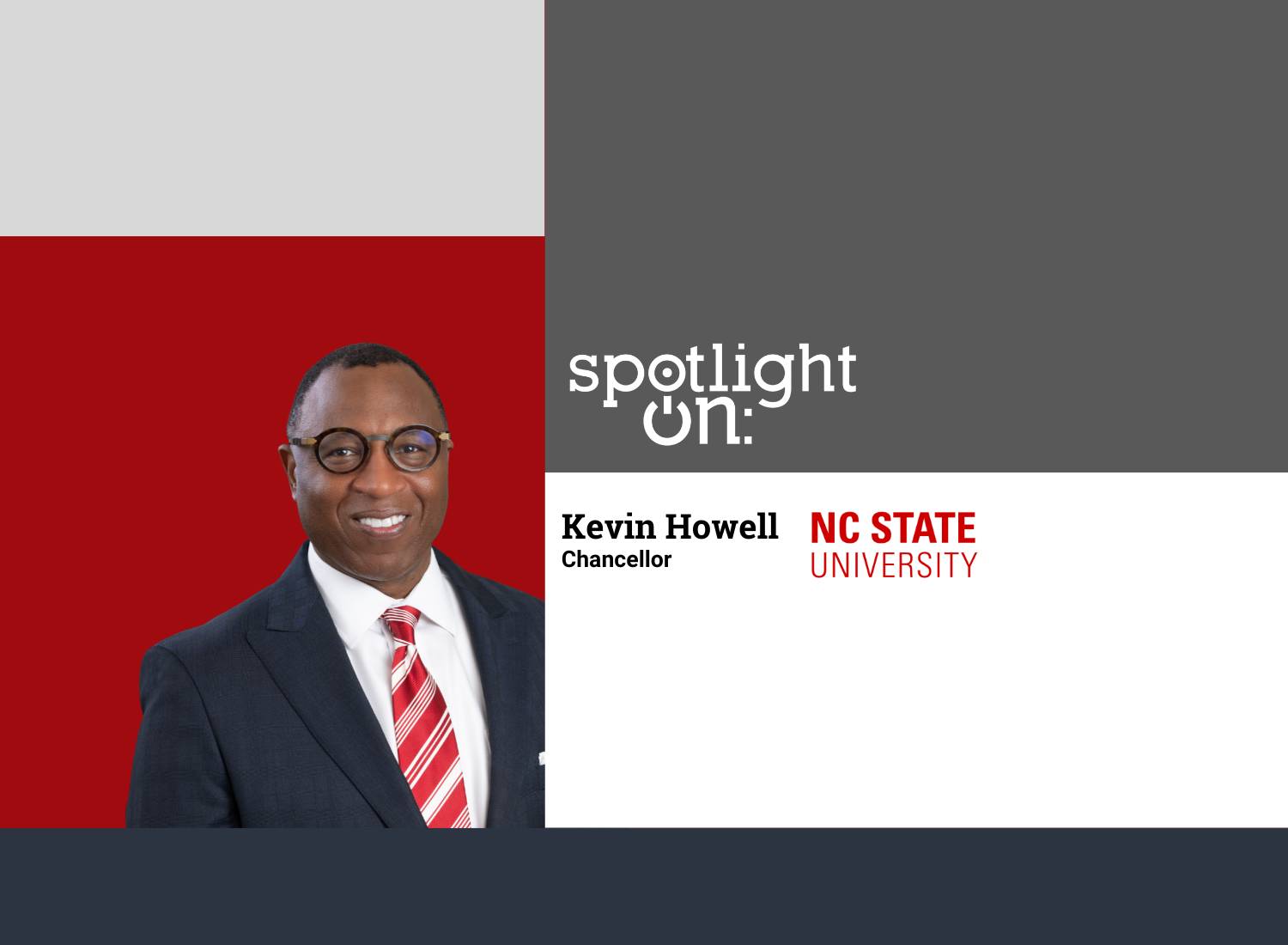 March 2026 — Invest: spoke with Kevin Howell, chancellor of North Carolina State University, about how higher education, research, and workforce alignment are shaping North Carolina’s long-term competitiveness. “Does higher education matter? It’s the biggest question we have to answer,” Howell said.
What have been some of the key changes and trends you’re seeing in higher education, and how are they shaping the university’s direction and long-term growth?
From NC State’s perspective, we’re closely monitoring activity at both the state and federal levels. Policy changes and agency decisions can have real implications, particularly for a research-intensive university like ours.
Strengthening our research administration and translating how NC State researchers are making an impact in our state, nation, and world are top priorities. Our new vice chancellor for research, Dr. Krista Walton, is working to sharpen our focus on how research supports economic growth, legislative priorities, and workforce needs. We are looking carefully at where our research efforts can have the greatest impact, including work connected to the Department of Defense and other initiatives that help expand our portfolio.
At the same time, we’re navigating enrollment dynamics that affect higher education nationally. There is strong competition for students, and universities are recruiting harder. We see this as an opportunity to expand access, particularly for talented students coming through the state’s community colleges. That focus led to the launch of Wolfpack Connect, which creates guaranteed pathways to an NC State degree.
International students also remain an important part of our campus. We continue to recruit globally, recognizing that international perspectives strengthen our academic community and help prepare students for an interconnected workforce.
Through all of this, we’ve remained committed to research and innovation. We believe the work happening at NC State strengthens the economy and prepares students for the jobs of tomorrow.
How do you see the bridge between research and workforce development, and what role does NC State play in driving North Carolina’s competitiveness?
Our total enrollment stands at over 40,000 students. What I’m really proud of in that number is that we educate more North Carolinians than any other university. NC State is a key driver of North Carolina’s workforce pipeline.
The companies in North Carolina today operate in highly competitive environments. Whether it’s artificial intelligence, advanced manufacturing, agriculture, or life sciences, they expect graduates who can contribute immediately. Our goal is that when students graduate from NC State, they are ready to go to work.
Our faculty play a critical role in that equation. They are leading research in areas such as wearable electronics, advanced semiconductors, quantum computing, and energy systems to name just a few. These aren’t abstract academic exercises. They directly connect to companies creating jobs across the state, including in rural communities.
Centennial Campus, our premier research park, which is home to over 70 different companies, is central to how we bridge research and workforce development. It allows students to learn in their classrooms, work alongside industry partners, and gain real-world experience all before they graduate. Many students leave NC State already embedded in the professional ecosystem they helped build.
What is the university doing to expand access and affordability for students, including through Wolfpack Connect?
Wolfpack Connect is one of the initiatives I feel strongly about. Too often, students complete an associate degree and are unsure about what comes next. This program creates clarity.
Students who complete an Associate in Arts or Associate in Science and maintain a certain grade point average at any of North Carolina’s 58 community colleges now have a defined pathway to a bachelor’s degree at NC State. The program reduces uncertainty, encourages completion, and opens doors for students who may not have initially seen themselves at a large four-year institution.
The program includes more than 100 majors across multiple colleges, with clear academic expectations designed to ensure students are prepared for success once they arrive on campus. Since launching the program, I’ve traveled across the state meeting with community college leaders to strengthen those partnerships as we collectively expand opportunity.
How are you working with local businesses and organizations to support workforce transitions and interdisciplinary research?
Centennial Campus serves as a hub for collaboration between industry, faculty, and students. Companies work directly with our professors, which strengthens their operations while enriching our academic programs. Faculty bring those experiences back into the classroom, helping students understand how theory translates into practice.
We also collaborate closely with economic development organizations, chambers of commerce, and state elected leaders. These relationships are critical to recruiting companies and ensuring the workforce pipeline aligns with employer needs.
Interdisciplinary collaboration is another priority. The challenges facing our economy don’t fit neatly into one discipline, so we’re bringing faculty together across colleges to work on shared problems. That approach strengthens research outcomes and prepares students to work in complex, cross-functional environments.
Looking ahead, how do you see the role of higher education evolving, and what does that mean for North Carolina’s economic future?
Does higher education matter? It’s the biggest question we have to answer. We have to be clear about the value of a four-year degree and what it means for individuals, families, and communities. At NC State, we’re proud to be recognized by Princeton Review as the No. 9 public university for value, and by the UNC System as delivering a 12:1 average lifetime return on investment. These recognitions reflect the quality of our faculty, the strength of our students, and the outcomes our graduates achieve.
Demand to attend NC State remains strong. We receive tens of thousands of applications for each incoming class, along with a significant number of transfer students. What matters most to me is who those students are. We enroll first-generation college students, students from economically distressed counties, military-affiliated students, and students from across North Carolina and around the world.
When someone earns an NC State degree, the impact extends beyond the individual. It affects families, neighborhoods, and future generations. That’s why we have to do a better job telling the story of higher education and why it matters.
To sustain that impact, we must recruit and retain outstanding faculty. Supporting our scholars is essential if we want to remain a leading research university and continue preparing students for jobs that may not even exist yet.
We’re also committed to collaboration with our state’s elected leaders. The NC General Assembly provided funding for “Engineering North Carolina’s Future,” a state legislative initiative designed to expand the College of Engineering by adding 4,000 students, over 100 faculty members, and upgrading facilities. This partnership with the state is critical to meet the growing workforce demand for engineers and computer scientists in North Carolina.
Serving as chancellor of NC State is an honor. I’ve seen firsthand how this institution transforms lives, including my own. Our mission, our research focus, and our culture of think and do position NC State to play a central role in the economic prosperity of North Carolina today and into the future.
Want more? Read the Invest: Raleigh-Durham report.