Spotlight On: Zac Snyder, Regional Executive, Carter Bank
Key points:
- • Banking strategy is shaped by uncertainty, with AI, regulation, and digital assets in focus.
- • Capital demand remains steady, but underwriting is more selective across sectors.
- • Technology, fraud risk, and talent define competitiveness alongside relationships.
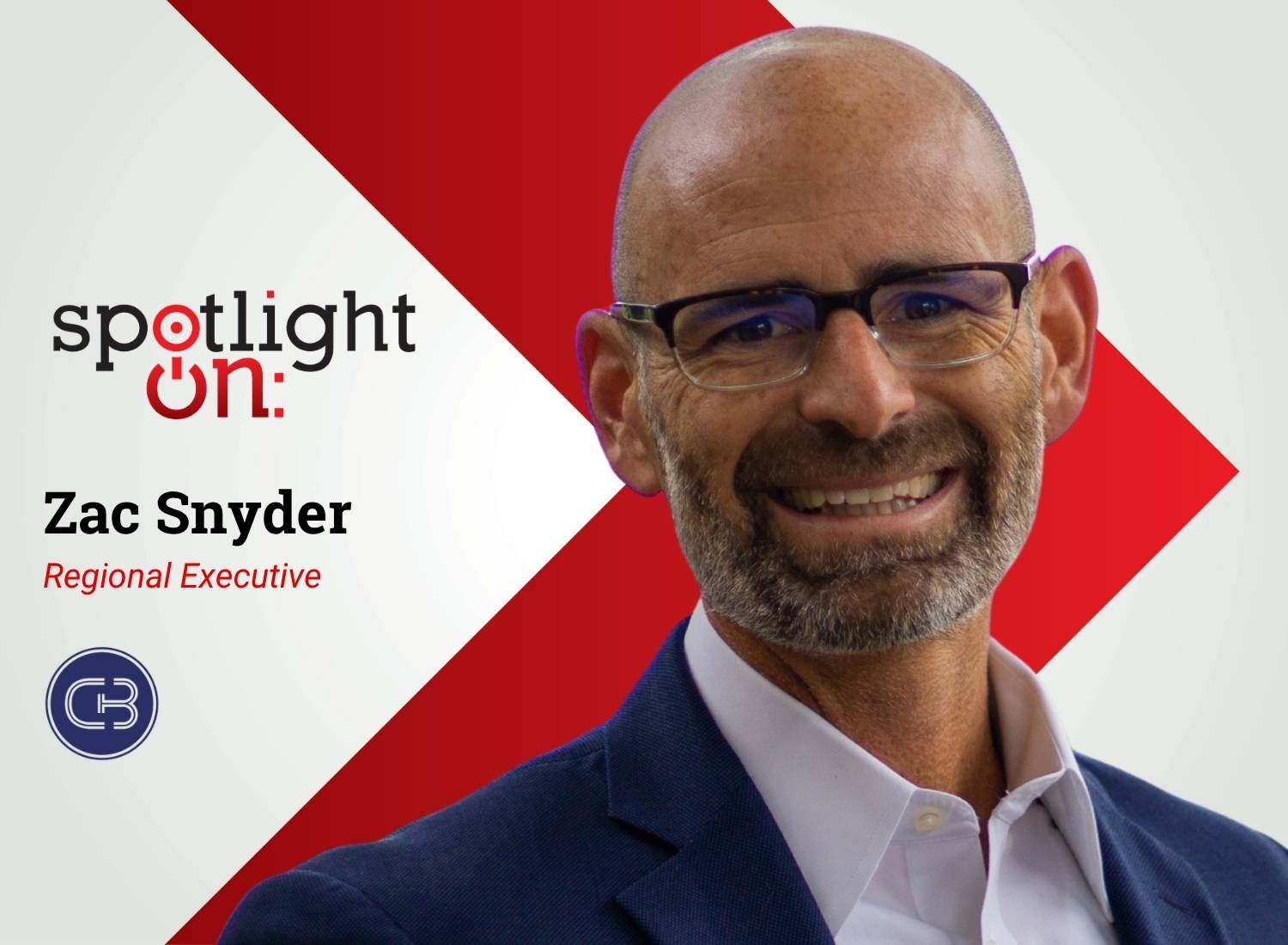 April 2026 — Invest: spoke with Zac Snyder, regional executive of Carter Bank, about what’s shaping banking strategy in 2026, where Charlotte’s growth is driving demand, and how community banks can compete through cycles. “Organizations that stay disciplined, informed, and client-focused are well positioned to succeed,” Snyder said.
Join us at caa’s upcoming leadership summits! These premier events bring together hundreds of public and private sector leaders to discuss the challenges and opportunities for businesses and investors. Find the next summit in a city near you!
How would you reflect on the past year, and what trends are informing your strategy for the year ahead?
If I had to summarize the business environment in one word, it would be uncertainty. The past 12 months have been defined by disruption, opportunity, and a persistent need for clarity. From a banking standpoint, digital assets and blockchain continue to move from headline territory into practical regulatory conversations. Anything that can change the plumbing of the financial system matters, and the industry has to watch for unintended consequences as frameworks evolve. I’m optimistic we’ll find common ground, but it’s a space to monitor closely.
On the regulatory side, there has also been reflection on the post-GFC era and the impacts of Dodd-Frank. Industry advocates have done a strong job telling the story of why community banks matter. We are fortunate to have thousands of banks across the country. Competition is healthy, and a diverse banking system supports a resilient economy.
We are also seeing meaningful M&A activity, and I expect that to continue. Part of that is more confidence that deals can be processed and completed without extended delays. Layered on top are issues every bank is navigating: AI, security, and cybersecurity. These are foundational concerns.
Whether it’s tariffs or policy shifts, uncertainty makes it difficult for business owners to plan long term. The more certainty we have, the better businesses can invest and grow.
Locally, the Carolinas and Charlotte in particular are a remarkable place to live and build. Population growth is rapid, the talent pool is strong, and the region continues to attract jobs and household formation. For a bank, that means expanding client needs. Our focus is to meet those needs with consistent execution, local decision-making, and a long-term mindset.
What sectors in the region are showing the strongest demand for capital right now, and where are you seeing more caution?
Commercial real estate remains a major area of activity, especially for community and commercial banks that operate in the construction-to-permanent space. The key is to stay granular, because the story shifts by asset class and submarket.
Multifamily, including build-to-rent, has been a defining theme. Charlotte delivered an outsized amount of new supply, and absorption has been impressive. That said, we are seeing heavier concessions and flatter rent growth in certain pockets. Areas that carried a larger share of supply have tighter fundamentals in the short term. The takeaway is not to overreact, but to underwrite with discipline and adjust assumptions around lease-up and rent growth. The upcoming leasing season will be an important indicator of the next phase of the cycle.
Industrial has been another strong performer. Historically overlooked, the sector has benefited from e-commerce, demographic growth, and shifting supply chains. Onshoring and reshoring trends could add additional tailwinds, and the Carolinas are well positioned to capture that activity.
Retail is more nuanced than many assume. Grocery-anchored centers continue to show demand, and retailers are following household growth across the region. The opportunity is real, but tenant strength and location remain critical.
Office continues to generate debate, but Charlotte has seen encouraging absorption tied to professional services growth. Like every asset class, performance varies widely depending on building quality and location.
Across these categories, one practical issue is tenants requesting higher levels of tenant improvements. That can work if structured correctly, but it increases break-evens and leverage for owners. Banks must stay nimble and underwrite accordingly.
Beyond real estate, we are focused heavily on commercial and industrial lending. Operating businesses, manufacturers, and service providers need not only loans but also strong cash management, payment tools, and fraud protection. As business owners express optimism about revenue growth and expansion, we want to support them with the right capital structure and services.
How is Carter Bank approaching acquisitions, and how do you help clients navigate competition and consolidation?
Carter Bank is active on the acquisition side. We are a $4.8 billion community bank with deep roots in Virginia and North Carolina, and we have recently expanded into South Carolina. We completed a two-branch acquisition last summer, including locations in Winston-Salem and Mooresville.
In terms of competition, many products look similar from the outside. The difference is how you deliver and whether clients can rely on you through the cycle. Our approach centers on execution, knowledge, and consistency. Business owners want to know their bank will do what it says, communicate clearly, and make decisions efficiently.
We also add value beyond the transaction. Many business owners are navigating succession planning or evaluating acquisition opportunities. Our role is to connect them with the right advisors and help them evaluate options thoughtfully.
During the early days of COVID, many clients faced real operational uncertainty. We worked closely with customers to find solutions and navigate challenges. That type of partnership builds trust that lasts beyond a single transaction.
How are technology investments changing the way you compete, especially with AI and crypto in the conversation?
Fraud and cybersecurity are especially important. Many institutions offer similar products, but the differentiator is how well you help clients use them and how much education you provide. Attackers are sophisticated and patient. Strong procedures matter just as much as strong software. A practical example is verifying wiring instructions. Businesses should have disciplined callback procedures using verified contact information, not details embedded in an email signature. As AI advances, impersonation becomes easier, so awareness and internal controls must evolve as well.
Banks must invest consistently in both technology and people. A major focus for us is strengthening our cash management platform so businesses can move money faster and more securely. We continue to enhance fraud protection tools and roll out capabilities such as same-day ACH.
It is not if, but when, and that reality shapes how we advise clients. Our goal is to pair technology with education and consistent habits to reduce risk.
How would you describe the talent market for banking in Charlotte, and how are you building and retaining strong teams?
Talent remains a challenge across industries, and banking is no exception. The industry can do a better job promoting banking as a career path, especially to younger professionals. We touch every sector of the economy, and the opportunities are significant.
For us, retention comes first. If you cannot keep your people, you cannot build momentum. Taking care of your team creates stability and fosters advocacy. Strong teams tend to attract other strong professionals.
Our expansion into Gastonia is a good example. As we increased our presence in that market, we connected with a team of bankers who were open to change. Bringing them on board has been a strong cultural fit and reinforces our belief that growth begins with people.
We are also expanding into Greenville, South Carolina, a market with compelling demographic growth and economic momentum. We have onboarded bankers there and are building our footprint thoughtfully. My role centers on driving organic growth, and that means identifying the right markets, hiring the right people, and building the right culture.
What differentiates Carter Bank in a competitive market like Charlotte?
A detail that reflects our culture is our stock symbol: CARE. It aligns with how we approach our work. We strive to be a trusted financial partner, and that starts with genuinely caring about clients and communities.
We are large enough to offer the products and services clients expect, but we maintain a personal, relationship-driven approach. Local decision-making and local knowledge are central to how we operate. When you understand your market and your clients, you can make better decisions for everyone involved.
Execution, responsiveness, and consistency matter, particularly when the cycle turns.
Charlotte’s growth story is real, and it extends across the broader region. Organizations that stay disciplined, informed, and client-focused are well positioned to succeed. Our role is to help businesses and families navigate decisions with clarity and confidence, and to stand beside them through every phase of the cycle.
Want more? Read the Invest: Charlotte report.