






America’s less traveled destinations looking for their piece of the tourism revenue pie
Writer: Mirella Franzese
October 2024 — The U.S. is the No. 1 tourism and travel market in the world, beating China, Germany, Japan, and the U.K., according to a report from the The World Travel & Tourism Council (WTTC). U.S. travel has also surpassed pre-pandemic levels with the tourism sector making the largest contribution to the national GDP ever recorded in history.
Tourism spending alone is expected to generate $2.5 trillion this year, which represents 9% of the U.S. economy. The top markets for travel and hospitality are vibrant metropolitan centers, such as New York, Miami, Orlando and San Francisco, which rank among the 10 most popular destinations for visitors according to FareGarage.
However, with $265 billion in revenue expected by 2029 from the travel and tourism sectors, America’s less traveled destinations are partnering with government agencies in a national push for greater equity in the tourism space. From Plymouth, Massachusetts to St. Paul, Minnesota, to Jacksonville, Florida, some of those locations are actively working to claim a piece of the tourism revenue.
The preservation of history is one of the key strategies for attracting visitors in the state of Massachusetts, according to Lea Filson, president and CEO of See Plymouth, told Invest:. “History is generally what draws tourists because Massachusetts itself is literally the foundation of the United States. We have a Historic Cultural District where our arts thrive, our history thrives, and where the restaurants and attractions are…. We have everything from an authentic tea room to a living history museum as well as many unique experiences for families.”
“Most towns work their entire lives to establish an international brand, but we have (Plymouth Rock),” Filson added. “It has been there since the pilgrims came over 400 years ago and for millions of years as a geological feature.” To further promote the town’s historical and cultural assets, See Plymouth is currently spearheading an initiative to launch the town as a tourism destination marketing district.
Saint Paul is also supporting the local artistic community to build on opportunities for growth in the dynamic travel sector. “In this year’s (visitor guide), our insiders are muralists who are part of a project bringing seven new murals to downtown Saint Paul. Each mural represents one of Saint Paul’s cultural destination areas and brings greater appreciation and awareness to the diversity of the city’s neighborhoods,” Jaimee Lucke Hendrikson, president and CEO of Visit Saint Paul, told Invest:. “The visitor’s guide is a great way to discover new places like the neighborhoods and cultural areas of Saint Paul, such as Little Africa, Rondo, District del Sol, and Little Mekong.”
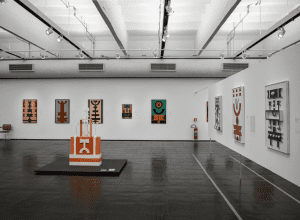
Northeast Florida’s private and public organizations are similarly investing in arts and culture to highlight off-the-beaten-path destinations across the region. The Jacksonville Museum of Contemporary Art (MOCA) is playing its part in the concentrated statewide efforts to boost tourism through investment in cultural assets.
Backed by the Tourist Development Council, which has shown a strong interest in supporting regional cultural innovation, MOCA will launch a number of key initiatives early into 2025 that are expected to double the number of tourists that visit the museum. Among them is a collaboration with L.A. art collector, Gordon W. Bailey, whose select pieces will be on display in a new exhibition.
“Mr. Bailey’s donation adds strength to MOCA Jacksonville’s holdings of works by untrained artists and emphasizes our commitment to being a museum that fully represents Northeast Florida, offering access points to contemporary art that engage every member of our community,” Caitlín Doherty, the executive director of the Museum of Contemporary Art Jacksonville told Invest:.
Technology is another area receiving substantial investment across all U.S. markets for the advancement of leisure and entertainment offerings. “We use geofencing and software, research, metrics and data to make our decisions on who we should advertise with and where we should put the majority of our ride circuit vehicles,” said Filson.
“We all became much more digitally oriented during the pandemic, but I was adamant that what we did should not just be a momentary response, but instead something that was sustainable far into the future,” said Doherty. “For that reason, we created a 360-degree virtual tour for every exhibition so anyone can experience our exhibitions from anywhere in the world.”
Doherty also discussed MOCA’s plans to unveil a number of new digitally-immersive pieces later this year to cultivate one-of-a-kind experiences for visitors. “Our first fully immersive tech-based installation in our Atrium Gallery (will launch later this year). Artist Raphael Lozano-Hemmer, who is based between Canada and Mexico, is creating an experiential work of art using heat seeking technology to bring the viewer into the work and create one-of-a-kind experiences for each visitor.”
For more information: