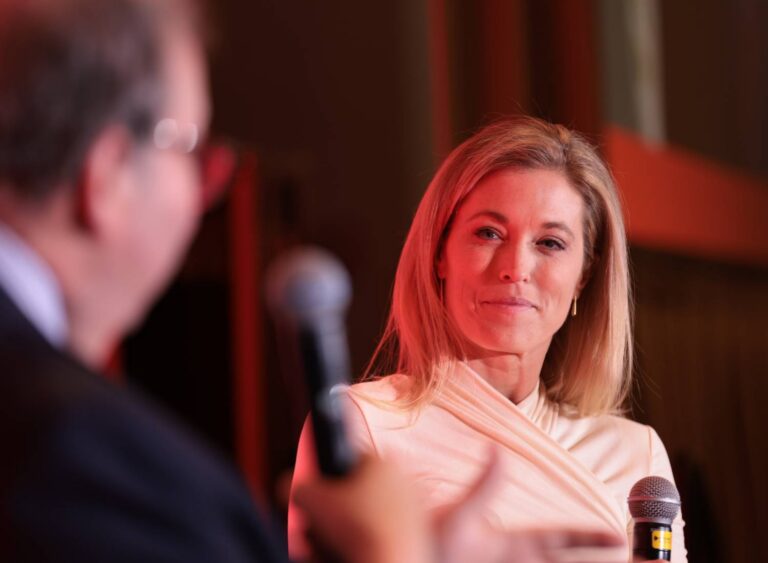







Bernard Dagenais, President & CEO, The Main Line Chamber of Commerce
 In an interview with Invest:, Bernard Dagenais, president & CEO of The Main Line Chamber of Commerce, discussed the region’s evolving business climate, workforce challenges, and innovation trends. Highlighting the Chamber’s role in leadership development, he emphasized, “Greater Philadelphia is a large and competitive region, and there is no reason why it shouldn’t be among the best at effectively utilizing the abundant talent that exists here.”
What have been some key successes for the Chamber over the past year?
At the Main Line Chamber of Commerce, we connect our members around business, leadership development and talent. These pillars drive everything we do, from supporting business growth to fostering strong professional networks.
In 2024, we launched our Make More Series: MiddleMarket Business Growth Initiative for companies with 50 to 250 employees, helping them find pathways to growth. We’ve created peer gatherings through our Owners and Operators Forum, convening regularly to support mid-size businesses in collaboration with larger Chamber members.
Our Talent and Education Network has also expanded. Beyond connecting employers with college talent, we are now reaching into low- and moderate-income high schools to guide students on career pathways. We engage juniors and seniors in discussions about their futures, from part-time jobs to experiential learning, including internships and summer programs. These opportunities provide valuable exposure, helping young people build a strong foundation for success.
The Society of Professional Women has experienced tremendous growth, recently hosting a sold-out event. This program remains a key part of our mission to connect men and women with leadership development opportunities.
What industries are driving growth in the Main Line region, and how is the business climate evolving?
People often highlight the education and healthcare sectors in our region, and rightfully so, as they are major contributors to our economy. However, one of the best aspects of the Main Line area is its industry diversity. We have a strong presence of financial services companies, technology firms, and life sciences businesses, which are key economic drivers. The current governor is particularly focused on growing the life sciences sector.
Manufacturing is another significant, though sometimes overlooked, industry in our region. Many people don’t realize the extent to which manufacturing companies operate across Delaware, Chester, and Montgomery counties, as well as in Philadelphia. These businesses play a crucial role in the local economy and provide valuable employment opportunities.
What challenges are businesses facing, and how is the Chamber helping them navigate these headwinds?
Finding the right talent remains a persistent challenge. To address this, we launched a healthcare collaborative connecting major health systems with students from technical schools and high schools. These students are earning certifications as patient care technicians or medical assistants and will enter the workforce immediately after graduation.
Through this initiative, hospital systems hire and develop talent internally, offering pathways for employees to pursue additional training or degrees. Increasingly, businesses are finding ways to retain entry-level employees and help them advance, strengthening both their workforce and long-term growth. These are the types of companies we love to support.
How is economic uncertainty impacting business investment and expansion?
While we haven’t seen major shifts, businesses are focused on cost control due to uncertainty. Companies — both locally and nationwide — have adapted well to existing regulations, but the real challenge is uncertainty about future policies, making long-term planning difficult.
Some optimism exists that regulatory burdens may ease, but national economic concerns continue to create hesitation. Many businesses are taking a conservative approach to spending, ensuring they are prepared for potential shifts.
How does the Chamber help its members stay engaged with key policy issues?
One of the most important things we do is connect members with key leaders. For example, a U.S. Senate staff member will soon speak with our government affairs committee, allowing for direct dialogue. We are also hosting the House Majority Leader of the Pennsylvania House of Representatives, who will provide insights on legislative priorities.
Beyond state and national politics, we engage with county leaders from Delaware, Chester, and Montgomery counties, who participate in chamber events to discuss regional business concerns.
Our goal is to connect members with policymakers and help them navigate evolving issues such as transportation funding and workforce development to empower businesses to stay informed and proactive.
How does the Chamber collaborate with other organizations to support economic growth?
We serve as a connector between economic development organizations and our members. Many nonprofits are part of our chamber, and we work closely with groups like the Philadelphia Foundation and the Foundation for Delaware County to help them help others to achieve sustainability and growth.
These organizations address critical community needs, making their success vital to the region. Our work in talent development helps strengthen a key driver of economic growth. Whether training emerging leaders or connecting employers with entry-level employees, we help businesses build strong teams. A well-developed talent strategy is essential for economic progress.
What trends or innovations are shaping the business landscape?
Some of our most successful member companies have found ways to drive collaboration and innovation. For example, one of our prominent tax software companies helps businesses determine their tax obligations both nationwide and globally, simplifying a complex process for many.
Then, of course, there’s AI, which is transforming industries. We recently hosted an event through our Society of Professional Women that focused on AI’s impact on communications and how businesses can leverage it effectively. Chambers of commerce, nonprofits, and businesses alike are all working to understand how to use AI in a way that adds value while remaining aligned with their missions.
The pace of AI evolution is rapid. What’s happening today will look different in a month or three months. The key is knowledge sharing. As businesses exchange insights and best practices, they will become more efficient and enable employees to focus on higher-level tasks that drive innovation and growth.
What are the biggest opportunities for businesses in the region over the next few years?
The strengths of our economy, particularly in financial services, manufacturing, education, and healthcare, position the Philadelphia region well for growth and success.
However, the real game-changer happens at the individual level. Success will depend on strong leadership, talent development, and the ability to seize opportunities while adapting when necessary. Greater Philadelphia is a large and competitive region, and there is no reason why it shouldn’t be among the best at effectively utilizing the abundant talent that exists here.
I believe there are great minds working on this right now, and I have a lot of optimism about the future of this region.