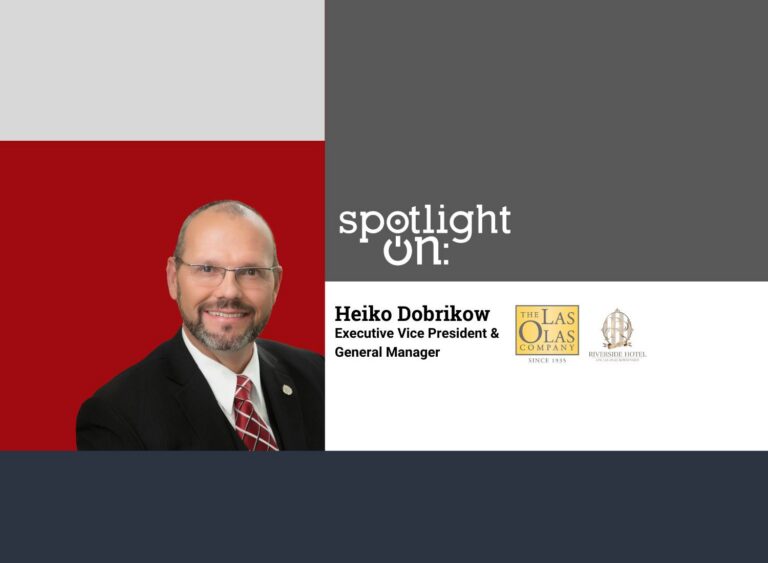







Cicely Jefferson, Dean, College of Business at Dallas Baptist University
Cicely Jefferson, dean of the College of Business at Dallas Baptist University, spoke to Invest: about its evolving role in the Dallas higher education and business space. The faith-based college is working on mentoring programs and seeing that its students get exposed to the real world of business.
Having been appointed dean this year, what are your immediate priorities for the College of Business?
Among the immediate priorities is to build one College of Business. In the past, we’ve had the College of Business as an undergraduate and then a graduate school of business, but I really want one unified College of Business. That’s my focus; establishing a cohesive team, building unity, and bringing us all together. For instance, our offices are not all located in the same space, so it takes some effort to make sure that everyone is still coming together. I’m ensuring that we are bringing all the meetings together, and also making sure that there are no barriers between faculty and staff. It’s no longer just faculty meetings, it’s faculty and staff; it’s a college meeting. We’re all coming together and fostering a lot of community interaction. That’s really one of my main priorities: building community and collegiality. This also means that there are opportunities for us to learn from each other, for collaboration, and for us to get to know each other better.
I’m also doing some lunch and learns where people can talk about a topic. It’s informal; still, it’s an opportunity for us to share some best practices with each other, and a place for us to get questions answered. We have also hired some new faculty, so helping them to integrate into the Dallas Baptist University culture is another focus.
What are some of the unique aspects of your program that you believe are attracting students and faculty?
One of the unique aspects of our program is our Christ-centered focus. We are a Christian university. We are unapologetically Christian. For people who are Christian, that is a distinction we offer because we are not a university that is just Christian in name, it’s embedded in our DNA. We integrate faith and teachings from the Bible into the content in the classroom. Students who come here will have chapel service, prayer in class, and devotion. They will see how the scriptures come alive and how they apply, whether it’s in finance, business, law, or management. We integrate all the principles from the Bible because the Bible is a great guide on business and how to manage people, how to lead people. That is one of our primary distinctions.
Another distinction is that Dallas Baptist University does not have teaching assistants or graduate assistants. Students get one-on-one time with the professor. Our student-to-professor ratio is 16-to-one, so our average class size is less than 20. That’s a distinctive feature: although we’re a school of almost 4,200 or so, students get to have and build a personal relationship with their professor. This is nothing against larger schools – I attended larger schools – but I love the fact that I really get to know my students and then I get to follow them on their journey. You become that coach and that cheerleader for that student as they matriculate through their years.
The time that we’re living in is one in which people are looking for deep relationships, people are battling loneliness. It’s important for students as they are away from home to find a sense of community, of family. They can really get that here at our school.
What specific partnerships help to provide students with experiential learning opportunities, mentorships, or other elements to enhance their opportunities?
One area is mentorship. We have a university mentoring program that all first-year students can sign up for and be a part of. We encourage our faculty to mentor. I have a mentee who’s a new freshman from outside of San Antonio who I spend time with, walking them through their experience. We’re doing this book called Welcome to Adulting. It’s a Christian book about how to adjust to being away from home in terms of your faith, your family, friends, and finances. We also have a College of Business-specific mentoring program that we offer. In the past, we’ve offered it for seniors, but now we’re going to move it to juniors as well because we want to prepare our students.
The purpose of the College of Business Mentoring is career preparation. We want to be able to work with our students on resumes, networking, how to present yourself and market yourself in a way that is attractive, how to highlight your skills and what you bring to the table when you are interviewing, when you are connecting with other individuals, and on the importance of getting an internship. We want to prepare our students for internships.
One of our new features is a specific position in the College of Business where we have a faculty member who is dedicated to the career and professional development of our students. She meets with students one on one. She seeks out internships. She is a member of a couple of the chambers. We are tapping into the chamber leaders and members of those organizations to provide internships for our students.
We also provide experiential learning through guest speakers. As part of our guest speaker program, we are bringing in people from industry to tell their story to our students because we want them to know what is going on out there and what it takes to be successful, because sometimes the younger generation wants things instantaneously. They want it to happen overnight. They want to go from undergrad to CEO. We want them to understand that there’s a process. There will be some failures along the way. There will be some obstacles. But when they hear from people in the industry, they remember those stories and those stories are impactful.
Another way we provide experiential learning is through having travel study trips. As an example, we went to New York and visited the New York Stock Exchange floor. We were in the financial district; we talked to alumni who were part of different marketing firms. Basically, we take business on the road by allowing students to see how business interacts in various sectors. And New York was a great place. We visited the retail district. We visited the sporting industry. The students were able to see business but also in the context of ministry and mission.