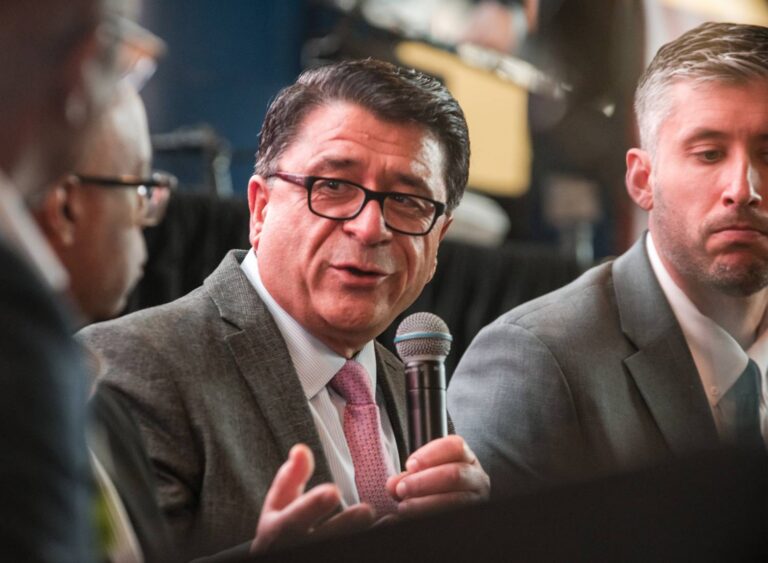







Daniel Gropper Dean Florida Atlantic University College of Business
 In an interview with Invest, Daniel Gropper, Dean of the Florida Atlantic University College of Business, discussed how the institution integrates technology and leadership skills to prepare students for evolving workforce demands. “We focus on providing experiential learning opportunities so that students are well-prepared to transition into the workforce,” he said.
How is the Florida Atlantic University (FAU) College of Business leveraging technology and innovation to prepare students to become successful members of the workforce?
We incorporate AI applications in many of our business classes. The implementation varies depending on the subject matter, whether it is finance, marketing, or economics. However, AI is integrated across the curriculum, ensuring that students utilize these tools in their coursework. Additionally, our professors employ AI applications in their research and teaching methodologies. This integration is transforming the way tasks are completed and accelerating processes across various disciplines.
How is the FAU College of Business adapting and keeping the curriculum up to date to meet the demands of a fast-changing job market?
It is indeed a challenge. Our faculty includes experts in the application of artificial intelligence within their respective business disciplines. Beyond internal expertise, we frequently collaborate with local businesses that are actively utilizing AI. These partnerships allow our students to apply their knowledge in real-world scenarios. From my perspective as dean, the most effective approach is to hire highly capable faculty and provide them with the necessary support. They do not require micromanagement as they only need the resources to achieve their full potential.
Has there been an increase in student enrollment or interest in recent years?
Our application numbers have risen significantly. For this year’s freshman class, we received over 57,000 applications for approximately 4,500 to 4,800 available spots. This level of interest is remarkable. The university is experiencing growth, partly due to Florida’s expanding population and the increasing number of domestic and international students seeking education here.
FAU’s College of Business Executive Education was ranked second in the country for the second straight year. To what do you attribute this success?
The Financial Times, based in London, conducts these rankings. Our executive education programs, which include open-enrollment courses such as Six Sigma quality control, leadership training, and finance for non-financial managers, have earned this distinction. While other institutions, like the University of Miami, excel in custom corporate programs, we pride ourselves on our general executive education offerings. This achievement stems from our outstanding faculty, some of whom are external experts, as well as our exceptional staff and state-of-the-art facilities, which are less than 5 years old. Our commitment to high-quality service further distinguishes us.
What is in the pipeline for the college in terms of campus projects, renovations, or expansions?
The College of Business currently serves over 9,000 degree-seeking students. We have expanded our programs in business analytics and hired new faculty with expertise in analytics and AI. While no new construction is planned as our facilities, completed during the pandemic, are already cutting-edge, we continuously invest in technology. For instance, our IT support team monitors classrooms in real time. If a professor encounters an issue during a lecture, they can verbally request assistance, and the support staff, who oversee multiple classrooms simultaneously, respond immediately. This system ensures seamless instruction and represents a level of efficiency that rivals even top-tier institutions.
Many people are questioning the value of higher education. What should be the value proposition of universities in modern times?
I believe that universities, at least in our context, have never faced significant skepticism regarding their value. That is not something I have observed in the state of Florida. What people are questioning are the values of the older Ivy League institutions, where tuition costs $60,000 or $70,000 annually. In contrast, our tuition remains under $10,000. There is no doubt that students receive substantial value for what we provide. We emphasize skills acquisition alongside a broad education. Our students gain a comprehensive understanding of societal dynamics without being indoctrinated. We do not follow trends that lead to divisive protests or unrest. Here, students come to learn. They collaborate effectively regardless of background, ethnicity, or religion. Everyone coexists harmoniously in South Florida. Some individuals in other parts of the United States may struggle to believe this, but I often explain that our workforce and student body are deeply multicultural. People arrive from all over the world, yet they integrate seamlessly, work well together, and excel in their studies.
How does the FAU College of Business promote leadership among students?
We approach this in several ways. We create opportunities for students to collaborate with individuals from diverse cultures, races, and backgrounds. Our focus remains on the collective goals of the team or organization. By emphasizing the positive attributes each person brings to a project, we find that students work together exceptionally well much like they would on a sports team or within a consulting firm.
For example, in sports such as European football, or soccer, teams consist of individuals of varying heights, racial backgrounds, and ethnicities. What ultimately matters is performance. The same principle applies here. When I observe students interacting, whether in sports or academic projects, their differences become irrelevant. What matters is whether they can fulfill their roles effectively.
We encourage students to appreciate their unique backgrounds through subtle yet meaningful initiatives. For instance, during holiday celebrations, students bring dishes from their home countries and share insights about their cultural traditions. Our executive programs reflect this diversity as well. Our lead administrator is from Norway, while the second-in-command is a woman from Haiti. She oversees a team of 25 to 30 staff members, representing nations across the Caribbean, South America, and Europe, including Georgia, Estonia, Venezuela, and Colombia. Despite their varied origins, they function cohesively. This philosophy extends beyond formal academics. Whether in classrooms, sports, or informal gatherings, students learn about one another in a positive and constructive manner. These experiences, both structured and organic, cultivate leadership skills grounded in mutual respect and collaboration.
What are the primary challenges facing the education industry, and how is the FAU College of Business working to address these?
Our challenges here may differ somewhat from those in other parts of the country or the world. Our primary issues revolve around managing capacity and high demand. I would much rather face this problem than the alternative of not having enough students. We have a significant number of students, and our challenge lies in determining how many we can accommodate. One of the key concerns for the university is student housing. Our issue is not filling dormitories or nearby apartments but rather having too many students for the available housing. Another challenge is the heavy traffic on surrounding streets, which is a result of high enrollment rather than a lack of attendance in our programs.
For example, the South Florida Business Journal recently published data ranking FAU as the No. 1 program in South Florida. This ranking was not based on qualitative measures but rather on the count of MBA students enrolled. We surpassed Florida International University, the University of Miami, and other institutions with approximately 950 students. Our challenge, therefore, is managing this volume of students while maintaining the quality of education we strive to provide. This includes hiring sufficient faculty to meet demand.
This is ultimately a positive challenge to have, as it mirrors the broader growth issues faced by South Florida and Palm Beach. The question then becomes how do we manage this growth effectively, particularly in terms of providing affordable housing so that individuals can live and work in the area.
How is the FAU preparing students for life beyond the academic and educational environment?
We focus on providing experiential learning opportunities so that students are well-prepared to transition into the workforce. Additionally, we emphasize the development of skills that enable lifelong learning. FAU fosters an environment of continuous education, offering opportunities for alumni to return for executive education programs even after completing their degrees.
We maintain strong connections with our alumni, often inviting them back as guest speakers in classrooms. These speakers are not limited to those who graduated decades ago and have since achieved distinguished careers. We also bring in recent graduates, sometimes just two or three years out of school, to share their experiences. These individuals provide current students with insights into what to expect in their first jobs and how to adapt from an academic setting to a professional workplace. This ongoing exchange of information between the workplace and the classroom helps bridge the gap between education and real-world application.