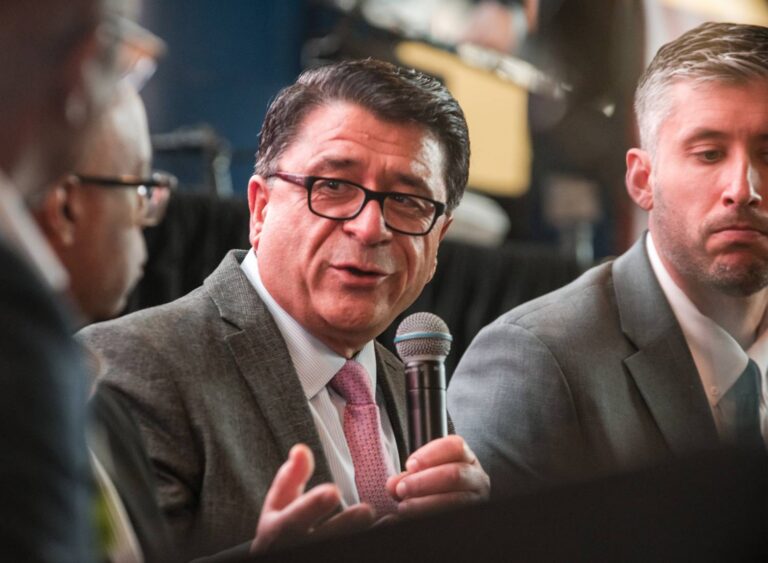







David Barnett, President, Brenau University
 In an interview with Focus:, David Barnett, president of Brenau University, said that the institution is experiencing growth and aligning programming with community and business needs. “We spend a great deal of time outside the university, in the community, listening to employers and listening to people who are looking to advance in their own careers,” he stated. This approach helps the university create learning opportunities that meet regional workforce needs.
What changes in the past year have most influenced Brenau University’s direction in education?
As you’re probably aware, the sector and corridor we’re in are expanding. Gainesville, Hall County, and Northeast Georgia are in a growth spurt, and Brenau is experiencing growth alongside the community. Since 2023, our traditional student population has grown about 20%, counter to higher education trends. About 80% of our students come from within 150 miles, allowing us to focus programs on regional workforce and economic development needs. This aligns our programming with community and business needs, which is historically true for Brenau. We are seeing growth in healthcare, education, and entertainment due to their heavy presence here, plus business functions. Brenau University, an applied research university, offers degrees through doctoral programs and operates a women’s college as a unit within our broader university. Our applied research takes classroom hypotheses into the workforce for testing, requiring coordination with the community for internships and clinical practice. Our traditional programs are near capacity, and we’re launching a new campus master plan to accommodate this growth.
What are the major campus updates planned in the next few years under the new master plan, especially considering regional and healthcare growth?
We’re creating space for student support, instructional areas, and athletics expansion. New facilities will support our fine arts and humanities programs, particularly dance and costume fabrication, feeding Georgia’s growing entertainment workforce. We’re planning a new student commons and dining facility, which will be open 24/7 for residential and commuter students to eat, study, and relax. We’re expanding our library with technologically advanced learning spaces and enhancing our communications program with space for radio, television, and podcast creation. Our growing Women’s College athletics program, especially our nationally acclaimed competitive cheerleading team, requires a second gymnasium for practice. These $50 million improvements follow a debt restructuring, with Brenau earning an investment-grade Standard & Poor’s rating, reflecting financial stability and growth potential. The new buildings, supporting academic and co-curricular programs, will be completed over a 10-year period to accommodate our expanding programs.
How is the university strengthening partnerships with local employers and internship providers to leverage regional growth?
Brenau University aligns its curriculum with Georgia’s Pathways program, addressing K-12 identified high-need employment areas. Our Tiger Teach program offers fully online teacher preparation, partnering with seven school systems. Non-classroom school staff can complete their degree online, do the required student teaching in their workplace, and transition to teaching roles, addressing Georgia’s teacher shortage. In logistics, our business college students intern with a Gainesville-based company, preparing for jobs at this firm, which benefits from the new Hall County inland port. This port handles containers from Savannah, distributed across Northeast Georgia, North Carolina, and South Carolina, requiring skilled logistics professionals. In healthcare, our undergraduate-to-doctoral programs place 700-800 students in hospitals and medical practices from Atlanta to North Carolina, applying classroom learning in clinical settings. These students achieve a 100% placement rate post-graduation in fields like nursing, physical therapy, occupational therapy, and psychology, meeting regional workforce needs.
How is Brenau approaching flexible education as student preferences shift between online and in-person learning?
Higher education is shifting away from an industrial, assembly-line model, where students start together, progress methodically, and earn a degree, to a flexible, student-driven system. At Brenau University, students can earn credits for prior experience, pursue micro-credentials, or combine certifications toward a degree at their own pace. Some take a few classes for a certificate, while others build multiple credentials into a degree. Brenau’s long history with online learning, starting in the late 1990s, eased this transition. Even pre-pandemic, students mixed online and face-to-face courses. During the pandemic, we moved to 100% online offerings, retaining these options afterward. Now, 75% of students take some or all classes virtually, embracing a digitized learning environment. Brenau’s faculty, unusually adaptable for higher education, maintains quality while innovating. This aligns with a knowledge-digitally-centric approach, meeting modern students’ needs with diverse, flexible learning modalities.
Looking ahead, what is your top priority for Brenau’s growth, and how do you see the university shaping Atlanta’s academic landscape?
Our priority is to have measured growth in areas where we have expertise and relationships in the community. Brenau is, under my leadership and previous leadership, very community-focused. We spend a great deal of time outside the university, in the community, listening to employers and listening to people who are looking to advance in their own careers. We want to hear what employers need, but also what jobs individuals want to pursue, so we can find ways to create opportunities for them to do that. If I’m talking to a high-school student or an adult, I don’t ask them what they want to major in. I ask them what they want to do. And then I talk to them about what kind of learning experiences will make them successful in pursuing that career. Normally, there’s something at the university that will help them do that.
The same is true with business owners. I ask them, what do they need their employees to be capable of doing? What do they need a person who walks in the door to be able to do with little or no training or development on day one? Everyone wants to hire people who have some level of capacity, not necessarily someone who has to learn everything, from how to turn their computer on to how to lock up their office at the end of the day. We want to find ways to meet both of those needs and then create learning opportunities that complement each other.