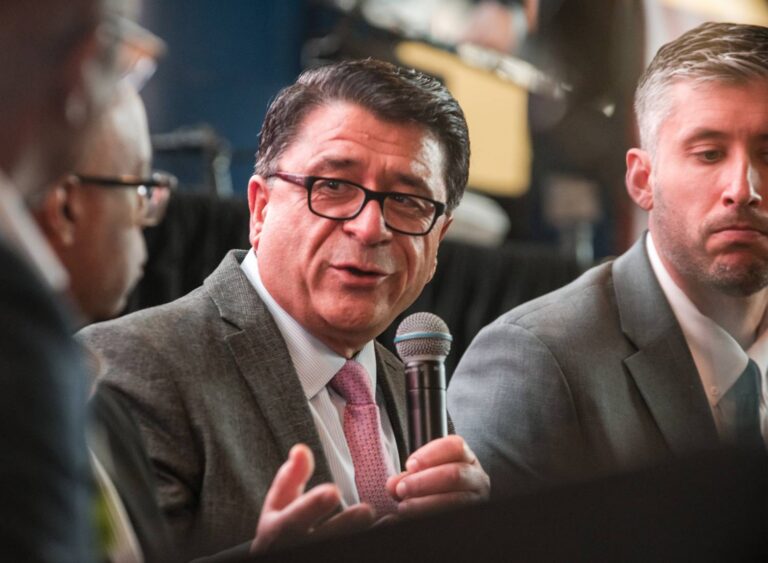







David Price, President of Engineering, Allen + Shariff Engineering
 In an interview with Invest:, David Price, president of engineering at Allen + Shariff Engineering, said, “our goal is to have ten offices by 2030,” as he detailed the firm’s strategic international expansion, its approach to navigating a competitive talent market, and how sustainable design is now inherently baked into standard building codes.
Over the past year, what have been the most important changes for Allen + Shariff Engineering, both locally in Pittsburgh and across your broader operations?
Over the past year, one of the most important developments for Allen + Shariff Engineering has been the establishment of a new office in Mexico City. This office was opened approximately one year ago to begin addressing market opportunities in that region while also providing support for our various offices throughout the United States. I am pleased to report that this initiative has evolved successfully over the last twelve months. We currently have seven people stationed there, plus one individual leading the operations, bringing the total to eight team members. Their consistent growth has been incredibly positive. Another significant development over the past year involves our offices in Dubai and Abu Dhabi. For the last fifteen years, these offices have primarily focused on project management, specifically specializing in mega hospitals. Approximately two years ago, challenges with certain contracts prompted a strategic shift toward diversification beyond pure project management. This led them to begin pursuing architectural and engineering work, similar to the core operations we conduct in the United States, though excluding the architectural component. As with any new venture, gaining traction requires time and patience. However, November 2024 marked a major turning point when they secured a substantial volume of new work. This influx of projects has catalyzed significant growth and momentum for those offices, which has been fantastic to witness. Additionally, the project management segment of their business is beginning to rebound. Overall, everything is progressing in a positive direction.
How have these shifts shaped your priorities?
These expansions have significantly influenced my role as president overseeing all United States and Mexico operations. The offices in Dubai and Abu Dhabi are managed by a separate director, so my involvement there is limited. For our domestic offices, the greatest challenge has been maintaining our existing workload within a market that has demonstrably slowed. While we strive to retain our current employees, we simultaneously face the difficulty of recruiting new talent in this highly competitive environment. This challenge is particularly acute as our offices, such as the one in Chicago, continue to grow and require additional staff. Our foremost priority, therefore, is identifying and attracting quality employees to join our organization.
What are some projects that showcase your team’s expertise in advanced healthcare environments, and what does it mean for the growth of your Pittsburgh office?
Regarding our expertise in advanced healthcare environments, the recent completion of the new laboratory for UPMC Hillman Cancer Center serves as a prime example. It is important to note that while every office at Allen + Shariff Engineering handles a broad spectrum of built-environment engineering, our Pittsburgh region has been significantly strong in the healthcare market. This team has been a solid and dedicated part of our organization for fifteen years, with UPMC being their number one client. The specialized nature of healthcare engineering, which encompasses critical aspects like life safety, demands a focused expertise.Concurrently, Pittsburgh has also completed significant work for UPMC, primarily focusing on office and tenant fit-outs. For instance, our team executed the engineering for over twenty floors of corporate tenant fit-out for UPMC in the UPMC Tower, which is the tallest building in Pittsburgh. Our association with UPMC spans nearly twenty years, underscoring a deep and sustained partnership.
What are some examples of projects where the firm has best showcased sustainability practices, and how has clients’ appetite for sustainability methods evolved?
Sustainability continues to be a critical focus for our firm. Over the last fifteen to twenty years, sustainability has transitioned from a frequent topic of discussion to an integral component of standard design practice. This evolution is largely due to building codes becoming progressively more stringent every three years, continually raising the baseline for efficiency and environmental performance. Consequently, we are observing a trend where fewer clients actively seek formal sustainability certifications for their projects. This is not due to a diminished commitment to sustainability, but because so many sustainable practices are now inherently baked into the standard design and construction process. By default, we are already operating at a high level of efficiency. That said, certain projects still pursue certifications. For example, we provided all engineering services for a new large entertainment venue across from the Andy Warhol Museum in Pittsburgh, which is pursuing LEED certification. We have successfully met the targeted energy efficiency goals for that project with relative ease by applying these principles early in the design. Furthermore, we are engaged in numerous affordable housing projects. As these are often government-driven, they come with stringent requirements for energy efficiency ratings and frequently aim to meet passive house standards. This represents a significant investment in long-term sustainability. While the data might suggest a decline in certified projects, the reality is that sustainable design is more pervasive than ever, as it has simply become a standard expectation integrated into all our work.
How are you building on the strength of the firm’s diverse and multicultural workforce to attract and retain engineering talent in Pittsburgh’s competitive labor market?
Our approach to attracting and retaining engineering talent in Pittsburgh’s competitive labor market, and in our other operational areas, is multifaceted. As a well-established company, our reputation is a strong selling point. However, beyond technical engineering skill, we place paramount importance on cultural fit and the values a prospective employee brings to our organization. We seek individuals who integrate well with our team and contribute to a collaborative environment. Our company values, which include integrity and fun, are central to our identity. We believe that enjoying one’s work is essential, so we actively foster engagement through group outings, shared lunches, and participation in community events, such as a recent cornhole tournament where our teams performed exceptionally well and received strong support from the office. We also host events with architectural firms to build camaraderie and strengthen professional relationships. By creating an enjoyable office environment with appealing amenities and views, we strive to make engineering an engaging lifestyle rather than just a job. This comprehensive approach is crucial to our recruitment and retention strategy.
How have you seen trends such as mixed-use development and C-PACE financing evolve over the last year, and what new opportunities are you preparing for?
Mixed-use development is still occurring. There are still projects popping up in Pittsburgh, and I am speaking from Pittsburgh because that is where I live. Those opportunities are still happening. In our Columbia market, they are also happening. There is more of a push towards multifamily residential, which, when those get built, commercial and retail uses often grow up around them. In the Pittsburgh market, it is still progressing well. In the Columbia, or the Baltimore-Washington DC market, those projects are out there, but they are slow to get started. We are still stuck in this economy where the market rates have not dropped. So, everybody is still hanging out there waiting to go. Just describing that, it is a pent-up energy, and at some point that dam will burst, and we will all be busy.
Regarding multifamily and C-PACE, I do not feel C-PACE has grown the way I thought it would. It is still available. I just do not see people taking advantage of it, and I am not sure why. Maybe if I were a building owner and more involved in the finances, I would understand. To me, it seems like a fantastic way to make long-term improvements to your building that do not affect what you want to do with the property later on.
You also previously mentioned seeing the bus rapid transit system, which will connect Oakland to downtown Pittsburgh, as a significant opportunity. Has that come to fruition?
Fortunately, we have seen a ton of growth in what is called Uptown. That is the area between Oakland, where the University of Pittsburgh is, and downtown Pittsburgh. Old buildings, old housing, old everything, have been torn down to build new. We have four to six projects in that small area alone that are ongoing right now, either in design or construction. There is a lot of growth in the residential sector, and it is going to draw the two areas together better, which is beneficial to the city.
Taking a broader look at the economy, how have ongoing changes in the market and labour force impacted your organization, if at all?
The current opportunity landscape presents a unique challenge. While recruiting recent college graduates is relatively straightforward, finding seasoned professionals with more experience is exceedingly difficult. This shortage can be traced back to the market downturn of 2008, which profoundly impacted the engineering and architectural sectors. During that period, many students switched their college majors away from these fields, and a significant number of experienced professionals were laid off and left the industry entirely. This has created a substantial gap in the talent pool, specifically affecting professionals with approximately eleven to seventeen years of experience. These individuals are exceptionally scarce and are often already content in their current roles, making them reluctant to transition to a new company. This makes the market for experienced talent extremely competitive. This reality is a key driver behind our international expansion into markets like Mexico and the UAE. For example, when our Dubai and Abu Dhabi offices secured a large volume of work in November 2024, they needed to hire thirty-five people immediately. They successfully recruited all thirty-five within two weeks, thanks to the abundant engineering talent available in the surrounding regions. Such rapid scaling is simply not feasible in the current United States market. Our goal for the Mexico office is not only to support growth in the United States but also to establish a platform for further expansion southward, potentially into countries like Colombia, as part of our broader strategic vision.
How does Allen + Shariff philosophy of community engagement translate into the firm’s engagement with the Pittsburgh community and regional development initiatives?
In general, we do a lot of that on our own as personal ambassadors. For example, although it is fun, I coach soccer. I don’t have kids on the team; it’s just an outlet to give back. Locally, we have opportunities such as garbage cleanup. We go out and do those things to try to help out. We are involved in different opportunities that benefit various organizations. For instance, I think they do more of this out of our Baltimore office, where Zack Shariff is involved. He is on the board of Johns Hopkins University on its development side. He is involved with the Howard County Leadership program, trying to generate revenues to then help future entrepreneurs, and many other such initiatives. Individual involvement is sometimes more inspiring than just a corporate policy of community engagement, because you can inspire team members to help out the community in many different ways rather than just following one program.
What are your top goals and priorities over the next two to three years, both in terms of project delivery and strengthening the company’s role in the regional market?
For the company, right now we have six offices. Our goal is to have ten offices by 2030. We have these kinds of goals for the growth of the company. We are looking to do a lot of internal improvements for standardization. These are all just efficiencies. We are looking at going into other markets and growing our reach. I am already licensed in half the country, but it would be nice to have offices in other places.