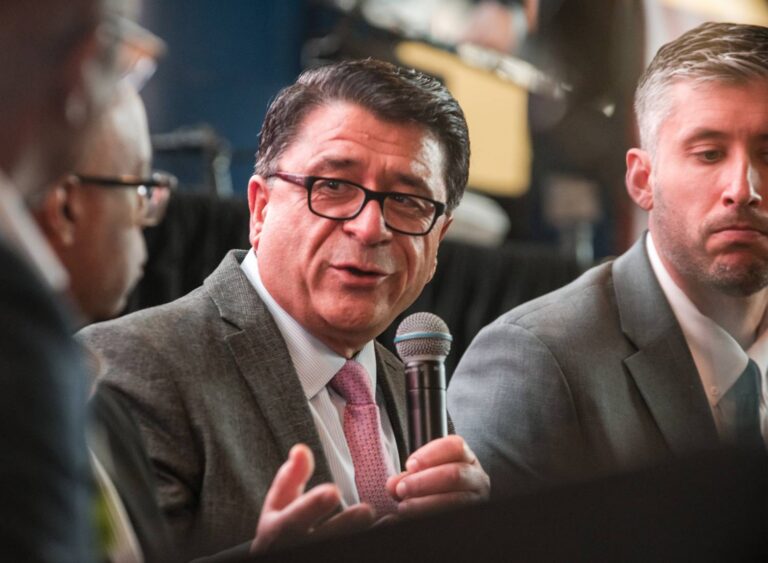






Dennis Mordan, President, O’Donnell & Naccarato
 Dennis Mordan, president of O’Donnell & Naccarato, sat down with Invest: to discuss the firm’s status as an ESOP, continued strategic expansion beyond Philadelphia into geographically diverse markets and sectors, and how the company is navigating a slow construction cycle while making targeted hires and investments. Mordan also covered technology and sustainability trends, including AI and mass timber, façade restoration requirements, workforce development, and plans to grow nationally while preserving a people-first culture.
What changes have most influenced the firm over the past year?
Our continued focus on strategic expansion has softened the blow from a challenging year in a flat construction market with fewer projects coming online. Our structural engineers are licensed in 49 states, with Alaska being the only exception, and I am spending more time in other offices. We are focusing on the right market sectors and making strategic hires, whereas other companies might be shedding staff. There have been fewer projects coming out from the design standpoint, so we try to be aggressive, think ahead, and figure out different ways that we can grow.
Which sectors have remained the most active or shown the most stability, and where are you seeing delays or cancellations?
We have not seen many cancellations, which is encouraging. When you start to see cancellations, that is when you start to get really concerned because the work that you had lined up is no longer in the books. However, the Philadelphia residential market has slowed. Challenges include construction costs, high interest rates, labor shortages, and limited tax abatement. Industrial has been stronger, shifting from large warehouses toward data centers fueled by AI. Healthcare remains a core strength, with projects such as Cooper University Health Care and Lehigh Valley Muhlenberg Health expansions. Overall, planning activity is increasing as clients position to take advantage of improved lending rates and stabilized construction costs. We typically see 3–6 months of design work before construction, so clients are preparing now for a more favorable environment ahead.
Your company operates in many different markets. Where are you seeing more excitement and movement?
New York and New Jersey are performing well, outpacing Philadelphia. Miami remains strong. Some design firms have downsized, but our geographic and market sector diversity has allowed us to avoid layoffs. We share resources across offices, with Philadelphia staff supporting New York projects and vice versa. While Philadelphia has been slower to rebound, we expect projects to pick up again toward 2026.
What are clients most interested in right now when it comes to low carbon materials and sustainable structural systems?
Mass timber is an emerging material we have used in several projects. It combines sustainability, aesthetics, and construction efficiency. Adoption is growing in higher education projects with strong sustainability agendas, and we expect broader acceptance over time. Structural engineering has limited opportunities to affect sustainability so far, but mass timber represents a major opportunity with unique carbon benefits.
How are you leveraging technology and do you see any exciting innovations that might change the future of engineering down the line?
AI is a hot topic, with significant implications for design and construction. Data centers are being built to support it, and within design, AI and automation are being explored for efficiency. Renovation projects already use AI tools. We see opportunities in automating business systems, proposals, and marketing materials, though not in actual engineering work where predictive guesses are not acceptable. The low-hanging fruit lies in streamlining workflows, automations, and leveraging decades of design data.
How do you view the role of machine learning tools in structural engineering, especially regarding accuracy and their use by younger, digitally native engineers?
It takes time for systems to provide nuanced and accurate feedback. Younger engineers, who are digitally native, tend to rely more on these tools, but in structural engineering, accuracy is critical. From our standpoint, we cannot rely on guesses.
How does company structure influence your leadership decisions and long-term strategy?
Retention is critical. As an ESOP, O&N supports employees with long-term wealth opportunities by providing a financial stake in the firm’s success, as well as down-the-road retirement benefits. This structure also requires us to be strategic about growth, and we focus on providing upward mobility, competitive pay, strong benefits, and culture. Geographic expansion and thoughtful market sector expansion support this strategy. We also invest heavily in training across all levels, making strategic hires even in slower markets to strengthen our team.
Looking forward, what are your top priorities for the firm over the next few years, and where do you see the greatest opportunities to grow and lead?
We are actively considering opening new offices in the Carolinas, Boston, or further west. Streamlining efficiency is essential, but relationships remain the foundation of our business. Talking to the right people, helping clients, and investing in their success ensures ours as well. Technology plays a role, but communication and relationships are key.
How would you describe your company’s growth ambitions, culture, and the role of structural engineering in mentoring young people and building client trust?
Our goal is to be nationally recognized. Philadelphia is our largest office, but we are pursuing opportunities to expand across the country. Structural engineering is technical, but it is also about relationships and trust. We want to show young people that STEM is not just math — it is about helping clients, communities, and colleagues. We emphasize team culture, with events like corporate outings that build connections. Putting people first, both internally and with clients, is what defines us. That is why I love engineering.