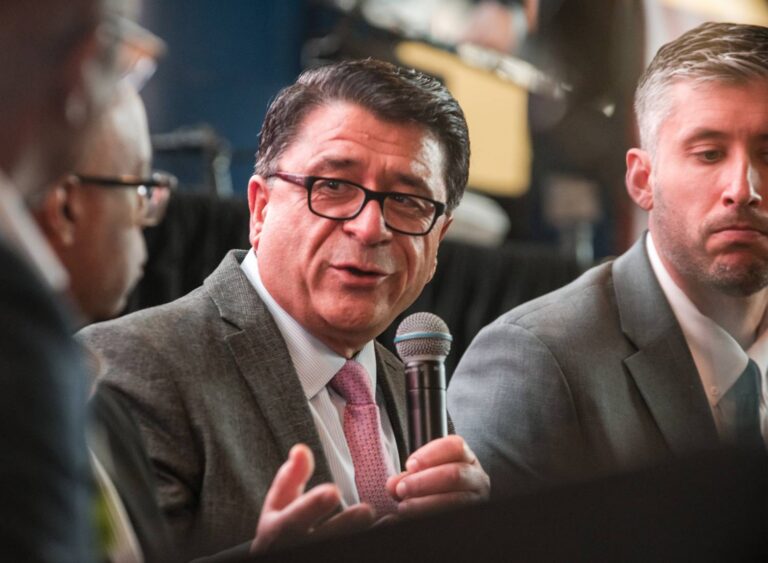







Dennis Wilke, President, Rosedale Technical College
 Dennis Wilke, president of Rosedale Technical College, sat down with Invest: to discuss how partnerships with local employers are shaping program development, and the various ways Rosedale is adapting its offerings to meet evolving workforce needs. “We put a heavy emphasis on trouble shooting, problem-solving, critical thinking, and connecting the dots between different competencies,” Wilke said.
Reflecting on the past year, what key milestones stand out and how do they mirror trends in technical education?
We just completed a record year of new enrollment, with 410 new students in the 2024 through 2025 school year. This trend has continued into this year. We also started our ninth different trade program, carpentry, with 17 new students scheduled to start in August. We are always under construction at Rosedale, whether that be the facility itself or within our practices and procedures. We are in the midst of a $6 million innovation and improvement construction project here on campus. The particular phase that we are in aims to enhance classrooms and create additional shops and workspaces.
What impact have you seen on student opportunities and industry partnerships from the #1 Cochran TechEx Center and related scholarships?
Collaboration is one of the key components of our strategic plan. This partnership with #1 Cochran is the largest, but it’s also one of many corporate collaborations we have. One exciting aspect of this partnership is that they will be funding $100,000 of scholarships annually for students attending Rosedale. Their staff and technical support are helping to do some training with our students, both on our site and theirs, through mentorship programs. They have connections with OEMs within the automotive space and have leveraged their unique position as the No. 1 automotive dealer in Western Pennsylvania to deepen our connection with companies like Ford and Nissan. We have received donations from these connections, some of which include equipment, software, and training.
When it comes to the skilled‑labor shortages in Pittsburgh, how is Rosedale adapting its offerings to meet evolving workforce needs in the region?
Our growth has come from students who traditionally had been on a college preparatory path in high school but who are choosing to pursue a technical career, rather than going off to a four-year school. That is very exciting to us because across all trades, the need for higher level thinking keeps growing. Our trades are becoming more computerized and based on complex pieces of machinery that are electronically controlled. In today’s trade world, you need to be able to think scientifically in your approach. These high-level students are helping us learn how to elevate what we do in the classrooms and labs to better prepare them to be problem-solvers. Employers are expecting newer employees to jump in and be able to get things done. They need to be able to solve problems on their own without being told what to do. We put a heavy emphasis on trouble shooting, problem-solving, critical thinking, and connecting the dots between different competencies.
Have you made changes to the curriculum or added new certifications to align with evolving industry standards and technologies?
We are a different kind of college and run year round, with classes being held 48 weeks out of the year. We are continuously upgrading and evaluating all the things we do, especially when it comes to lab assignments and curriculum details. If we are making any major changes, we go through an exhaustive process with state, federal, and regulatory agencies. At the micro level, we are making adjustments all the time. Many of these refinements come directly from conversations with employers who hire our graduates, surveys with alumni in the field, and one-on-one discussions with industry professionals. This feedback allows us to integrate new technologies and best practices into our teaching quickly and effectively. For example, we added electrical theory into our general education courses because the concepts apply across multiple programs — from automotive and diesel technology to HVAC and carpentry. This cross-disciplinary approach ensures all students gain foundational knowledge that reflects the interconnected realities of modern technical careers.
How are your partnerships with local employers shaping program development? Are new collaborations emerging to ensure students graduate with job-ready skills?
There are at least 100 days out of the year where we have an employer here talking to us or our students. It’s a constant engagement so that whenever something is top of mind, we hear it directly from an employer. We aren’t just forcing conversations to happen in big roundtable meetings, they are just continuous throughout the year. I believe that is the best way to get the pulse on what is happening out in the working world. Our students are allowed to take field trips to visit local employers at their job sites. Employers also love to spend time here on our campus, for a multitude of reasons. It can be an advertising mechanism for them and also allows them to engage in training.
How do you see the school’s physical expansion aligning with the growth of Pittsburgh’s industries, such as energy, advanced manufacturing, and automotive?
Five years ago, we embarked on this multistage and multiphased campus improvement program and through this process we came up with this concept called “industrial chic.” Slowly, we have been transforming our campus into this vibrant and energetic space. Our goal is to elevate the trades. We have been elevating our curriculum, lab spaces, and physical space to enhance the student experience. Our new spaces are purposely designed for flexibility to allow us to quickly adapt our labs to focus on whatever competency is relevant at the moment.
Rosedale has earned “Best Place to Work” recognition for 16 consecutive years. What is behind that and what impact does the designation have?
This year, we have again been named one of the best places to work in Western Pennsylvania and finished first in our category for four of those preceding years. That stems from our overriding philosophy that our best, most productive individuals should be the happiest here. We do not have open admissions; however, we did accept 78% of applicants last year. It is tougher to get into Rosedale Technical College than some of the four-year schools. We do that on purpose. If someone isn’t going to be engaged, isn’t coming here for the right reasons, or simply can’t handle the level of training that we provide, then maybe there is a better place for them to be than here. The same goes for our staff resulting in a cohesive team operating with a sense of shared value and high levels of engagement. Things that are in motion tend to stay in motion. We have that kind of momentum here because people want to be here and enjoy being with others who are just as engaged. That permeates throughout our entire culture.
Being named a Military Friendly School underscores your veteran outreach. How have you expanded services or programs for military‑affiliated students?
We offer a lot of personalized attention. We have a dedicated person in financial aid who helps prospective students go through and navigate the process to receive military benefits for education. She really holds their hand through the entire process and they are very appreciative of her. That theme continues throughout our education experience. We engage with students one on one. The golden rule is to treat people the way you want to be treated, but the platinum rule is to treat people the way they want to be treated. We try to meet students where their needs are and that filters through everything we do. We also support these students through a club called the Tech Vets. We provide them with a free lunch and host speakers so they can meet with one another and get to know other veteran students that they otherwise might not interact with.
Looking ahead, what are your top priorities for program development, employer partnerships, and community engagement over the next 12 months?
We recently upgraded our accreditation to a regional accreditor named the Middle States Commissioner on Higher Education. They tend to work with more traditional colleges and less with trade schools. We are expecting that engagement and partnership to help to continue to elevate everything that we do. We have our eye on one or two other extensions within the skilled trades world to add additional programs, as well recruiting staff to help expand our geographical reach and bring more students in. We have housing available in downtown Pittsburgh for students. We plan on continuing to focus on being inclusive of nontraditional students in the trades. We have raised our percentage of female students five-fold in the past 20 years.