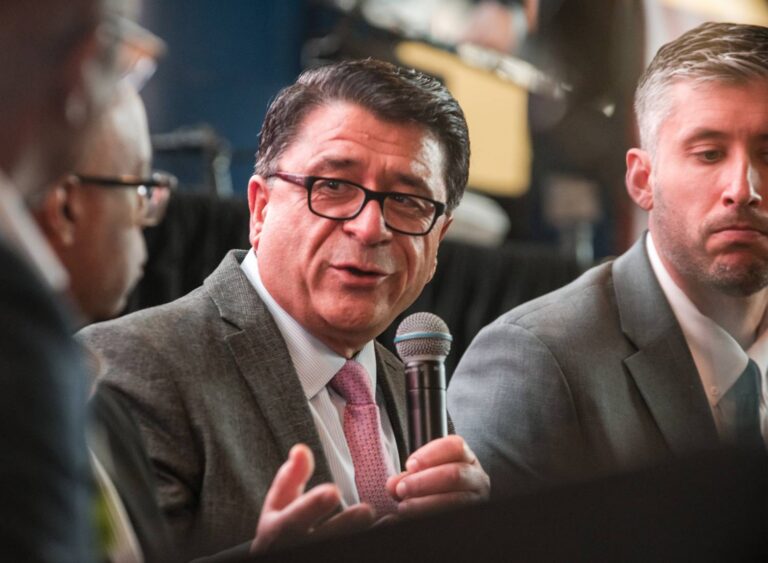







Eric Boughner, Chairman of BNY Pennsylvania and Midwest Regional President of BNY Wealth
 In an interview with Invest:, Eric Boughner, chairman of BNY Pennsylvania and Midwest Regional President of BNY Wealth, shared the importance of the Pittsburgh market to the firm’s global footprint. “While we’re proud of the long-standing relationships we have locally, our Pittsburgh team plays a central role in delivering for clients globally,” said Boughner, while highlighting the bank’s embrace of AI, with nearly 100% employee certification on its internal platform, and a strong commitment to financial literacy and workforce development.
What changes over the past year have impacted BNY in Pittsburgh?
Our company continues to grow, both in overall focus and in the impact we have globally. At BNY, we do three main things: we manage money, we move it around the world, and we keep it safe – and we do this at a tremendous scale. In many cases we are the world’s largest provider. We oversee $55.8 trillion in assets under custody and process over $3 trillion in payments each day. Over 90% of Fortune 100 companies and the top 100 banks globally are our existing clients in some.
What’s most important is that much of this activity is centered in Pittsburgh. This city is one of our two strategic global locations in the United States, and it continues to be a hub for how we serve clients around the world. Our people here support clients in over 100 countries and collaborate daily with colleagues in 37 different nations. So, while we’re proud of the long-standing relationships we have locally, our Pittsburgh team plays a central role in delivering for clients globally.
We’ve also continued transforming how we operate. BNY is a capital markets platform business at its core, and we’re working toward a platform model across everything we do. That means organizing cross functional teams, investing in strong and resilient systems, and using those platforms to serve clients across all markets more efficiently and effectively.
How do local initiatives in education and financial literacy connect to the firm’s broader strategy?
We’ve always believed that strong communities create strong companies, and strong companies, in turn, support and build strong communities. That philosophy is part of our heritage, going back more than 240 years.
Just recently, we announced a renewed focus on improving financial education and access. We’re approaching this in three ways. First, we’re working with large financial institutions — the ones we’ve long supported — to continue helping them succeed. Second, we’re engaging more directly with smaller, grassroots financial organizations, including community banks. We published a Voice of Community Banks study and found that these institutions often need help in areas like cybersecurity, corporate finance, and emerging technologies. We’re launching specialized training programs that share our expertise in those fields.
Lastly, we’re also supporting nonprofits with a $10 million commitment to amplify financial literacy efforts nationwide. It’s all about using our scale and resources to help strengthen the financial system at every level.
What major trends are shaping financial services today, and what challenges come with them?
A lot of what we’re doing begins with our own employees. We want to make sure everyone has access to the right tools and education when it comes to financial knowledge. A couple of years ago, we made nearly every employee at BNY a shareholder by granting them equity in the company. That served two purposes. First, it encourages a sense of ownership and accountability, which aligns with how we want people to think and act. Second, for many employees, it was their first experience owning a security. That opened the door for them to learn more about savings accounts, brokerage accounts, IRAs, and broader financial planning.
On top of that, we just announced a $10 million contribution to U.S.-based nonprofits that focus on financial literacy and well-being. These partners are already doing great work, and our goal is to help them expand their reach and amplify their impact in the communities we serve.
How is BNY addressing workforce development in Pittsburgh?
Pittsburgh is one of our six global strategic locations, and one of the main reasons we chose it is the access to a highly educated, well-trained workforce. We already have a strong presence, a great brand, and a long-standing client base here, but we’re also focused on building for the future.
The city doesn’t always get recognized as a college town, but it really is. We have institutions like Carnegie Mellon, the University of Pittsburgh, Penn State, Chatham, Robert Morris, and many others, all graduating thousands of smart, capable students every year. Many of them are within walking or public transit distance of our offices. We want those students to start and grow their careers here.
Over the past two summers, we’ve welcomed close to 300 interns each year. Many return for full-time roles. In August, we brought on nearly 200 full-time hires from college programs. They’re already bringing energy and ideas, and they’re making an impact.
How is BNY contributing to Pittsburgh’s long-term competitiveness?
Pittsburgh, and southwestern Pennsylvania more broadly, has nearly everything needed to drive long-term economic growth. We have energy resources, innovation coming out of top universities, a strong talent pipeline, and key infrastructure.
Earlier this year, Carnegie Mellon and Senator McCormick’s office hosted an energy and innovation summit that highlighted just how much investment is coming into this region. We have abundant fresh water, a skilled workforce with strong roots in manufacturing and trades, and a growing innovation economy.
When you combine all of that, Pittsburgh is well-positioned to compete — not just regionally, but globally.
What impact has artificial intelligence had on your operations?
AI is one of the biggest changes we’re seeing, and we’re embracing it across the company. Nearly 100% of our employees are now certified to use Eliza, our internal AI platform named after Alexander Hamilton’s wife. We’re already using AI in production. For example, we have digital employees — automated agents that log into systems, have ID numbers, and work under managers — to take on repetitive, time-consuming tasks.
This frees up our people to focus on higher-value work like client service, innovation, and product development. We’ve established an AI hub here in Pittsburgh and are forming partnerships with local universities and organizations to expand our capabilities further. It’s a major part of how we plan to grow — and Pittsburgh is at the center of that effort.
What are BNY’s top priorities for the next two to three years?
Our priorities are straightforward. First, we want to be more for our clients. That means delivering all our capabilities across the entire organization in a cohesive, strategic way. We’ve just launched a new commercial model designed to do exactly that — bringing everything we offer directly to the client in a more streamlined and impactful manner.
Second, we’re focused on how we can run our company better for our clients. We’re using data, analytics, and the same advanced tools that the world’s largest companies are using to operate more effectively. We want to apply that to how we run our own business.
And third, it’s about our people. We’re committed to hiring, growing, and supporting talent. We want to cultivate a culture where people feel empowered to improve how we work and how we serve clients. If we can do all three of those things well — serve clients better, run the business better, and power a great culture — then we’ll be well-positioned for the future.
How does BNY balance its deep legacy with the need for continuous innovation?
To be around for centuries, a company needs two essential qualities. First, resilience. Our clients trust us to deliver on time and in full so they can operate without disruption. That reliability is fundamental to everything we do.
Second, innovation. The way we serve clients today is very different from five years ago, and dramatically different from 200 plus years ago. Business needs evolve, technologies change, and expectations shift. To remain relevant, we must keep finding new ways to improve, to grow, and to lead.
We’re proud of our history, going back to the 1700s, but we’re just as focused on where we’re going. That means continuing to evolve, especially here in Pittsburgh, where we’re building for the future while honoring the legacy that brought us here.