





Face Off: How NFL stadiums drive economic growth and business investment

 January 2026 — America’s NFL franchises are worth billions of dollars, with the average team valuation reaching $7.1 billion in 2025. Teams such as the Houston Texans and Pittsburgh Steelers have recorded valuation increases of more than 20% over the past year alone, delivering substantial economic benefits and business investment to surrounding regions through higher retail spending, hotel bookings, restaurant traffic and ticket revenue.
Join us at the Invest: Pittsburgh 3rd Edition Leadership Summit! This premier event brings together hundreds of Pittsburgh’s business and regional leaders to discuss the challenges and opportunities for businesses and investors. Buy your ticket now!
Yet the multibillion-dollar economy surrounding NFL teams is driven in large part by a secondary force: the stadiums that house them and the business investment they attract. Beyond serving as homes for professional football franchises, these venues function as long-term engines of business investment, urban development, tourism and job creation.
In Pittsburgh, the Steelers’ home venue, Acrisure Stadium, has become a significant driver of regional economic activity. The team has contributed $3.4 billion in economic output in Allegheny County and supported approximately 3,000 permanent jobs over the past four years. Looking ahead, the 2026 NFL Draft is expected to attract up to 800,000 visitors to the stadium, fill hotel rooms and generate more than $200 million in economic impact across multiple industries.
The Texans offer a similar example of how stadium-centered investment translates into regional growth. NRG Stadium hosts concerts, college sports and large-scale events year-round, drawing a steady influx of visitors. That consistent activity boosts spending across hospitality, retail and service sectors, creating a sustained ripple effect throughout the Houston economy.
More broadly, Texas and Pennsylvania rank among the nation’s largest spectator sports markets, extending well beyond the NFL. Both states have maximized returns on professional sports infrastructure, converting rising fan demand into meaningful economic activity. Since the pandemic, attendance and consumer spending tied to spectator sports have increased by roughly 25%, translating into millions of dollars spent in and around stadiums on game days and supporting local businesses, employment and broader business investment.
As 2026 shapes up to be a marquee year for major sporting events, U.S. metro areas such as Pittsburgh and Houston are increasingly positioning NFL franchises as pillars of long-term economic growth, competitiveness, and sustained business investment.
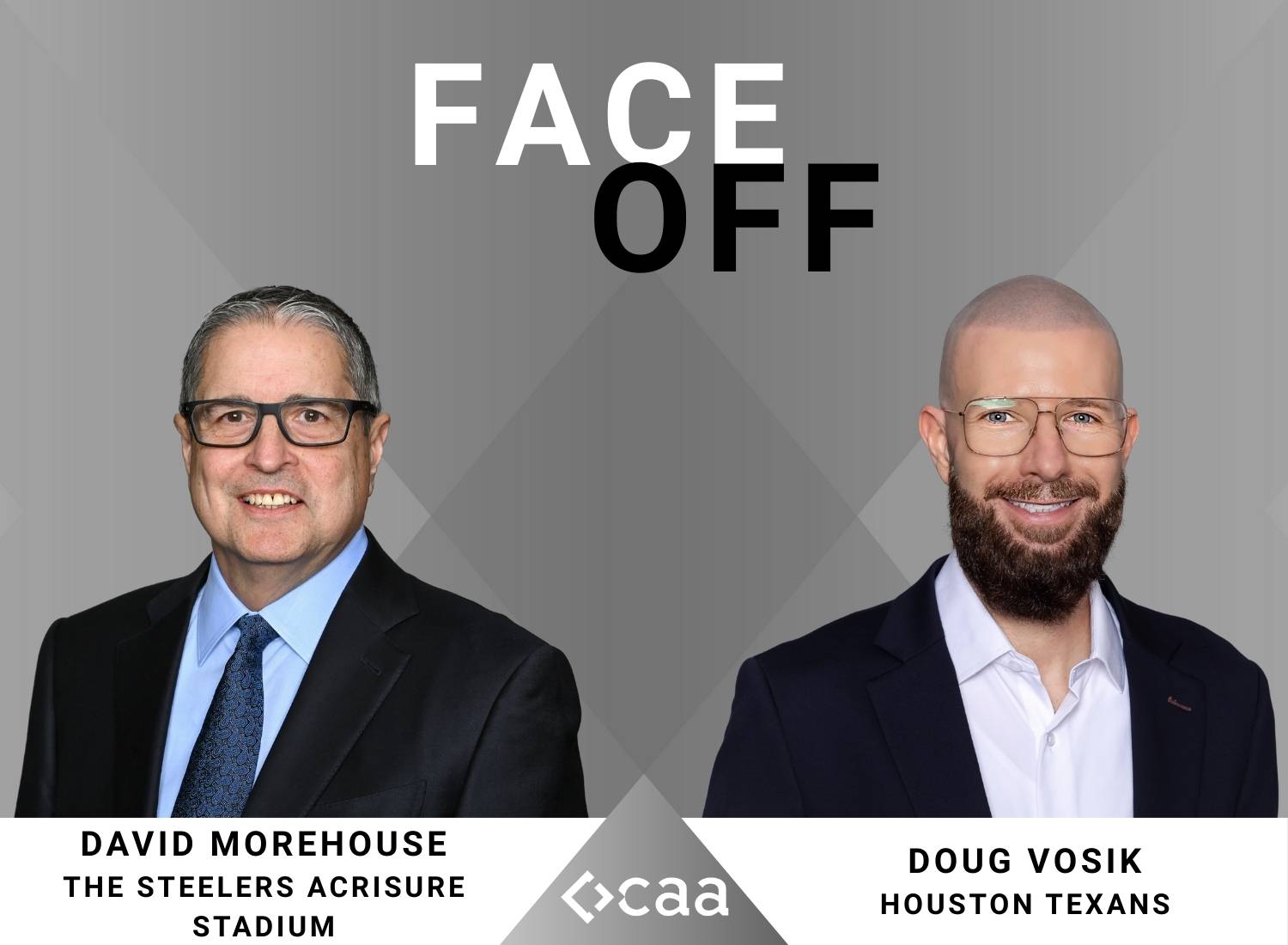
Below, David Morehouse, executive vice president for strategy at the Pittsburgh Steelers and Doug Vosik, senior vice president of marketing, communications and ticketing at the Houston Texans, share how stadium strategy translates into measurable economic impact for their cities.
 David Morehouse, Executive Vice President for Strategy, Pittsburgh Steelers
The Steelers should do what we can to give the city’s economy a boost. One major way we’ve done that is by bringing the 2026 NFL Draft to Pittsburgh. The Draft draws about 50 million television viewers, with many more watching through social media and digital platforms. Cities that have hosted the world-class event have seen between 500,000 and 800,000 visitors in recent years.
Hosting the Draft in Pittsburgh has created a lot of economic activity even before the event itself. Projects that were on the books from the city, the county, and the state are being accelerated to get ready for April 2026. The projected economic impact is $200M+.
Beyond that, it gives us a national and global platform to showcase how Pittsburgh has evolved, especially with the growth in robotics, AI, energy, life sciences and tech broadly. The Steelers and Acrisure Stadium also generate regular economic impact throughout the year. Over a four-year period, the Steelers created $3.4 billion in economic activity in Allegheny County alone. There are 3,000 permanent jobs supported by the Steelers and Acrisure Stadium. And on game weeks, about 58% of fans in the stadium come from more than 75 miles away. That results in a $61 million spending uplift per home game week. That consistency drives major value for the local economy.
 Doug Vosik, Senior Vice President of Marketing, Communications & Ticketing, Houston Texans
We’re seeing synergy between business and football. That’s rare. Right now, everything is growing together, and that makes it a special moment for the franchise. Houston is an outstanding sports market. The community rallies around its teams like few others. We’ve seen a resurgence in fan enthusiasm, not just because of our rebrand and content but because of what’s happening on the field … (So we’ve) also been exploring what the stadium of the future looks like… how we can renovate and modernize the space to better meet fans’ expectations.
We’re also looking at building a new training center to improve the player experience. That would open up more space inside the stadium for fan-focused amenities. These efforts tie into a broader trend in sports: creating entertainment districts around stadiums that include retail, restaurants, and other attractions. These are the kinds of long-term projects we’re planning to ensure we continue to lead in fan and athlete experience.
Want more? Read the Invest: reports.
Subscribe to Our Newsletters