





Gil Prado, Executive Director, Fulton Industrial CID
 In an interview with Focus:, Gil Prado, executive director of the Fulton Industrial Community Improvement District, said that the district is evolving through strategic investments in infrastructure and redevelopment with a special focus on sustainability to ensure long-term and strong industrial growth. “We’re focused on supporting our current industries with infrastructure like truck parking, staging areas, EV charging, enhanced pedestrian safety infrastructure and other facilities that help them stay competitive.”
What have been some of the most significant projects and updates from the district over the past year?
Last year, we continued focusing on our core priorities: public safety, landscaping and beautification, transportation improvements, and, ultimately, economic development. One of our major initiatives was the development of a sustainability framework for the district. We’ve been exploring alternative fuel sources for trucking and other vehicles that operate in the area daily. It’s a fairly comprehensive plan that looks at several interrelated improvements that all lead to operational efficiency, safety and sustainability. Additionally, one of the goals of the Fulton Industrial Sustainability Framework is to be both educational and engaging for the community. The plan contemplates exploring the possibility of an energy generation demonstration, perhaps a solar panel installation, combined with public art and interactive learning elements. The idea is to create a space where people can charge their vehicles, learn about green energy, and see a live demonstration of power generation.
This plan also includes enhancements to the surrounding infrastructure — landscaping, sidewalks, and bus shelters — to improve the overall experience. That’s been our signature project for 2025. Additionally, we developed a clean power generation toolkit for local business owners. If a company wants to install solar panels in a warehouse or convert their forklifts from gas to electric, the toolkit offers a blueprint. We published this toolkit on our website to be widely accessible.
Another major initiative addressed truck parking — an issue not just in the Fulton Industrial District, but metro Atlanta, and across Georgia. The state has a high volume of logistics and trucking activity, yet limited parking and staging areas. We developed a strategy to increase truck parking and staging capacity in the district. “Staging” refers to trucks arriving early and needing a place to wait before making a delivery or pickup. Parking involves longer-term stays, like overnight. We identified key locations and approaches to improve truck staging and parking over the next decade.
What are the primary drivers of job creation and economic growth?
I always like to emphasize that Fulton Industrial is the largest industrial corridor in the eastern United States. It spans about 12 miles and includes over 550 warehouses and industrial buildings, supporting approximately 28,000 industrial jobs.
Our main industries include warehousing and logistics. We have major players like UPS, Penske, Ryder, and Knight Transportation. In warehousing, we support a wide range of needs, from furniture storage to cold storage. For example, Atlanta has a large wholesale furniture market, and much of that inventory is stored in our district. Cold storage is also significant, with companies like United Natural Foods and Americold operating here. So when you buy frozen chicken or vegetables at the store, there’s a good chance it was stored in our district.
Food production is another main industry. The district is home to long-standing companies like Pepsi, Coca-Cola bottling, Frito-Lay, Quaker Oats, and several bakeries. Publix even bakes its pies here. This stability is a defining characteristic — many of these companies have been here for 40 to 50 years, so we don’t see much year-to-year fluctuation.
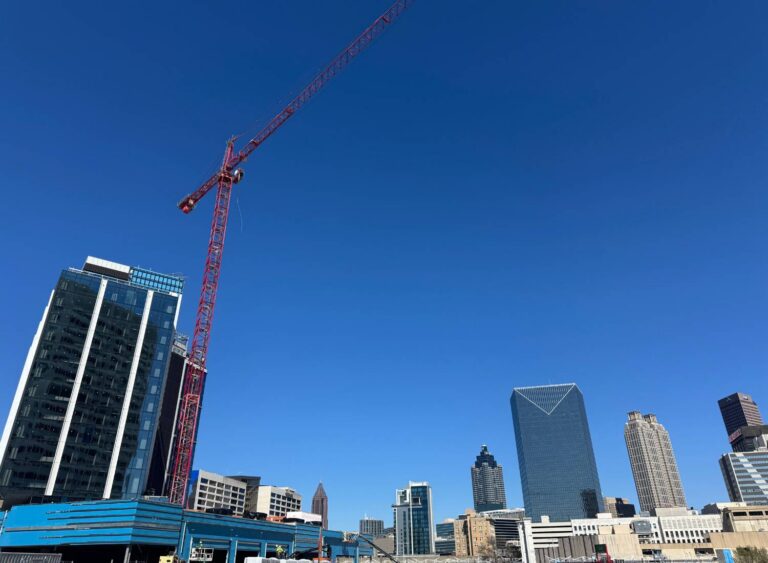
One new development is the construction of a data center, which is a first for us. It’s still under construction, but it indicates that the district is evolving with modern industrial needs while maintaining its established base.
What economic and commercial development trends are currently shaping the district?
While the district is generally stable with long-term business operations, we’ve placed strategic focus on a particular area around the Fulton Industrial Boulevard and I-20 interchange. That area suffered from significant disinvestment and crime over the last couple of decades. Over the past 10 years, we’ve worked to reverse that.
In 2024, Fulton County made significant progress by purchasing and demolishing several problematic hotels that had become hotspots for crime. Two major demolitions included the Executive Inn, an 11-story hotel, and the Super Inn, which had around 50 rooms. These properties were significant sources of criminal activity in an otherwise thriving district.
The county has since issued a request for qualifications from developers to redevelop the properties. In total, five hotels have either been demolished or are scheduled for demolition in 2025, along with an old McDonald’s and a gas station. We’re hopeful that this redevelopment will bring in new energy, industries, and amenities like restaurants, truck parking, EV charging stations, and other services to benefit the district.
What current challenges are facing the district?
Public safety remains a priority for the CID. However, we’ve made incredible progress. Over the last decade, thanks to our public safety strategies, crime in the district has decreased by 81%. This is the lowest crime rate we’ve had in more than 10 years.
We’ve implemented a robust public safety strategy, including 34 license plate readers throughout the district. Nearly every vehicle entering the area is scanned, and if a plate is linked to a wanted vehicle or person, police are automatically alerted. Our partnerships with local and state law enforcement have also been instrumental in making these efforts effective.
Have national economic trends had any noticeable impact on businesses or residents in the district?
Our focus is on making the district as functional and commercially competitive as possible so businesses can continue to thrive today and in the future.
The most obvious example of a direct economic impact was during COVID. With people staying home, e-commerce surged, which led to a spike in truck traffic and grocery product distribution — both of which directly benefited the district. However, in the current climate, changes are less immediately visible and harder to quantify over a short period. The CID will continue to make strategic investments on projects and programs that produce the highest positive impacts for people and businesses in the district.
What ongoing partnerships are shaping your strategic direction?
The district is unique in that it spans three jurisdictions: the city of Atlanta, unincorporated Fulton County, and the city of South Fulton. That presents challenges, especially in areas like public safety, where we work with three different police departments and thousands of stakeholders.
We’ve taken on the role of mediator and coordinator, bringing all parties to the table to ensure cohesive planning and information-sharing. Our approach is to view the district holistically and deploy resources in a way that benefits all three jurisdictions. We think this collaborative, unified strategy is essential for long-term revitalization.
How is the district positioning itself to take advantage of business growth?
From a land-use perspective, we remain committed to maintaining the district’s industrial character. Introducing housing can create conflicts, especially with truck traffic, so we prioritize industrial integrity to support continued business operations.
That said, the area around the I-20 interchange, where several blighted properties were recently demolished, presents an opportunity to rebrand and introduce new amenities. We’re focused on supporting our current industries with infrastructure like truck parking, staging areas, EV charging, and other facilities that help them stay competitive. This area has strong potential to become a hub for supportive businesses and services for continued industrial activity. That’s where we see the greatest opportunity for growth.
How do you envision the Fulton Industrial Community evolving over the next five years?
Our sustainability plan is really about preparing for the next five to 10 years. For example, we’ve looked into hydrogen power for trucks. While the technology isn’t quite ready for widespread adoption, we want the district to be positioned for it when the time comes.
We’re also prioritizing solutions for truck parking and staging, as those needs will only grow. If we don’t meet them, we risk companies relocating to areas with better infrastructure. Our proximity to Atlanta’s 6 million residents is a major advantage, but we’re nearly fully built out. That creates pressure to modernize aging warehouses and optimize land use and improve infrastructure.
So our strength, being in an urban area, is also our biggest challenge. Our goal is to adapt and modernize in ways that preserve our industrial legacy while preparing for a rapidly evolving future.