






Gloria Salinas, Vice President, Frisco Economic Development Corporation
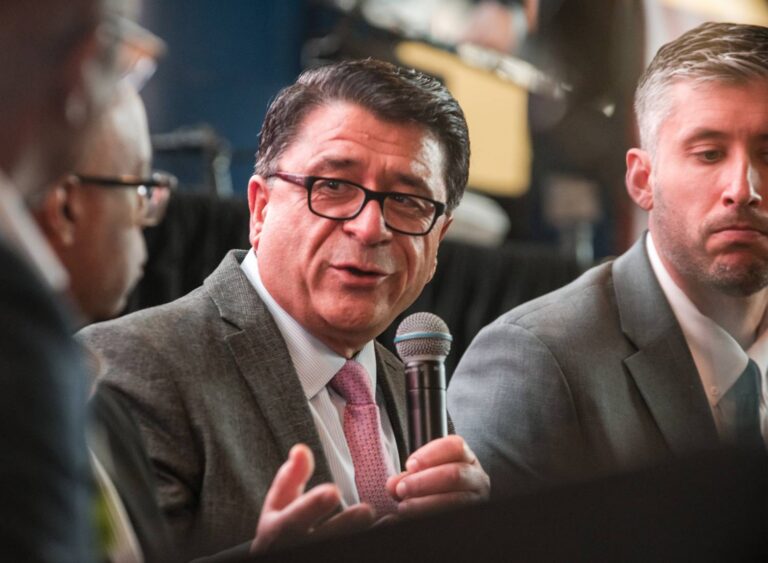
In an interview with Invest:, Gloria Salinas, vice president of the Frisco Economic Development Corporation, discussed the significant real estate and job growth Frisco is experiencing, why it is shifting focus to commercial development, and how it attracts venture capital by creating office environments that encourage collaboration and innovation.
What have been the significant milestones and achievements for the Frisco Economic Development Corporation (EDC) over the last 12 to 18 months?
We have had another phenomenal year of growth. It is a rapid growth era for the city, both in terms of job growth and real estate development. Over the past year, we have seen several major announcements. One of the most significant is Firefly Park, along with the reinvestment and redevelopment of our downtown area, the Frisco Rail District, and Toyota Stadium. These projects represent a balance between reinvesting in existing developments and driving new mixed-use developments in areas that previously did not exist in the city. It has been a busy year, especially in real estate development, with many important projects taking shape.
In addition to that, job growth has been a standout. At the end of last year, we announced Plug and Play opening their tech center in Frisco. This has been a key part of launching our Innovation Strategy, which has attracted resources for startups and investors, creating new job growth at the community level.
We also continue to attract major Fortune 500 companies. TIAA, a Fortune 100 company, officially opened its offices in Frisco this past summer and has started bringing in employees. This is the result of years of effort, and we are now seeing the payoff as companies open headquarters and regional corporate offices, return to work, and choose Frisco as their location.
How is Frisco positioning itself as a leading tech hub?
We launched our Innovation Strategy this past year, and it is focused on four core pillars. The first is attracting venture capital, with the goal of becoming a venture capital hub for the central United States by 2040. The second pillar is attracting smart city technologies for the city of Frisco to pilot. Frisco has been a leader in piloting smart city technologies, such as Google Wing, which we were one of the first cities to launch, and Drive AI autonomous vehicles, which successfully exited to Apple. These initiatives are focused on mobility solutions, connectivity and public safety applications that improve transportation systems for residents, businesses, and visitors.
Frisco is increasingly viewed as an innovation lab where innovators can pilot and test new technologies. Our third pillar focuses on corporate innovation and research and development (R&D) centers. Frisco is now home to eight corporate innovation and R&D hubs, five of which belong to Fortune 500 companies. These hubs are driving innovation by incubating startups, acquiring new technologies, and implementing them to stay competitive in their industries.
Finally, the fourth pillar involves attracting high-growth tech companies, particularly those at Series B or higher rounds of investment. These companies are in expansion mode, creating jobs, raising funding, and are on their way to becoming public companies or having their technology acquired. The Innovation Strategy revolves around these four pillars.
Frisco’s edge in becoming a tech hub comes from its people. We are home to the tech talent corridor of North Texas, supplying skilled workers not only to the region but also to local companies. This talent pool is a big draw for corporations, innovators, and investors. The residents of Frisco themselves are a tech hub, providing intellectual power to solve future challenges, whether that is sustainability or the application of new technologies in urban environments.
We are excited to be leading innovation in economic development, which is not always the focus of economic development corporations. Innovation can be risky, but we are fully committed to driving this strategy and ensuring that our ecosystem and innovation economy thrives.
Given economic challenges, how are you helping businesses to continue to thrive and grow?
The biggest challenge in recent memory has been the COVID-19 pandemic and recovery, as well as the new era of work and the way we work. This continues to be top of mind for businesses and companies as they create return-to-work policies and look at their new investments. Businesses are also considering how to offload some of the real estate and office buildings they hold in markets where workers are not returning. At the same time, they are looking for central locations with significant growth, like Frisco, and thinking about how to model this new era of work in those buildings.
In Frisco, we work closely with our developers and businesses to understand what the future of work looks like. We aim to design and develop the community, as well as our business and office parks, to resemble places where people want to return to work. We are focused on creating environments that encourage collaboration and offer access to rich amenities. This remains a challenge, but developers, businesses, and companies are continuing to innovate within the office market space to meet these needs.
It has been exciting to see how we have attracted corporate innovation centers and hubs post-COVID. People are eager to be around tech talent and access the solutions available. Another major business trend in the past year has been office consolidation for growth. We have seen a lot of corporate consolidation, not so much through mergers and acquisitions, but through realignment of real estate to match talent growth. Frisco and the Dallas-Fort Worth region continue to be a major part of this conversation, and we are excited to be a solution for companies figuring out how to create the future of work and find the next generation of talent and growth.
What are your top priorities and goals for the next two to three years?
We are focused on continuing to launch initiatives in our innovation strategy and our proactive attraction strategy. We are in year three of our five-year strategic plan, which includes launching new pillars in venture capital attraction and working toward becoming a hub for venture capital. We have several policy initiatives rolling out in the coming year that will help drive investor attraction.
We are also continuing to push market attraction from coastal cities, focusing on attracting corporations, headquarters, and back-office projects. Over the next two years, we will continue to drive this business attraction strategy both nationally and internationally. In addition, we will be focusing on business retention and expansion. With the significant growth we have seen, it is important to get our companies deeply rooted in the community. We want to ensure that they are successful in Frisco, able to find the right talent for growth, and connected to our workforce partners.
Once we complete this five-year strategy in 2025, we will immediately launch our next three-year strategic plan continuing to focus on sustainable growth. We will identify future opportunities and solutions that we need to explore.
How do you envision Frisco will develop and change in the coming years?
The city is revisiting its comprehensive master plan for the next 20 years. Frisco is approaching its build-out in terms of residential growth. We have about 230,000 residents now and are still adding 800 to 1,000 residents each month. By 2030, we expect to reach 350,000 residents. The next phase of growth will focus on continued commercial development and redevelopment of our existing developments, which is already starting to take off.
As part of our master plan, we have found that only 16% of raw, developable land remains in Frisco. This means we need to be extremely strategic about the types of projects we pursue. While we are still in a period of rapid new development, we are also beginning to experience redevelopment and reinvestment in the community. It is important for companies to know that we are not only focused on new growth, but also on protecting our assets and reinvesting in the community to sustain long-term growth and development.
This continued investment is crucial for our residents, the talent working here every day, and the companies that choose Frisco for their future. Growth in the region hasn’t slowed, and we remain committed to ongoing development.