



Hospitals turn to culture and wellbeing as workforce shortages deepen
 November 2025 — Hospitals across the U.S. are beginning to treat the wellbeing of healthcare employees not as a benefit, but as a strategic asset. As labor shortages intensify, culture has become a direct response to risk.
Join us at caa’s upcoming leadership summits! These premier events bring together hundreds of public and private sector leaders to discuss the challenges and opportunities for businesses and investors. Find the next summit in a city near you!
“One of the best ways to win in recruitment is to effectively retain our current employees,” said Nick Barcellona, CFO of WVU Health System, in an interview with Invest:.
Turnover rates show why retention is vital. According to the 2025 NSI Nursing Solutions report, hospital turnover was 18.3% and registered nurse (RN) turnover was 16.4% in 2024. Each 1% increase in RN turnover can cost a hospital about $289,000 a year. That pressure is driving systemwide change.
Workforce shift
The U.S. healthcare workforce is sounding an alarm. Surveys show that over half of healthcare workers plan to change jobs by 2026, while 76% report at least one mental health symptom. In an environment where expertise equals care quality, the retention challenge becomes both financial and operational.
Barcellona highlights the issue across the clinical spectrum: “We prioritize culture to energize and retain our employees, but the future pipeline is a daunting challenge that will persist across the clinical enterprise — physicians, where the pipeline is acutely strained, nursing, allied health professionals, and administrators. At the same time, employee benefit costs are also rising across all sectors.”
Culture into action
Some health systems are embedding wellbeing into policy and culture. At Empath Health, colleague support is placed at a premium.
“Beyond professional growth, we prioritize colleague well-being. After hurricanes Helene and Milton, we deployed over $500,000 in assistance to help employees with housing, transportation, and emergency needs,” said Jonathan Fleece, president and CEO of Empath Health, in the latest edition of Invest: Tampa Bay.
Support systems like these are becoming models for resilience. They move wellbeing from benefit packages into real-world responses that protect the workforce when it matters most.
Culture as a retention strategy
A growing number of providers treat culture as infrastructure. At Universal Health Services, retention and growth are intentionally linked.
As Marc Miller, president and CEO of Universal Health Services, told Invest:, “Our employee retention and longevity with UHS are a testament to our commitment to meeting them where they are and fostering their professional growth. Promoting from within has been a cornerstone of our success.”
Their approach mirrors national findings. The 2025 Press Ganey Employee Experience report — based on 2.3 million healthcare workers — shows turnover highest among Gen Z at 38%, followed by millennials at 22%. Generational expectations are shifting. Culture, growth-pathways and flexibility are now central to workforce stability.
Investment focus
Employee support research shows workers who feel culturally supported report over 50% higher engagement and are 34% more likely to stay.
Investors and executives are beginning to evaluate culture as part of operational health. The question is shifting away from “do you have wellbeing programs?” to “are wellbeing and culture embedded in daily operations, scheduling, decision-making and leadership models?”
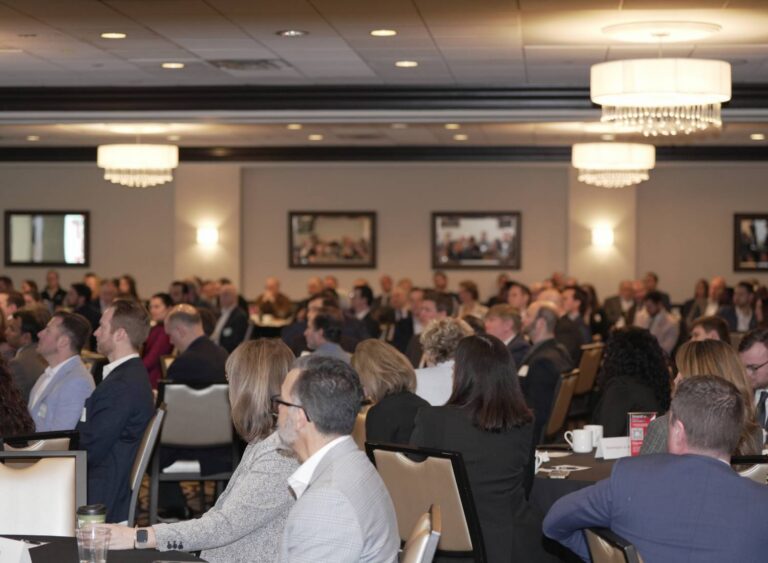
This topic and others were covered on the final panel of Invest: Tampa Bay 6th Edition Leadership Summit, with examples of Tampa Bay’s academic institutions and healthcare systems teaming up to address critical workforce shortages and evolving skill-demands.
Want more? Read Invest: reports.
Subscribe to Our Newsletters