





How Atlanta is closing the gap between school and work
 April 2026 — Atlanta‘s employers and educators are facing the same problem from different directions, as the talent AI demands does not yet exist. Schools are racing to build it while companies are focusing on retraining, but the partnerships they build together will define a successful transition.
Join us at caa’s upcoming leadership summits! These premier events bring together hundreds of public and private sector leaders to discuss the challenges and opportunities for businesses and investors. Find the next summit in a city near you!
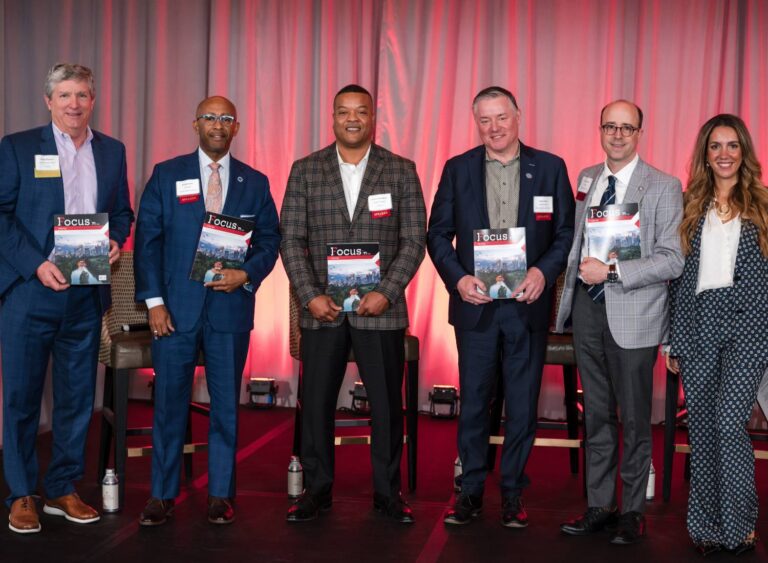
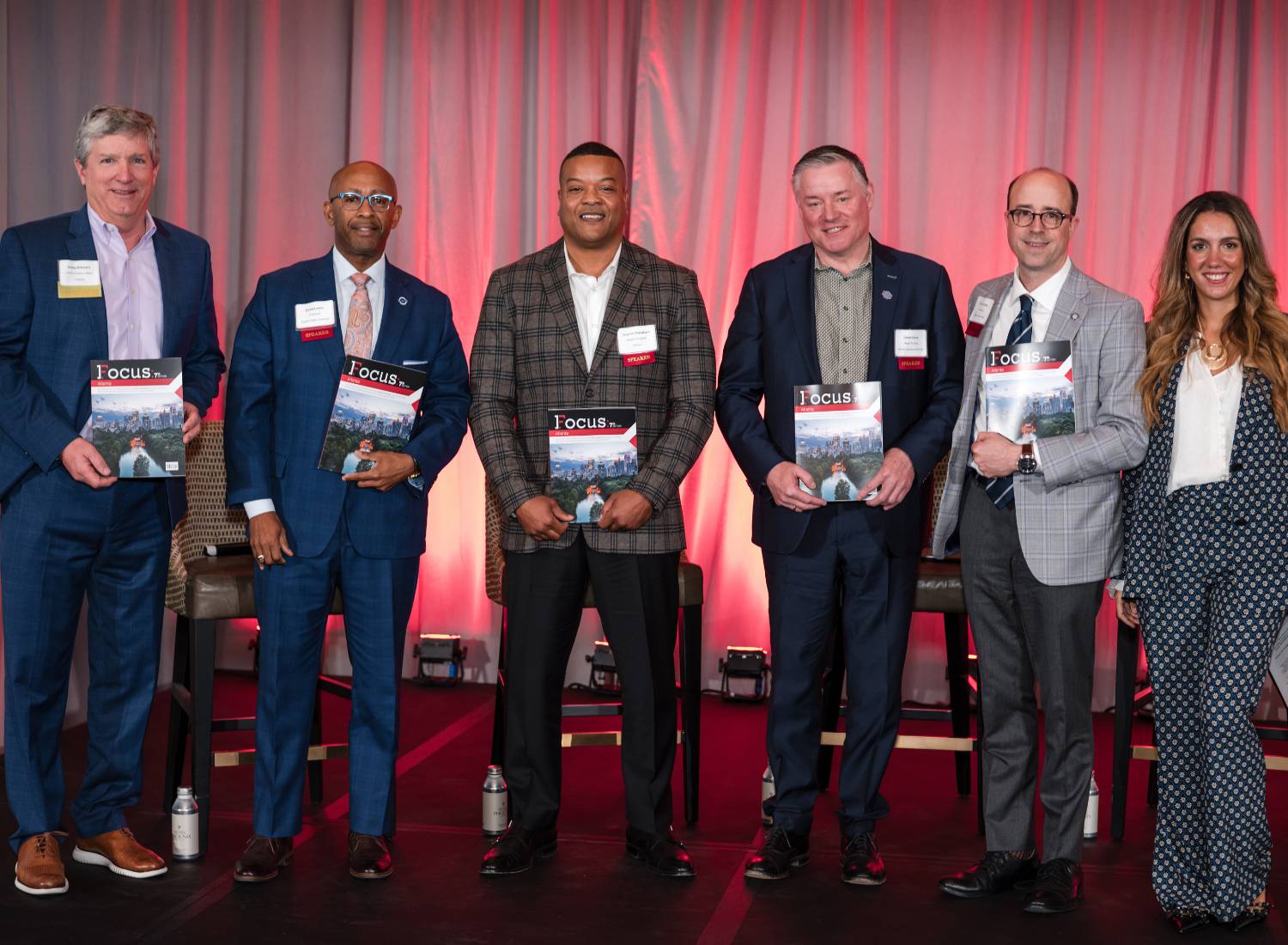
“Talent has always been at the center of what drives things,” said Doug Blizzard, chief solutions officer at Catapult, at the Focus: Atlanta 7th Leadership Summit last month. “But what talent looks like and what it needs is evolving faster than it has in years.”
While technical knowledge remains important, employers are focused on competencies that allow workers to adapt in real time. The World Economic Forum estimates that 39% of the workers’ core skills will change by 2030. Employers are already responding, prioritizing adaptability, analytical thinking, and collaboration over narrowly defined technical competencies.
“There’s a heavier balance now between technical and durable skills,” said Jerome Cheatham, region president at Verizon. “Learning agility, curiosity, and collaboration are becoming just as important in how we evaluate talent.”
For companies operating at scale, those dynamics are already showing up in how roles are defined and how people are trained. Nearly half of all workers will require retraining by 2030, whether through upskilling within their current roles or reskilling entirely into new ones. In North America, employers expect that need to be even higher, with two-thirds of the workforce needing additional training over the same period.
That pressure is also showing up within higher education. Students are arriving with more information at their fingertips than ever, but panelists argued that access to information isn’t the same as readiness to work.
“There is a gap between what businesses truly need and what we in education think we should be providing,” said John Fuchko, president of Dalton State College.
Closing that gap is increasingly tied to experience. Institutions are placing greater emphasis on internships, applied learning, and real-world exposure to ensure students can contribute from the start.
“At Clayton State, you cannot graduate unless you have some form of experiential learning,” said Georj Lewis, president of Clayton State University. “That experience is what helps students be ready on day one.”
New tools, new expectations
AI is accelerating that shift, altering how work itself is structured and the tools people use to do it. “I don’t look at AI as just a tool,” Cheatham said. “It’s a broader shift in how work gets done.”
Across industries, companies are using AI to automate routine tasks and augment how decisions get made, but the rollout is not happening evenly.
Nearly half of U.S. workers reported never using AI at work, according to a Gallup survey from the fourth quarter of 2025 — even as 12% said they used it daily, up from 10% earlier that year, and another 26% reported using it several times a week.
The organizational level shows a similar pattern. Just 38% of respondents said their company had integrated AI in some form, while 41% reported no implementation at all. Use also varies by industry, with higher uptake concentrated in technology, finance, and professional services, and a more limited approach in retail, manufacturing, social services and government.
The uneven adoption is influencing how those abilities are applied, especially as routine tasks become more automated while others continue to rely on human judgment and creativity.
“If we’re just using AI to substitute for our own thinking, we’re not learning anything,” said Kevin Glass, head of school at Atlanta International School. “The goal is to use it to challenge thinking and get to higher-order skills.”
Talent as a shared responsibility
Atlanta’s density of employers, universities, and civic institutions is creating opportunities for collaboration, and the pressure to make good on them.
“We are connected so many times greater now than at any point in human history,” said Glass. “The opportunity is how we use that interconnectedness to build stronger partnerships between businesses, schools, and communities.”
Employers are advising on curriculum and investing earlier in the talent pipeline, with some of that investment reaching students long before they set foot in a college classroom. Verizon’s Innovative Learning Labs embeds STEM and AI education directly in Atlanta communities, reaching students well before they face career decisions.
“To give that to a kid to broaden their horizons at an early age is important,” said Cheatham.
Educators are also pushing for greater accountability on their end. Partnership with employers matters, but so does what happens inside their institutions.
“It’s our responsibility to identify what the problem is, put things in place to shrink that gap, and implement,” Lewis said. “So that when they show up at your place of employment, you’re satisfied with the product you’re getting.”
Interested in reading the Focus: Atlanta report? Sign up today!
For complete conference panel discussions, tune in to our YouTube Channel.