



How Tampa Bay is aligning healthcare and education to tackle workforce challenges
 October 2025 — By 2035, Florida’s senior population is expected to double, surpassing 6 million residents aged 65 and older — yet the state ranks last nationally in its ratio of home health aides to seniors with 16 aides per 1,000 seniors vs. national average of 62. At the same time, more than half of frontline healthcare workers nationwide are considering a job change within the next year, according to a Harris Poll conducted with Strategic Education, citing burnout and limited advancement opportunities.
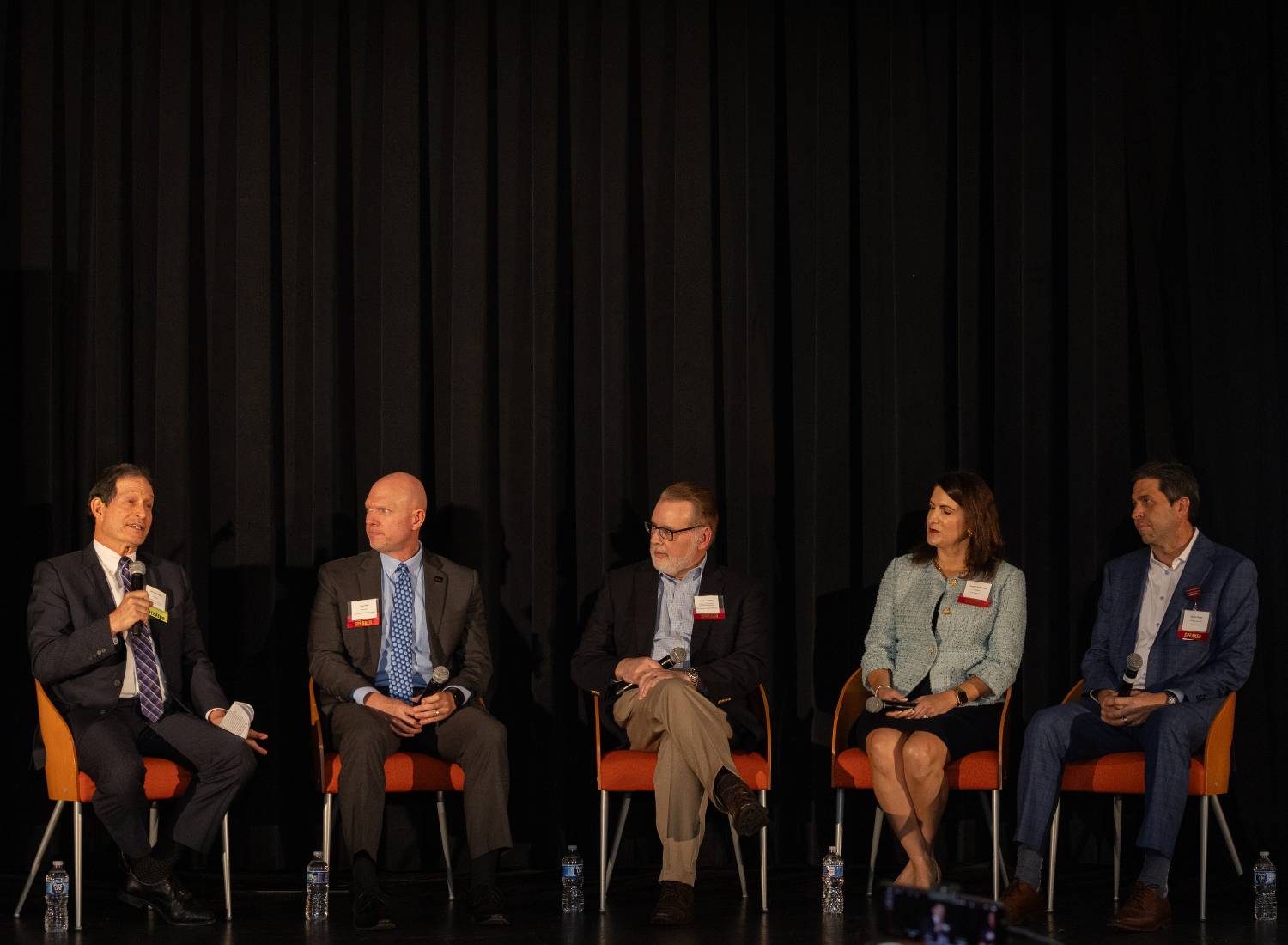
At the Invest: Tampa Bay 6th Edition Leadership Summit, the closing panel — “Team Effort: Why healthcare and higher education are collaborating like never before, and the programs needed to prepare a workforce facing near‑term disruption” — laid out both the stakes and the strategies being developed across the region.
“We’re very fortunate to be in a state that for almost 10 years in a row, our state colleges and university system have been ranked number one in the nation,” said Eric Hall, President of Pasco-Hernando State College. “That affordability means that we can mitigate some of the barriers — students coming out with no debt to little debt — and start to invest in those lifestyles and those dreams.”
But Hall quickly pivoted to the downside of that affordability: low compensation for instructors. “If I need to have a nursing instructor and they have the option of coming and working for $50,000 a year and teaching our next generation of nurses or work in the field itself making $80,000 or more — that’s a competition,” he said. “We have to figure out how to break that cycle.”
Hall later added: “Relationships in the absence of accountability is irresponsible. That’s what an MOU is really about … having that joint ownership in supporting the talent.”
Clifton Gooch, Vice President for Clinical and Translational Research at USF and Chair of Neurology at the Morsani College of Medicine, provided a macro view of the financial and systemic pressure. “Healthcare expenditures now are 20% of GDP as of 2025. That equates to $5.7 trillion a year in the United States for healthcare. A massive, massive amount of money. It’s not sustainable.”
He emphasized that the country’s healthcare infrastructure wasn’t built for today’s demographics. “We have 60 million people currently in America over the age of 65,” he said. “The system was never really originally designed to keep people going 20 years beyond the age of eligibility.”
More than talent retention, Gooch argued the sector must rethink how it produces and deploys healthcare professionals. “We have to think our way out of this problem,” he said, pointing to academic medical centers — tightly integrated medical schools and hospitals — as engines of innovation and cost efficiency. USF’s growing partnership with Tampa General Hospital has already helped attract research funding, tech companies, and medical device firms like Medtronic to the city’s fast-growing medical district.
Angela Falconetti, President of Polk State College, emphasized the localized impact of state colleges. “Our graduates by design are designed to stay in that location,” she said. “Seventy percent of our students stay here in Polk County and are employed in Polk County, and we’re very proud of that.”
Falconetti described plans for a $51 million health sciences center and simulation hospital in Haines City–Davenport, developed with both public and private support. “But it’s not just about the building,” she added. “We’re creating what we’re calling a simulation hospital” to house interdisciplinary learning and real‑world collaboration with healthcare providers. Falconetti pointed out that partners like AdventHealth have already helped update curricula, expand faculty, and grow enrollment.
This mirrors national trends: Becker’s Hospital Review reports simulation‑based education is expanding rapidly in U.S. hospitals and health systems as institutions seek safer, more realistic training. Local recognition followed — Tampa General and USF Health’s CAMLS was named in 2024 among the nation’s top simulation and education programs for immersive tools and scenario‑based training.
David Ottati, President and CEO of AdventHealth West Florida Division, focused on how technology can multiply impact. “We have over 60 AI applications in our systems,” he said. “We’re embedding technology everywhere — but we’re looking at it as an enabler.” He contrasted early resistance to EMRs with newer graduates’ expectations: “One doctor in particular was fairly upset … but then a brand‑new medical graduate asked me: ‘Do you have electronic medical records?’ … ‘Yes — because I’ve only been trained in EMRs. I’ve never used paper.’”
Now rolling out smart room technology across nine states, including rural markets, Ottati framed tech as a force multiplier. “Should a place like Wauchula experience different healthcare than what we have in a big metropolitan area?” he asked.
He added that early workforce development, including outreach to high schoolers, is part of a broader retention strategy. “Our retention is 95% plus when someone’s in a learning pathway,” Ottati said.
For more information, please visit: