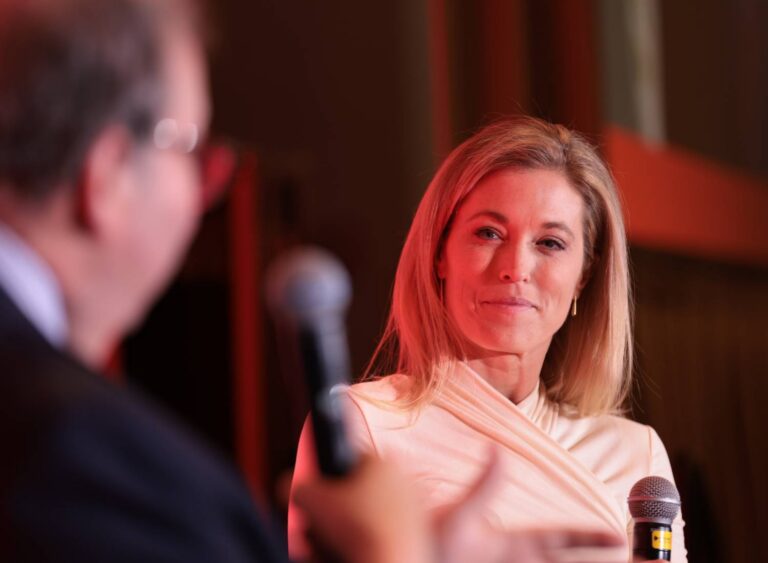







Ingrid Thompson-Sellers, President, Atlanta Metropolitan State College
 In an interview with Focus:, Ingrid Thompson-Sellers, president of Atlanta Metropolitan State College, discussed strategic growth, workforce-aligned programs, and expanding access through innovation and partnerships. “Education matters, it holds power and continues to change lives,” Thompson-Sellers said.
What major changes have taken place at Atlanta Metropolitan State College (AMSC) over the past year, and how are they shaping the institution’s direction?
Our biggest accomplishment has been launching our 2025–2030 strategic plan, Engaging Minds, Advancing Community. When I arrived in 2023, the previous plan was ending, so I formed a task force to engage the community, gather feedback, and assess whether to change direction. The feedback was mixed, but we chose to move forward.
This plan is truly bottom-up. We held numerous conversations and meetings to ensure every stakeholder had a voice. It’s built on four pillars: telling our story; preparing students and adding value to their degrees; strengthening community ties; and recruiting, developing, and rewarding talent. We can have all the buildings in the world, but if we don’t take care of our people, it’s meaningless.
We’re already seeing progress. We expanded our academic offerings to stay relevant, launching new certificate and degree programs, including a phlebotomy certificate that equips students with job-ready skills. Another milestone is our education degree, set to launch in fall 2026. We’ve worked closely with local school systems to prepare for our first class of paraprofessionals, helping address metro Atlanta’s teacher shortage.
To boost student success, we’ve implemented more targeted support strategies for those facing personal or academic challenges. The data show that these efforts are working — our fall-to-fall retention rate increased by 12.5%.
We’ve also deepened partnerships. For the first time, we signed an MOU with Atlanta Technical College (ATC), with whom we share a campus. This agreement creates a smooth transition for ATC students into one of AMSC’s bachelor’s programs, ensuring their time, effort, and credits continue to count.
How is the college strengthening enrollment efforts to reach its goal of 3,000 students by 2030?
When people think about enrollment, they often focus on recruitment. But the reality is that retention plays just as critical a role. Across higher education, we’re all aware of the demographic cliff and population decline, but not enough attention has been paid to the students we already have.
When we analyzed our data, we found that returning students make up more than 60% of our total enrollment. That means the key to sustainable growth lies in ensuring those students persist and succeed. We’re also reaching out to students who stopped out, encouraging them to return and finish their degrees.
Our enrollment plan for the next five years combines recruitment with retention. We’ve partnered with the National Institute for Student Success at Georgia State University to identify institutional bottlenecks and improve systems through data-informed strategies. Following the diagnostic process, we now have a clear playbook that focuses on four core areas for strengthening retention and student progression.
We’re also expanding recruitment to reach underrepresented groups on our campus, including Latina students and adult learners who haven’t completed higher education.
Our headcount has been growing for three years. This fall, we reached 1,704 students, a 3% year-over-year increase. That’s before our education program students arrive in fall 2026. We’re confident in reaching our 2030 goal, and I’m fully committed to leading that effort with my team.
How is the college partnering with community organizations, employers, and other institutions to align programs with workforce needs?
This semester, we launched the Small Business and Entrepreneurial Center as a hub connecting students with community and business leaders. The goal is to facilitate conversations with local entrepreneurs, helping students learn firsthand how to start and manage a small business. Our first seminar series earlier this semester was a success.
We’re also expanding partnerships in education. We recently signed an MOU with the Atlanta Public Schools System to assist paraprofessionals pursuing degrees at AMSC, covering tuition, fees, and books. This program will help support both paraprofessionals who would like to become certified teachers and to expand the region’s teacher pipeline.
Across all partnerships, we stay close to the table, asking industry and education partners what they need and how we can best support them. As an agile institution, we can respond quickly by developing stackable credentials such as certificates, micro-credentials, and degree pathways that build real-world skills.
For example, we’ve partnered with IBM to train faculty on artificial intelligence tools and applications. Students are already deeply engaged with AI, and this ensures our faculty stay ahead of the curve. We’ve extended the partnership opportunity to AMSC students who can earn digital badges, micro-credentials, and micro-internships that can connect them with employment opportunities.
Higher education is changing fast, and we’re proud to be a responsive institution that adapts in the face of new challenges while producing measurable results.
How is technology being used to improve instruction, engagement, and decision-making at the college?
Across the University System of Georgia, we’re implementing Workday, a new enterprise resource planning system designed to improve efficiency and create a more user-friendly experience in HR, payroll, and finance. Standardizing technology helps deliver a consistent experience for students and staff while reducing costs. Each institution retains some autonomy, but we align with system-wide goals to ensure quality and service.
On our campus, we routinely upgrade our technology infrastructure, including network capacity and bandwidth. These essentials are critical, since an unreliable network can disrupt a student’s academic progress. We’ve expanded cloud storage, we use a learning management system with predictive analytics to flag students needing support, and offer continuous training to ensure effective use of these tools.
In the classrooms, technology enhances learning and engagement. We maintain strong cybersecurity protocols to protect data, and we’re focused on responsible AI use. The system has issued clear guidance, and at AMSC, we prioritize faculty training and helping students use AI tools ethically and effectively. While we’re not a research institution, our students are conducting undergraduate research on topics like AI applications.
Our goal is to integrate technology and data in ways that drive student success, support smart decision-making, and strengthen institutional performance.
As Atlanta continues to expand and diversify, how do you see the college contributing to the region’s educational and economic ecosystem?
Our university system is mission-driven, and so is our institution. Our mission is to educate students from all backgrounds, socioeconomic status, and life circumstances. Whether someone is ready for college or doesn’t yet see themselves as college material, we meet them where they are and show them that education is within reach. We remain committed to that mission.
The flexibility lies in how we deliver it. Our students face increasing financial, social, and personal challenges, and we’ve become creative in finding ways and means to support them. One example is the Reset Scholarship, launched in 2024 for students who previously attempted college without success. Often, a low GPA follows them like a bad credit score, disqualifying them from federal financial aid. If these students maintain at least a 2.5 GPA during their first two semesters with us, we connect them with donors who are ready to invest in their potential.
We’re also firmly committed to affordability. For the past seven years, tuition and fees across our system have seen little or no increases. Atlanta Metro remains one of the most affordable options in metro Atlanta, and we intend to keep it that way. Affordability is central to our mission.
To reduce the cost of course materials, we encourage faculty to use vetted open educational resources. Partners have also stepped in to fund book scholarships and transportation assistance. Something as simple as a MARTA card, gas card, or ride-share voucher can determine whether a student makes it to class. These practical, community-driven solutions help our students stay enrolled and succeed.
What inspires your commitment to higher education and its role in transforming lives?
We’re living in challenging times, both nationally and globally. Still, I believe people always have the opportunity to grow and improve. Higher education remains the most effective game changer for individuals, families, and communities. It’s a powerful investment in society’s future.
Debates about the value of higher education continue, but I speak from personal experience. I was a first-generation student, raised by a single parent in a family of six. Without education, I wouldn’t be where I am today. It transformed my life, and I’ve seen it transform the lives of many students at Atlanta Metropolitan State College. By the time they graduate, they are more confident, capable, and ready to serve and to lead.
That transformation is what fuels my passion. Education matters. It holds power and continues to change lives. That’s why I do this work, why I’m thankful to serve at AMSC, because I believe in our mission.