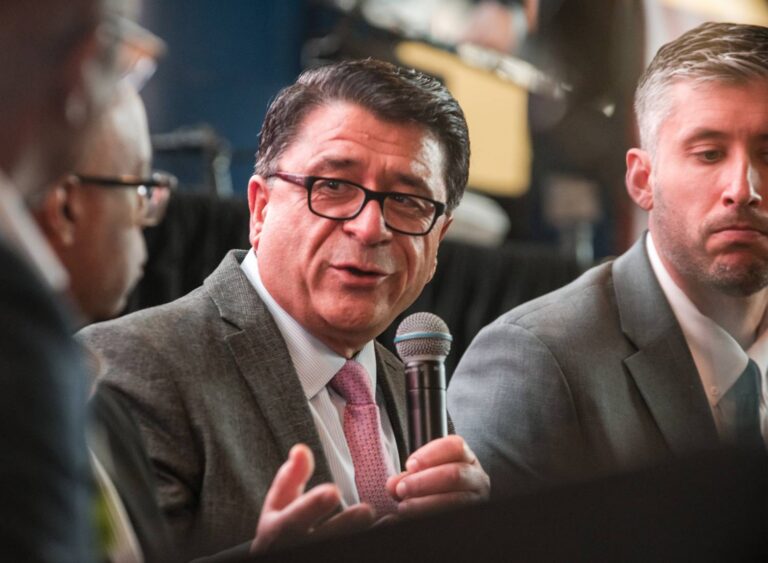







James Fritze, President & CEO, NewTown Macon
 In an interview with Focus:, James Fritze, president and CEO of NewTown Macon, discussed revitalization efforts, downtown momentum, public-private investment, and support for small businesses. “There’s a strong link between downtown living and business growth: for every 15 new residents, we typically see one new business,” he said.
What were the most significant milestones and accomplishments for NewTown Macon over the last year?
NewTown Macon is a not-for-profit 501(c)(3), and we’re privately funded, not part of any government agency. We rely very little on local, state, or federal funding. Our mission is to invest time, resources, and money into local people and businesses to revitalize downtown Macon. As the city’s private revitalization agency, we focus on keeping things local. That’s a core value in our work downtown.
Over the past four or five years, Macon has done a remarkable job of collaborating on projects that require close coordination between the county and the private sector. Mayor Lester Miller and his staff have been strong supporters of our efforts. Under his leadership and through the collective work happening downtown, we’ve made significant progress, and it’s been incredibly rewarding.
How would you describe the momentum in downtown Macon in terms of private and public investment?
Macon is fortunate to have a rich stock of historic buildings downtown. Like many cities, it saw a decline in the 1970s as people moved to the suburbs and malls expanded. NewTown was formed in the late ’90s to reverse that trend, and it took about 15 to 20 years to find the right approach. Our strategy has been to restore these buildings by adding residential lofts on upper floors and commercial or retail spaces at street level.
Over the past six to eight years, we’ve gone from just 25 downtown residents to more than 1,500. We’ve built around 1,000 lofts in just over a decade, and 300 more are underway. In two years, we expect downtown’s population to reach 1,600 to 1,700.
There’s a strong link between downtown living and business growth: for every 15 new residents, we typically see one new business. Macon’s walkability, with its restaurants, venues, bars, shops, and green spaces, makes it a vibrant “city in a park” that continues to grow.
The Urban Development Authority hosts the Macon Action Plan on its website. Now in its third version, the plan outlines detailed strategies we’re pursuing, including expanding and diversifying downtown’s housing. People who live here genuinely enjoy the experience.
What impact does the economic environment have on revitalization efforts in Macon?
We see politics as mostly local, and we’re fortunate to have a strong local government that’s managed a surplus and rolled back property taxes while maintaining fiscal discipline.
At the state level, Gov. Brian Kemp’s administration has also maintained a surplus, implemented income tax rollbacks, and returned funds to taxpayers. That financial strength at both levels is a big advantage.
While the federal government navigates its own path, we believe Macon and Georgia are well-positioned to keep moving forward. Of course, challenges remain, housing construction costs have soared, and higher interest rates have made financing harder. But despite that, we’re in a strong position thanks to our solid foundation at the local and state levels.
How does NewTown Macon support entrepreneurs and small businesses in this process?
As a Community Development Financial Institution, or CDFI, a federal designation under the Treasury Department, we’re able to partner with banks and leverage funds for community impact. This lets us do more than just finance real estate projects. We also support entrepreneurs by offering business planning guidance and running adult learning programs that help people develop sound business plans.
Part of our loan fund is dedicated to helping startups launch. Once someone receives a loan from us, they become part of the NewTown family — we provide coaching, regular check-ins, and hands-on support. It’s a different model from traditional banking. We offer technical assistance to help borrowers succeed.
In Macon and many communities like it, economic growth hinges on small businesses getting off the ground. That’s where we’re seeing the most momentum, and it’s a major focus of NewTown’s mission.
How does the trail system contribute to community development in Macon?
The trail system has been a key part of our work since the early 2000s. We’ve built 13 of the planned 22 miles so far. At NewTown, we handle design and construction, then turn the trail over to the county for maintenance, a true public-private partnership.
Much of the trail runs along public land owned by the county or the Water Authority, and parts even connect to the Ocmulgee Mounds National Historical Park. Access and permitting can slow progress, but our goal remains the same: to connect neighborhoods and encourage outdoor activity. Whether it’s walking, biking, or running, we believe that communities that spend time outside together are stronger communities.
We’ve experienced delays due to a major highway interchange project that overlaps with the trail, but once complete, the trail will be a vital connector for Macon’s neighborhoods and a key element of community building.
What role do events play in your broader strategy?
Events are central to creating a sense of place. In our early years, we organized many events ourselves to draw people downtown. Today, that responsibility is shared across a wide range of organizations.
First Friday is one of our most successful ongoing events. It brings out a great crowd every month. We’ve also worked to activate alleys with lighting and art installations, turning overlooked spaces into destinations.
And the Christmas lights extravaganza has grown from a small local celebration into something with national visibility. The turnout is remarkable. It’s become one of our biggest drivers of tourism and community engagement.
Looking ahead, what are your top priorities over the next couple of years?
We’re moving forward with three major loft projects, which will add about 300 new residential units and bring roughly 450 more people into downtown. We’re also seeing a wave of public-private investment. The renewed SPLOST will fund major developments, and Mercer University is relocating its medical school downtown.
With that growth, we’re shifting some focus toward hotel development. We’ve concentrated on lofts and apartments, but now we’re looking to increase hotel capacity to support Macon’s growing convention and event traffic. There is also a need for more hotel rooms, which is an exciting next step in downtown’s evolution.