




Jennifer Brin Kovach, Director – South Florida, Jim Moran Institute
Jennifer Brin Kovach, South Florida director of the Jim Moran Institute, spoke with Invest: about notable achievements at the institute, the importance of executive education, and how its programs help develop a collaborative business community in South Florida.
What were some of the significant milestones and achievements for the Jim Moran Institute over the last 12 to 18 months?
This year we are celebrating our 30th anniversary of the Jim Moran Institute. We are part of Florida State University and until 2023, we were part of the College of Business. Several years ago, the Jim Moran College of Entrepreneurship was started and in October 2023 we officially transitioned our institute over to the Jim Moran College, which has resulted in great synergies. We also recently announced our funder, the Jim Moran Foundation is building a new headquarters in South Florida and providing an office for South Florida Jim Moran Institute. We’re excited about serving more small-business leaders and building more capacity to collaborate with them in our new space. In 2023, we celebrated the 10-year anniversary of the launch of our flagship program, the Small Business Executive Program, which became the inspiration for us to offer many more small business executive programs across the state. We also created a nonprofit executive program based on the same model. We will hit 800 graduates this semester (in South Florida). This is an impressive number for us because we only do the program for about 18 or 20 participants at a time, twice a year for our Small Business Executive Program, and once a year for our nonprofit.
What emerging industries or sectors in South Florida do you see driving economic growth and creating new opportunities for small-business owners?
South Florida has built and grown so much that we’re not dependent on tourism as much as we once were. There’s so much opportunity all year long, with a diverse group of businesses in the cities and communities. When we select our program participants, we focus on putting together a diverse array of industries and different types of businesses in each seat, from staffing agencies and investment banks to aviation companies, auto sales, and Spanish-speaking immersion education programs. We’ve seen an increased interest and popularity with high-growth tech businesses. A lot of the small-business owners we work with are exploring how to use new technology effectively in their business.
Given the recent trends, how do you see the demand for executive education evolving in the South Florida market?
The great thing I’ve seen over the years is that more and more organizations and communities are focusing on small businesses and nonprofit and CEO leadership. The industry groups that would get together with, our peers in the community have surely grown and grown. I am the chair of a group called the Alliance of Entrepreneur Resource Organizations. We started as a group of 10 and now we’re up to 20 members. Whether that’s a university, a local city economic development organization, or a chamber of commerce, there is a great deal of support. These organizations help create a positive ecosystem for small businesses.
What are some of the most in demand skills business leaders are looking for?
We have seen the most interest in personnel management, especially in recruiting and keeping great talent. Businesses want to create a culture that is welcoming and encourages employees to stay and grow within the business. We have peer-to-peer meetings with small groups of CEOs once a month and often discuss talent acquisition. These gatherings provide a platform for sharing effective interview questions and determining whether candidates will be a good cultural fit for their teams.
How does technology and digital transformation affect small businesses and nonprofits in South Florida?
A decade ago, technology topics typically focused on things like using QuickBooks, customer relationship management systems, and social media. Over the last couple of years, AI has been the biggest topic of discussion, and figuring out the best policies and practices in that regard. Most business leaders have learned effective ways of integrating AI into their organizations. We work together to develop effective strategies.
What impact does the current economic climate have on small businesses and nonprofits, and how does the institute help business leaders navigate through that?
What I value about our peer groups and discussions with business leaders is the willingness to tackle a new issue as it comes up, and brainstorming ways to navigate new challenges that arise. Due to rising operational costs, mergers and acquisitions, and competition from larger companies, many of our small businesses have had to reluctantly raise prices that hadn’t changed in many years. Business leaders support each other in navigating these challenges, and finding ways to compete and differentiate themselves in the market.
How do you collaborate with other organizations to strengthen the work that you do?
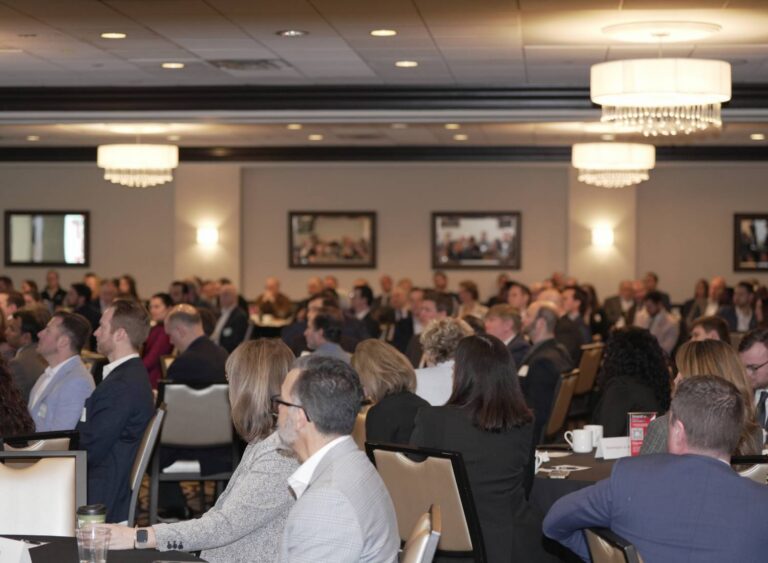
We started an organization called the Alliance of Entrepreneur Resource Organizations as an industry group. We meet once a month. Instead of members viewing each other as competition, we think about how we can collaborate and work together to help the community as a whole. We collaborate with our partners by including them as speakers in our program. We also put on a group expo every year. We will be hosting the business expo on February 20th. It’s a free event and gives business leaders a chance to meet and learn about the resources available to them. We put the word out whenever another organization has an event. We also look forward to the annual Florida International Trade and Cultural Expo, where there are 250 tables and business leaders from all over the world at the convention center. Connecting with our business community is a great value to small-business leaders. Nonprofit leaders also collaborate and share a network of resources. Nonprofit leaders are generally familiar with one another, and many are also founders and entrepreneurs themselves, driven by a mission to address specific needs and solve community issues.
What are your top priorities and goals for the Jim Moran Institute in South Florida over the next couple of years?
We want to continue to find ways to support our graduates, and to spread the word about our programs. We’re always making tweaks and improvements to our programs using feedback from our participants. We do several workshops throughout the year, and we have an annual conference that we are hoping to bring back to South Florida in 2026. We’re also focused on supporting our up-and-coming business leaders and helping with leadership transitions as current business leaders prepare for retirement or career advancements.
Are there any additional topics you’d like to discuss?
If a small-business leader is reading this: while our programs are free, the time participants invest in our program is the true value, whether it’s our program or one of our peers in the community. We understand the day-to-day, hour-to-hour demands business leaders face, and the difficulties of planning ahead and finding a strategic future for your organization. That’s what our programs, education workshops, and seminars are here for. Most business leaders find they create better efficiencies, better management, and less stress after participating in our programs, and can strategically plan the future of their organization.
About the Jim Moran Institute for Global Entrepreneurship
The Jim Moran Institute for Global Entrepreneurship cultivates, trains and inspires entrepreneurial leaders through world-class executive education, applied training, public recognition, and leading-edge research.
Jim Moran was an automotive pioneer and an entrepreneur at heart, who at the age of 7, sold soda pop at sandlot baseball games in Chicago. With a career that spanned more than six decades, he built an amazing chronicle of achievements in the automobile industry.
His vision for the Jim Moran Institute was to provide opportunities that would help others become more successful business owners. A 1995 contribution from Jim and Jan Moran and JM Family Enterprises established the Jim Moran Institute for Global Entrepreneurship at the Florida State University College of Business. Since 2011, further enhancements to the Jim Moran Institute and its outreach have been made possible by Jan Moran and The Jim Moran Foundation. In 2023 the Jim Moran Institute transitioned to the Jim Moran College of Entrepreneurship.
For more information, visit jimmoraninstitute.fsu.edu.
About the South Florida Operations
The Jim Moran Institute’s South Florida office serves entrepreneurs, business owners, and nonprofit leaders in the South Florida community through multiple programs designed to take advantage of local resources. Providing executive education and leveraging the resources of the Jim Moran Institute, the South Florida team helps its clients’ businesses – and the region’s economy – grow and prosper.
With an office based in Fort Lauderdale, South Florida services are for for-profit and nonprofit businesses and are geared toward CEOs, entrepreneurs, business owners, and presidents whose companies have been established for at least three years and have three or more employees. Services are provided for little to no cost.