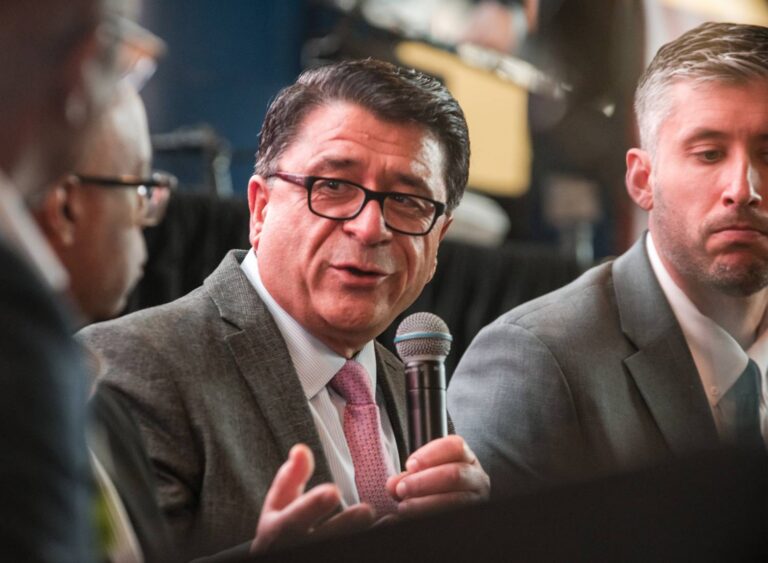






Jim Gilvin, Mayor, City of Alpharetta
 In an interview with Focus:, Jim Gilvin, mayor of Alpharetta, discussed the city’s growth as a thriving business hub while maintaining its appeal as a family-friendly community. “Everything we do is focused on making Alpharetta a place that businesses and people want to be,” Gilvin said.
What changes over the past year have most impacted the city of Alpharetta, and in what ways?
The biggest impact has been Alpharetta’s growth into a mature office and workforce location, while remaining a great place to raise a family. We have 20 million square feet of Class A and B office space that has been a foundation of economic development for three or four decades. The design of office buildings and parks has changed, and the city of Alpharetta has worked with the private sector to envision the next phase of office developments, focusing on redevelopments.
For example, Brookside, a 155-acre office park zoned in 1997, includes multiple office buildings and a 30-acre municipal park with two miles of trails, which we’re expanding. In 2022, the city developed a plan for the Brookside corridor to retrofit suburban office parks for a walkable, connected environment. The Providence Group removed a 105,000-square-foot Class B office building and is redeveloping it for 160 for-sale townhomes.
How are you maintaining Alpharetta’s reputation as both a top place to raise a family and a strong hub for business?
Everything we do is focused on making Alpharetta a place that businesses and people want to be. When we see that people are seeking office spaces with amenities like trails that are connected by walking instead of driving, we focus on that desire from the development community and from the residents.
What transportation and other infrastructure projects are in the pipeline?
Locally, we’re spending a tremendous amount of time expanding trail networks, including connecting the Alpha Loop to North Point and the Big Creek Greenway.
For over 15 years, as Alpharetta grew, traffic increased, so we’ve invested hundreds of millions of dollars in efficient transportation networks. We’ve tried to create less congestion and increase capacity along major corridors by spending $90 million in local money on neighborhood thoroughfares and collector streets. We’ve worked with the Georgia Department of Transportation (GDOT) as Georgia 400 in North Fulton, a key asset for Alpharetta’s development over four decades, needs infrastructure updates. GDOT is working on a $4.5 billion expansion of the Georgia 400 corridor, improving access to Atlanta or the airport, incorporating a bus rapid transit component to reduce congestion, improve efficiency, and create a better environment for everyone.
How do you collaborate with the private sector, local institutions, or regional governments to advance city goals?
Our partners are pretty extensive in North Fulton. We’ve worked very closely with the Greater North Fulton Chamber of Commerce for a long time, and that’s been a great partner in the Alpharetta area and region.
The six cities in North Fulton and their major employers collaborated to launch the North Fulton Economic, and we’re really excited about that. It would be a regional economic development initiative and team that would include all of the cities in North Fulton, as well as Fulton County and major employers, investors, and stakeholders. That initiative kicked off in June 2025 with the hiring of the executive director to lead the new organization.
What are the top public safety challenges the city is currently addressing?
One of the things we’ve been working on, as all cities have faced challenges, is attracting and retaining police officers and firefighters. Twenty years ago, Alpharetta would have 100 applicants for a police officer or firefighter role; nowadays, we might get a handful, and not always qualified candidates. We take good care of our officers and firefighters, providing what they need to succeed. We leverage technology, using flock cameras to identify threats or incidents involving people entering our city with nefarious intent. We’ve created a community supportive of public safety, keeping this a safe place, and will continue doing so by working closely with our school systems.
How are you leveraging technology, digital infrastructure, and smart city technology to improve services and resident experience?
We would use any technology that is going to be available to us and cost-efficient to help us do a better job. We’re doing different things with our lighting systems in the city and working with organizations that help improve response times for emergency vehicles.
For example, we work with a local company that has been developing a technology that automatically changes traffic light signals for emergency vehicles. This allows traffic to be safe, and emergency vehicles can get through an intersection very quickly and safely for everybody. It’s actually been a huge success expanding around the North American region.
In your view, what sets Alpharetta apart from other suburban cities nationally, and how do you ensure that distinction continues as the region grows?
Alpharetta has a unique blend. Many great cities, like San Jose, are technology hubs but may not offer the highest quality of life. We’ve been intentional in creating an environment that balances being a great place to build a business and raise a family, to live and be part of the community. This has been our clear direction, and we’ve been successful, as shown by recent accolades. Southern Living ranked Alpharetta the No. 9 city in its 2024 list of the South’s best cities on the rise. Alpharetta is the No. 10 city on Market Beat’s 2024 list of America’s Top 100 hidden gem cities for startups. Niche Magazine ranked us No. 16 in the 2024 best suburbs to live in in America.
Looking ahead, what are your top priorities for the city through the remainder of your term?
We plan to continue doing what has made us successful, while adding amenities like trail networks and improving infrastructure, the basics a city needs to be welcoming and attractive to businesses and residents. One of our main focuses is the redevelopment of the North Point District, a 560-acre area we are especially excited about. It’s our top redevelopment priority, though there are other opportunities in the works.
One of those opportunities through a private developer, Alpharetta Sports & Entertainment Group, seeks to transform North Point Mall into a dynamic entertainment destination potentially capable of attracting a National Hockey League franchise. We’d love to see that come to fruition.
I’d also like to mention something my staff recently pointed out — we don’t always tout our successes as much as we should. One accomplishment we’re excited about, and that many people aren’t even aware of, is that the city of Alpharetta has been designated a BioReady Gold community by Georgia Bio, the state’s leading life sciences membership organization. This designation means Alpharetta is open for business in biotechnology. We have many spaces well suited for redevelopment in this sector, and we’d be excited to host anyone with a business in these areas of interest.