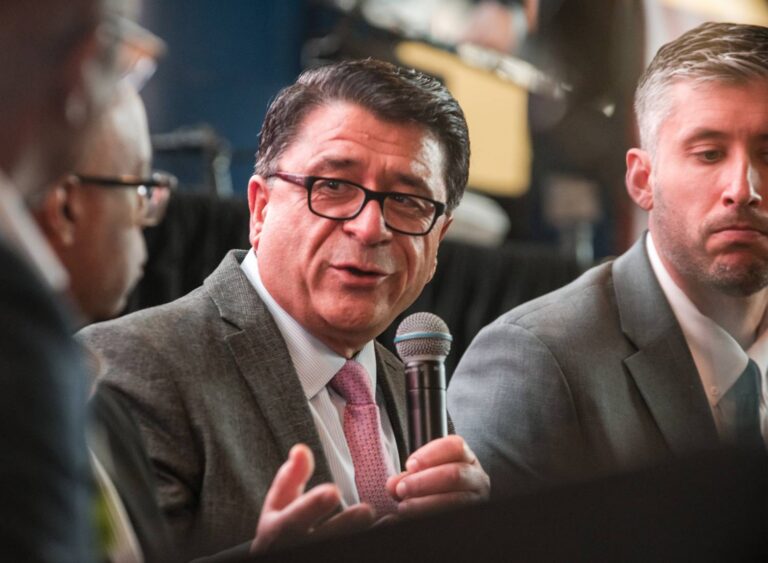







Karyn Wallace, President & CEO, WVU Medicine Uniontown Hospital
 Healthcare remains a pillar of every great community. Despite its challenges, the industry continues to reinvent itself in the post-pandemic world while supporting the communities it serves. In an interview with Invest:, Karyn Wallace, president and CEO of WVU Medicine Uniontown Hospital, highlights the current state of the healthcare sector in the region, the expansion of specialty services, and impact of technology in the industry.
What is the current outlook for the healthcare sector across Southwestern Pennsylvania?
Uniontown Hospital is one of 25 hospitals in our health system and the only one in Pennsylvania. We have a very unique perspective as it relates to WVU Medicine and WVU Health System. Among our current strategic priorities are the expansion of our specialty services, technology advancements, and quality initiatives. We have made great strides in that regard over the past few years. Our goal is to continue this work and move in the right direction. We enhance our specialties with the recruitment of talented physicians that are able to bring new technologies and services to the area. Our greatest focus is to increase our surgical footprint and volume with a focus on technology. We recently started robotic surgeries, which are a significant advancement for our operations. Uniontown Hospital can take care of almost any patient, meaning there are minimal advanced conditions where patients would need to go elsewhere to get the care they need. However, our goal is to be able to assist them here. As such, we opened our labor and delivery unit this January. My role is to make sure that we continue to grow that service and offer great medical services to our community. We want our patients to stay and receive medical services and treatment in their home community. This is the greatest part of our mission. The strategy behind this boils down to the excellent surgeons and physicians that have expertise and specialization.
How is the hospital evaluating its expansion of specialty medical services?
We are in a great geographical position in Uniontown, where we are about 25 to 35 minutes from our hub at Ruby Memorial Hospital in Morgantown. We care for patients in our community so Ruby can focus on more advanced cases, while still giving our patients access to specialized services not offered in Uniontown, such as stroke intervention. Our stroke program allows Morgantown physicians to work with our team to decide if a patient needs advanced care or can remain in Uniontown. If we keep the patient, we can leverage support from stroke physicians in Morgantown. We have access to other factors that help us reduce costs, such as our internal procurement team. We buy imaging and other equipment strategically to keep costs low — an important part of managing the hospital. As a leadership team, our hospitals work collaboratively by figuring out how to help each other. As a health system, our goal is to make sure that the right patient is at the right facility. That means having solid systems that enable us to transfer patients and work together.
How do you go about recruiting and attracting top healthcare talent in today’s landscape?
We are keen on developing our own training programs where we have processes for training nurses, medical technologists, therapists, and those related skill sets. We aim to provide direct training or support their access to education elsewhere. We can also offer training and experiences in our hospital, and then we are able to sign them up and keep them as part of our team. Training our own people and making sure that we are investing in the education of nurses and other key clinical positions is part of what makes the hospital run every day. We have relied on agency staffing, especially since the pandemic, and still do to some degree. That support allows us to keep our services up and running. However, our goal is to train and keep them on as employees. We want to make sure our people are set up for success, so our hospital is a place where people want to stay.
How is the hospital leveraging technology solutions?
Telehealth is a great example. We have grown that platform across WVU Medicine as a whole. We can see patients from different parts of our region and provide services remotely to take care of patients. This is helpful as we leverage expertise from our nearby hospitals when we need additional support. Technology fosters better communication between providers and patients. Our MyChart platform allows patients to view results, communicate with providers, and access care more easily. This really helps to expedite processes. Online scheduling is another convenient feature through the platform. We have been keen on advancing those types of developments.
What investments or partnerships have been directed at addressing mental and behavioral health?
We recently partnered with Chestnut Ridge Counseling where the primary care practices here are incorporating those services into their clinics. When patients come in for primary care services, counseling services or therapy are available resources to them. We are embedding some behavioral health support services into our general medicine clinic as well.
As a system, we are looking at establishing a bed board that monitors behavioral health bed availability. We have dedicated team members who are experienced in behavioral health that are able to connect with patients when there may not be a psychiatrist on staff. The bed board helps us check availability and see where they best fit based on needs and facility offerings.
What are your priorities moving forward?
We plan to continue to focus on our quality metrics and exceed them. We want to continue to make the hospital a place where people want to work. Physician recruitment is a key goal which is tied to expanding not only our services but our footprint as well. As we expand services, we want to grow and help more patients across the region. Expanding ambulatory settings and diagnostic services are key parts of our goals and strategy.