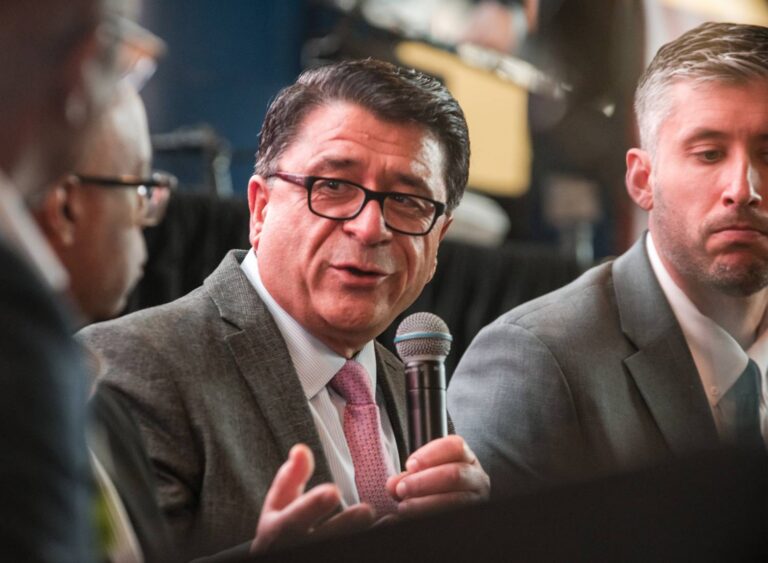







Keith Poettker, Chairman & CEO, Poettker Construction
In an interview with Invest:, Keith Poettker, chairman and CEO of Poettker Construction, discussed the company’s milestones, including numerous awards for safety and leadership, its strategic growth plans, and the importance of sustainable practices and workforce development in navigating industry challenges.
What were some of the key milestones and achievements for your company over the last year?
We’ve been growing in both the Midwest and the Southeast, earning numerous awards for growth and leadership. The awards closest to our heart are our safety and employee engagement awards. We received a safety award from the Carolinas AGC and the national ABC. These accolades reflect our employees’ dedication to making safe decisions and the effectiveness of our training and oversight. Safety is a top priority for us, ensuring we look after each other on our job sites. Additionally, we’ve experienced significant growth, forming new relationships and strengthening existing ones. Despite challenges, we’ve built closer partnerships with like-minded individuals who understand our business and culture.
How do you perceive the construction landscape, and what strategies do you have in place to navigate through the challenges?
The construction landscape is challenging, with a lack of anticipated interest rate reductions tightening underwriting restrictions. This uncertainty has caused many developers to pause their projects. Despite this, our diverse market sectors and large geographic footprint have somewhat protected our balance sheet and backlog. For us, 2024 will likely be a flat year in terms of revenue, but we foresee significant growth in the latter half of 2025. We believe this challenging period will be short-lived, and there is a lot of positivity on the horizon. Meanwhile, everyone is taking a conservative approach to development to protect their balance sheets.
How does your company plan to leverage its new Southeast corporate headquarters to support and accelerate growth?
We are planning a Southeast headquarters and hope to break ground later this year. We’re currently in the design, zoning, and permitting phases with the city and county. This facility will consolidate our capacity, including Poettker Construction Company, Poettker Leasing and Supply, and Poettker Industrial Services. These businesses support each other operationally, giving us more flexibility in how we conduct business. This new headquarters will also strengthen our relationships throughout our supply chain. We acquired 20 acres in Rock Hill last year and aim to be operating out of the new facility by late 1Q26. By this time next year, we hope the facility will be under construction, with operations beginning in 2026.
How do you incorporate sustainable practices in your construction processes?
Our headquarters in Illinois features a solar farm for power production and an HVAC system that uses geothermal heating and cooling. This system includes a geothermal pool loop in our lake and a vertical loop in front of the building. We also implement a waste management plan across all projects, focusing on recycling as much as possible. Many of our team members are LEED-certified, which is a sustainability certification for construction projects. Additionally, during preconstruction, we educate clients on sustainability measures, such as window tinting, glazing, advanced HVAC systems, and electrical power generation, advising on cost-effective options. Poettker Industrial Services, our power infrastructure company, also undertakes numerous clean, renewable energy projects like solar farms and electrical vehicle charging stations.
You’ve been recognized for your safety standards. How do you ensure quality and safety in your projects?
Poettker prioritizes safety and quality excellence throughout the company. Our company is divided into preconstruction, operations, risk management, and financial management divisions. In preconstruction, we have consulting services, marketing, business development, and estimating, all working together. Operations include field operations, project management, and project engineers. The financial management division handles accounting and human resources. Risk management comprises quality engineers, safety engineers, and scheduling engineers, responsible for training and oversight.
The risk management division reports directly to a vice president of risk management, and ultimately to me. We empower our people through training and resources, ensuring everyone is responsible for safety. Our learning management system, Poettker Elevate, provides certifications on various topics. We use data analytics for safety and quality, focusing on lessons learned and “good catches,” where potential safety incidents are identified and prevented. Awards are given for these efforts, fostering a culture of vigilance.
On the quality side, we track good catches and lessons learned to improve construction details. Scheduling training helps us phase and sequence projects efficiently. Overall, having many eyes on a job site ensures everyone looks out for each other, enhancing both safety and quality.
How is workforce development evolving and what are the associated challenges and opportunities in your industry?
Workforce development is a significant concern in our industry, as well as in manufacturing and healthcare. Ensuring we have personnel who can work safely and efficiently while delivering quality products is an ongoing challenge. However, there are many opportunities to address this issue. We are partnering with community colleges, associations, and construction management schools to develop a skilled workforce.
For instance, UNC Charlotte has an excellent construction management program, and York Technical College in Rock Hill offers a strong trades workforce development program. We are working closely with these institutions. Additionally, the Carolinas AGC and ABC of the Carolinas have robust workforce development programs to engage the younger generation in trades.
At the state level, there is a need for more focus and funding for trades education. Reintroducing shop classes in high schools and funding schools to support trades programs would be beneficial. Decades ago, these programs were removed from high schools, and re-engaging in this area is crucial. We believe these changes will happen, supporting the future workforce development needs of our industry.
What is your overall outlook for the company, and what are your top priorities over the next few years?
We’re working within our strategic plan that ends in 2025, while also developing our 2030 plan, which will guide our growth through the next decade. We aim to finalize the 2030 plan by this fall. This plan will focus on specific market sectors and geographic regions, particularly emphasizing transportation and logistics in the Charlotte region. Due to the reinvestment in Atlantic Coast ports like Charleston, Savannah, and Wilmington, more trade is coming across the Atlantic, positioning Charlotte as a key hub for logistics and manufacturing.
Charlotte’s strategic location, with its rail lines and interstate system, makes it ideal for transportation logistics and manufacturing expansion, attracting significant foreign investment, particularly in energy projects, electric batteries, and electric vehicles. The rise of AI will also drive the need for more data centers and power infrastructure, with Duke Energy playing a crucial role. The region is poised for substantial growth, especially with the ongoing airport expansion. One of the major challenges will be keeping up with this growth to ensure efficient functioning, which will require significant infrastructure investment and effective leadership.