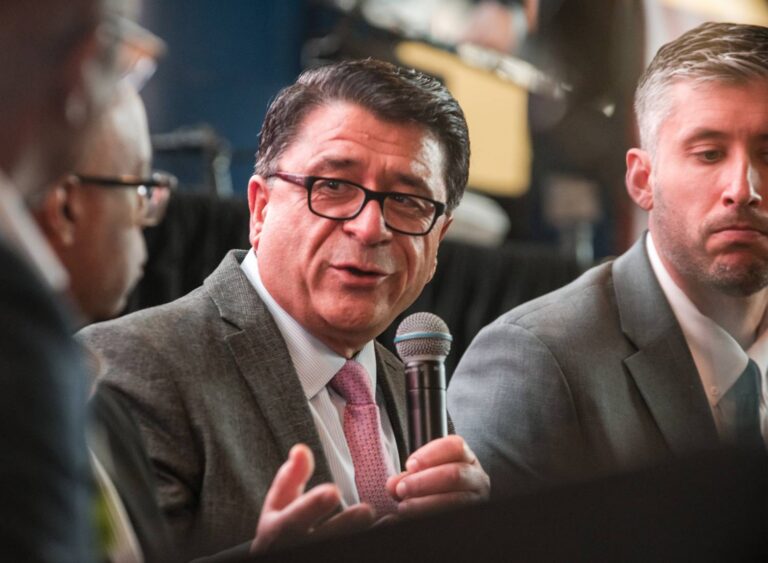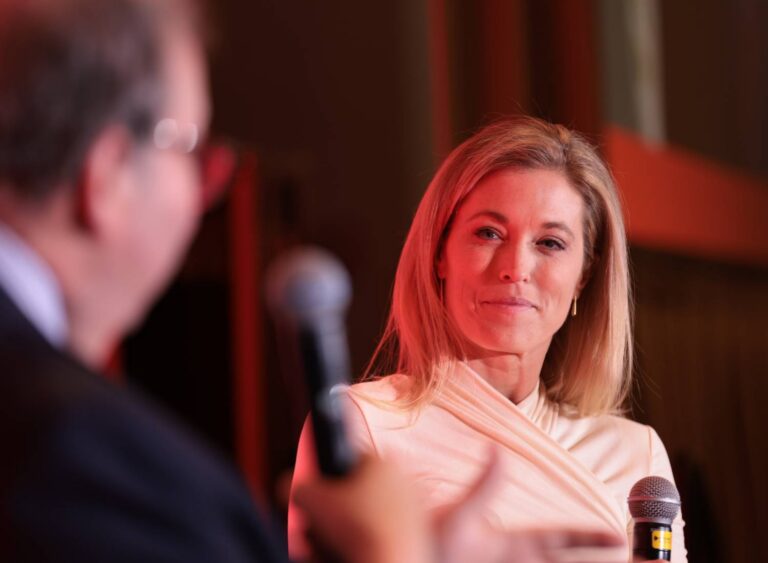







Kyle Marrero, President, Georgia Southern University
 In an interview with Focus:, Kyle Marrero, president of Georgia Southern University, said that purposeful growth and student-centered innovation are central to the university’s mission in a rapidly evolving regional and educational landscape. “Industry leaders consistently tell us they want graduates who can think critically, communicate clearly, and solve problems. That’s what we’re training them to do — so they’re ready from day one, hence the name of the program,” Marrero said, referring to the university’s Ready Day One program.
What changes over the past year have most impacted the university, and in what ways?
For us, the most significant impact stems from our location — we’re in the geographic epicenter of growth in Georgia, particularly Southeast Georgia. With campuses in Statesboro, Savannah, Hinesville, and Swainsboro, we serve a multi-county area that’s being rapidly transformed by developments like the Hyundai Meta plant and the expansion of the port. We’re looking at nearly $15 billion in investment and the potential for over 20,000 new jobs in the next five years, which has major implications for us.
This regional boom has accelerated housing growth, increased migration projections by 20 to 30% over the next decade, and opened the door for more partnerships and community engagement. Georgia Southern continues to grow in relevance and scale — this fall, we hit a record enrollment of 29,633 students. We also recently consolidated with East Georgia State College. So, in terms of growth, relevance, and importance, our trajectory is strong as we prepare today’s and tomorrow’s workforce.
Are you seeing any trends that could reshape how universities operate over the next few years?
One key trend we’re embracing is accountability. At Georgia Southern, we are deeply committed to showing a return on investment for the state and federal funding we receive. We use a balanced scorecard approach — my leadership team and I have publicly shared key performance indicators, and we track everything from graduation outcomes to post-grad earnings. Universities that aren’t adopting performance and relevance models will struggle to stay viable.
Another major trend is the evolving federal funding landscape for research. We’re on a path to becoming Georgia’s next Carnegie R1 institution, which requires us to meet high thresholds in research activity. We’ve already exceeded the requirement for doctoral research degrees and reached $49.26 million in research expenditures in FY25. This year, we’re targeting $50 million, the R1 benchmark. However, there are new challenges in securing NIH, DOE, and DoD funding due to shifting regulations and funding levels. That’s why we’re diversifying our funding sources and building corporate and private partnerships to supplement federal grants. We choose to see these challenges as opportunities to remain relevant and innovative.
What strategies does the university have in place to navigate potential headwinds?
Growth brings opportunity but also challenges — especially in housing, infrastructure, childcare, and healthcare. I’m proud that Georgia Southern is directly addressing these issues through our public impact research agenda, which has seven areas of focus. For example, our Institute for Water and Health is studying how to support growth sustainably, particularly around water resources.
We’re also heavily invested in advanced manufacturing, helping to build a robust regional sector supported by AI, robotics, and our state’s only advanced manufacturing engineering program. In public health, we’re working on solutions for fitness, wellness, and repetitive motion-related injuries through our soldier performance and readiness programs. That research also benefits sectors with high physical labor demands.
Our work in logistics and supply chain innovation is reducing inefficiencies through smart transportation technologies. We’re also delving into sustainable fuel research, studying how to convert food waste into fuel and exploring biofuels for aerospace. These initiatives position Georgia Southern not only as a talent pipeline — Hyundai has already hired 100 of our graduates — but also as a research leader ensuring purposeful, sustainable growth in the region.
Could you share what Georgia Southern’s efforts to build a more student-centered university look like and any exciting signs of progress?
Let’s start with data — our graduation rates are the highest in university history, and freshman retention is on track to set a new record. Beyond that, one of our most exciting initiatives is Day One Connect, which has been launched over the past three years. Every freshman takes a first-year experience course where they complete a cognitive skill assessment to identify their strengths, gaps, and areas of interest. This helps them evaluate whether their major aligns with their passions and abilities.
We pair that with a career assessment using Steppingblocks, showing students what jobs they can pursue with their degree, projected salaries, and how their skills translate across industries. Then, throughout their studies, we embed career readiness into the curriculum. Career services stays involved each step of the way.
One of the biggest challenges in higher ed is helping students understand why they’re taking certain courses and how those connect to their future. We’ve developed student learning outcomes that make those connections explicit so students can confidently articulate their skills during job interviews.
We’re also requiring externships or internships across all programs so students can apply classroom knowledge in real-world settings. Industry leaders consistently tell us they want graduates who can think critically, communicate clearly, and solve problems. That’s what we’re training them to do — so they’re ready from day one, hence the name of the program.
Could you talk about some of the initiatives supporting the effort to expand access for rural, first-generation, and underserved students?
We’re a comprehensive university aiming for R1 designation, so we do have admissions criteria, and starting in Fall 2026, we’ll return to requiring standardized test scores as part of our freshman index. We recognize the challenge that creates, especially given the learning gaps caused by COVID-19, particularly in math and English.
Our recent consolidation with East Georgia State College, a primarily associate-degree-granting, open-access institution, gives us a new entry point. It’s similar to Georgia State’s model with Perimeter College — students start there but remain Georgia Southern students, then seamlessly transition to a four-year degree.
We also provide robust support for students through integrative advising using the National Institute for Student Success (NISS) model. We track every test score and academic indicator to trigger early interventions — whether that’s tutoring or supplemental instruction. This doesn’t mean lowering standards; it means meeting students where they are to help them succeed.
Engagement is key. With 300 student organizations, D1 FBS athletics, and numerous leadership opportunities, we track co-curricular engagement because it correlates strongly with academic success. For first-generation students specifically, we support programs like REACH Scholars and all federal TRIO programs. These targeted interventions ensure we’re compliant with the Board of Regents and federal policies while maximizing student success.
What are your top priorities and goals for Georgia Southern over the next few years?
We’ve just completed a new strategic plan that took effect July 1, 2025, and extends through 2030. Growth will certainly continue — we expect to exceed 30,000 students soon — but it must be purposeful. Growth for its own sake is only meaningful if we can maintain the quality of experience and support for all students.
Our research agenda is another major priority. We’ve added six new Ph.D. programs in three years, with the most recent addition of a Biomedical Sciences Ph.D. Our partnerships with the Medical College of Georgia, including the opening of the Dental College of Georgia in Savannah in 2028, are also crucial.
We’re launching a new Physician Assistant program in the next two years, further expanding our already strong presence in health professions education.
We also launched a $300 million capital campaign running through 2030, and we’ve seen record fundraising for four consecutive years.
Our vision centers around three keywords: People. Purpose. Action. It starts with our faculty, staff, students, alumni, and community. Our purpose is rooted in the transformational power of education. And action means accountability — KPIs, dashboards, and 90-day goals that we hold ourselves to publicly. Our guiding phrase is: “Growing ourselves to grow others.” It reflects our commitment to continual improvement and outward impact.
While relevance and accountability are essential, we must never lose sight of why we exist. Higher education changes lives — and that’s what drives us every day.