




Leadership Lessons from Burning Man’s 10 Principles

Last week, I found myself surrounded by 80,000 people from around the world, in the middle of nowhere Nevada, watching a giant man burn to the ground. It was my first “burn” at Burning Man.
And before you start: Yes, Burning Man is a whole lot of what you think it is. Sure, it is a massive rave out in the desert where rules are fast and loose. Sure, there are plenty of x-rated activities you can get into, from drugs to sex. Sure, terrible things do happen like dust and rainstorms that can destroy your camp, to unfortunately this year, homicide. But as I discovered, it is a whole lot more than what you might think. In all the best ways. If you allow me, I would like to lay out my case for leaders and how an experience like Burning Man can bring us to new levels of leadership.
You might be familiar with Burning Man’s 10 principles. For those of you who are not, these are the Top 10 fundamental truths that each Burner acknowledges and lives by. And while they are incredibly important while braving the harsh conditions of the Nevada desert, some of them call out to me in the professional world.
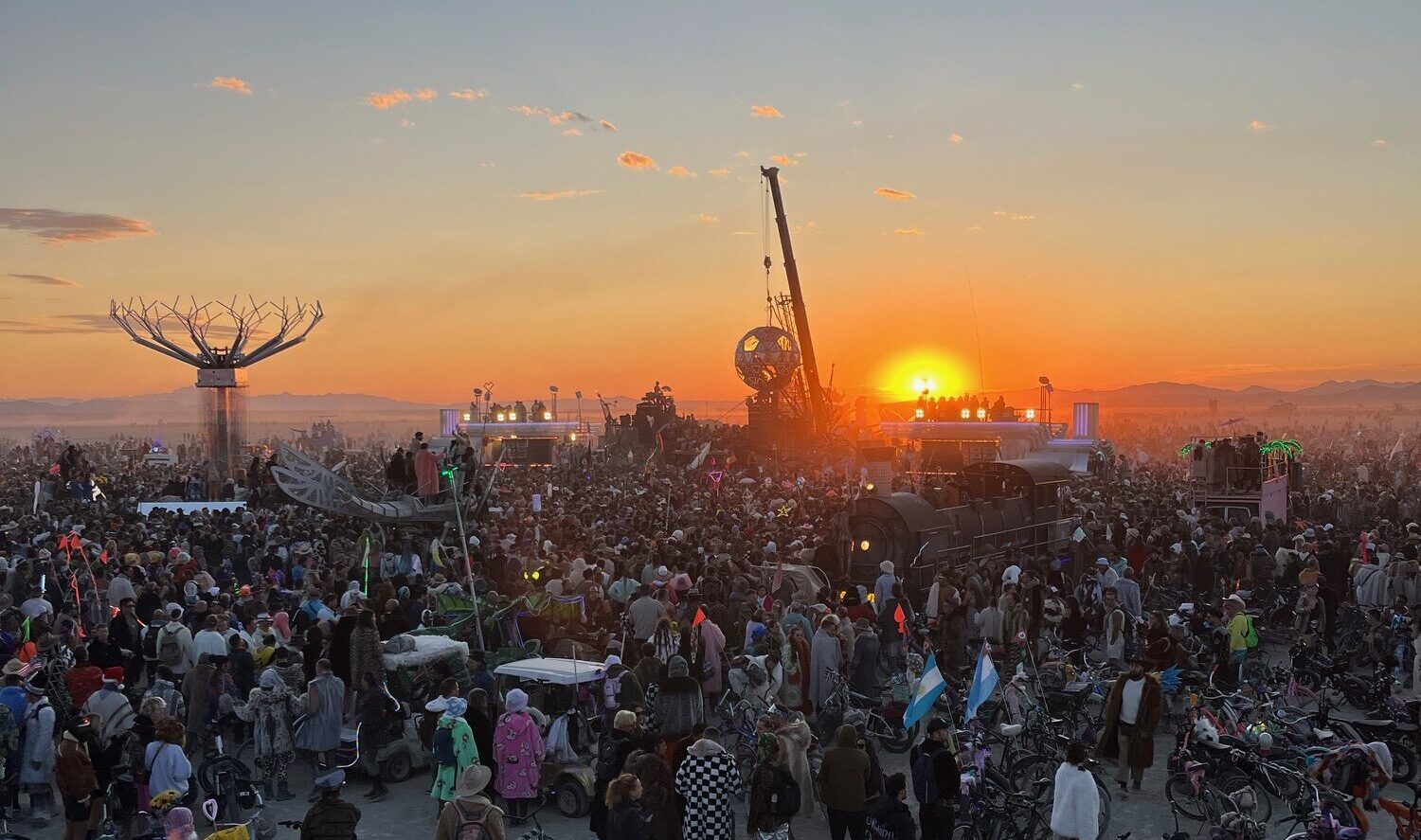
Take radical inclusion. There was not a single time on the playa that I didn’t feel welcomed. Smiles, hellos, and hugs from strangers were seemingly endless. As in life, you meet people from all walks of life in the professional world. I once met a man whose company gets out the vote for republican candidates, including our current Commander in Chief. He also sits on the board of companies whose leadership are openly conservative leaning. When we spoke about HR woes, he stood firm that his issues were always with his democratic leaning hires. I pushed back: If the leadership weren’t so outwardly in opposition of many people’s views, do you think they would feel more included and therefore not be so much of a ”problem?” Imagine if we checked our opposing views at the door and the workspace was simply about getting the job done. If we could radically include all walks of life, could we radically share our company’s common goals? And if that were true, could we reach those goals faster and stronger?
Next, radical self-reliance. No one wants to pull someone else’s weight. Not on the Pickell Ball court, not in doing household chores, and definitely not when setting up your camp on a pile of dust. But certainly not at work. How many teams break down because someone is slacking? How many companies go under not because the idea was bad, but because the team didn’t bring their best to the table. There were many times I was reminded how important it was for me to be prepared for anything that could be thrown at me in order for both me and my group of friends to enjoy ourselves. If someone is dragging down the group, it is immediately felt (and discouraged).
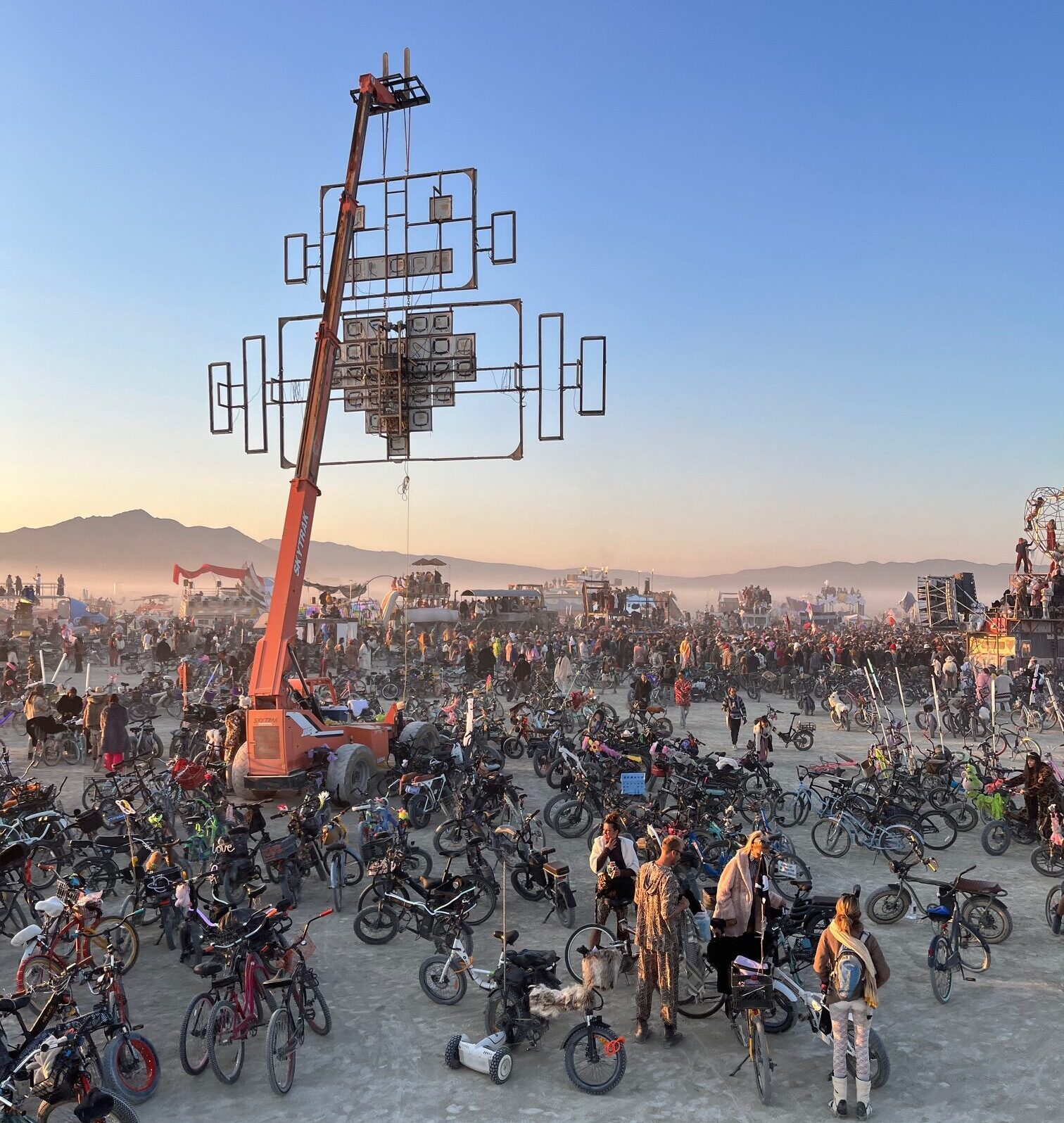
But that radical self reliance is balanced by two other principles: Communal Effort and Civic Responsibility. Everyone helps out without question. From offering a bottle of water to jumping a generator, the question isn’t “who will help?” but “how can I offer my services.” What if that were a part of your company culture? How might the day breeze by if problems weren’t looked at as “someone else’s responsibility” but a bump in the road that anyone could fix easily with a helpful pair of hands?
But my favorite principles, by far, were Radical Self-expression, Participation and Immediacy. As we enter adulthood, we lose our sense of play, of creativity, of trying new things simply for the sport of it. That child-like wonder is beaten out of us and replaced with “maturity” and “responsibility.” I have felt over the years that I don’t “fit in.” My silly bone is pretty strong (I have never met a kid that I don’t immediately get along with) and my dancing background just doesn’t allow Abby to sit in the corner. But I have let that light dim over the years because it is hard to be the only one in your circle who will dance like no one’s watching. But at Burning Man, I found my people. People who weren’t afraid to let their creativity shine. From the clothes, to the accessories, to the decorations on the bikes, to the designs of the art cars — everyone was on self-expression overload. You want to try a handstand? Climb over a 20-foot dinosaur? Dance behind the DJ? Rollerskate? My heart was a flutter watching people try something for the first time without hesitation, without barriers. We were all there to unabashedly experience, come what may, and that was breathtaking.

What if, as leaders, we could continually challenge our concept of creativity? Push the boundaries with what we will try? Not take ourselves so seriously? I argue that this outlook on life brings us closer to those we wish to build with, making our companies stronger for it. I made friends in that week that I know are lifelong friendships. It was that shared experience that solidified something in us that I know is long-standing. My goal now is to bring that to caa.
People hate on Burning Man. I get it. But after experiencing the amazing display of human ingenuity, compassion, creativity, self expression, perseverance, play, and community, I now must admit: I’m a burner.