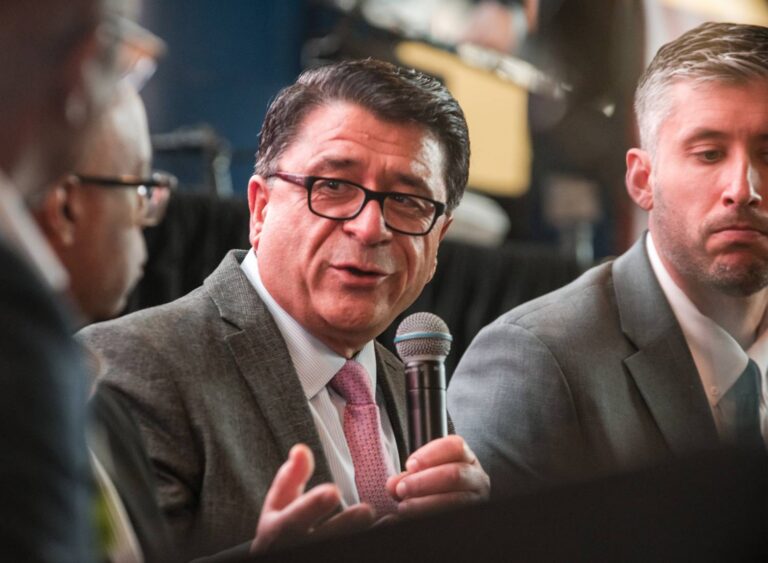







Leonardo McClarty, President/CEO, Fayette County Chamber
 Supporting small businesses and addressing community issues were key focuses for the Fayette Chamber of Commerce over the past year. “We’ve done a lot to support our small business community, and to support those that may be entering the next phase of their business life cycle,” said Leonardo McClarty, president and CEO of the Chamber, in an interview with Focus:.
What would you highlight as the Chamber of Commerce’s most significant achievements and milestones during the last year?
A few things come to mind. We submitted our application to the US Chamber to become an accredited organization. Less than 2% of chambers across the chamber hold this distinction and we believe this milestone will send a message that we are well managed, governed, and poised for growth. I am extremely pleased with the work we’ve done to support our small business community through programming focused on helping startups with new ideas, products, and services, while also supporting those entering the next phase of their business life cycle.
In some cases, that means businesses looking to transition leadership. In others, it may involve acquiring a similarly sized company and growing through mergers and acquisitions or expanding into a new market. Suffice it to say, I am extremely proud of the work we have done to support small businesses.
Another major area of focus has been quality-of-life issues and broader community initiatives. We’re experiencing a lot of growth in Fayette County, but we also recognize that there are issues we must continue to address collaboratively. Whether it’s transportation — how we move people from different parts of Fayette to job opportunities — or housing affordability, we need an ample supply of housing at a range of price points, particularly for those earlier in their careers and not too many years out of college.
These issues are closely tied to talent attraction, and we’ve been working in that space as well. Community development has been another major focus, and we’re proud that we also saw solid growth last year, with our membership numbers increasing.
Can you comment on the leadership initiative?
Leadership Fayette is a program we’ve had for nearly 40 years, focused on informing civic leaders and helping them engage in ways that improve and enhance the community. Each year, we typically have a class of about 25 men and women from a wide range of backgrounds and disciplines. Some come from corporate environments, others from nonprofits, education, or government, but all share an interest in Fayette County and a desire to see it continue to thrive and grow.
Over the course of seven months, participants receive in-depth exposure to education, economic development, government, and the justice system. This year, we added components focused on housing and sustainability, public health, and how the nonprofit sector supports the community.
The idea is to equip people who are already in, or moving into, positions of influence with the knowledge and perspective needed to positively impact the community.
How is the Chamber adapting to the current economic changes?
It’s certainly been a changing landscape. One of the county’s major industries is advanced manufacturing, and there’s a lot of concern right now around conversations related to tariffs. We have the Fayette Advanced Manufacturing & Industry Network that meets bimonthly and is focused on serving the manufacturing community, and we continue to refine programs that help those businesses navigate these headwinds, make informed decisions, and access timely information.
That’s one area where we’re being very intentional in our support. Another is small business. Like most businesses, we are analyzing our operations and programmatic costs to ensure that we are functioning as efficiently as possible.
Are there any other challenges that are pressing right now, apart from changing demographics?
Technology continues to have a significant impact, in at least two ways. Certain technologies may eliminate some jobs, which means people will need to be retrained, retooled, and reskilled. At the same time, new technologies create new opportunities.
For example, in a manufacturing facility, increased use of robotics may replace a role previously held by a person. But if that robot goes down or the software has a glitch, someone needs to be on site who knows how to fix it. While some jobs will be affected by AI and other technologies continue to advance, new roles and opportunities will emerge as well.
This places increased importance on education systems that help students grasp new concepts and remain adaptable, especially since many are preparing for jobs that don’t yet exist.
What are your key goals and priorities for the next two to three years?
We recently adopted a new strategic plan focused on organizational growth, business support, leadership development, and public affairs.
Quality-of-life metrics will remain a major focus, including housing, transportation access, and workforce development. Enhancing our leadership development efforts is critical. Particularly in preparing emerging leaders to lead within their organizations and the broader community. We recognize that some business owners will be selling their companies or retiring, and many community organizations rely on private-sector leaders who volunteer their time and expertise.
Another key priority is small business development, including continuing to strengthen our small business programming. Helping to implement these ambitious goals will be our newly created 501(c)(3) Foundation. The Fayette Community and Leadership Foundation will allow us to generate additional dollars focused on community development, leadership, workforce development, and education.