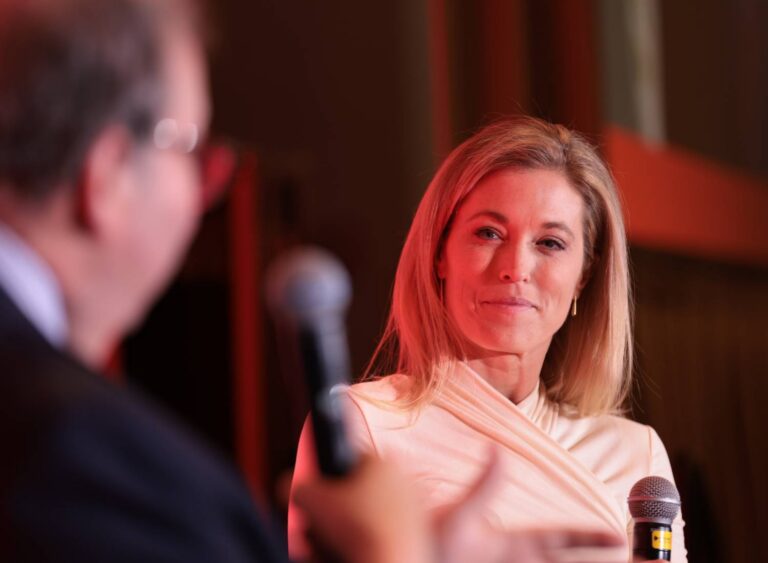






Lisa Anders, COO, Explore Gwinnett
 Lisa Anders, COO of Explore Gwinnett, spoke with Focus: about adapting to economic changes to elevate the economy in and around Gwinnett County. “The film and television production industry in Georgia is at a crossroads. The next two to three years should be much more stable. We want to ensure that our restaurants, hotels, and film and television productions keep our people employed.”
Since our last conversation, what changes over the past year have impacted Explore Gwinnett, and in what ways?
We’ve had a strong year across several parts of our industry, although the tourism landscape has seen a slowdown in international travel, and Gwinnett was not immune to that shift. Gwinnett is a diverse area that typically attracts a significant amount of international visitors, and we’re eager to see that increase again.
The Gas South District, which includes an arena, theater, and convention center, has completed its first full year of operations. Following the renovation and the addition of the four-star Westin Headquarters Hotel, it has been a game changer for meetings and conventions. These updates are allowing us to draw major regional and national events, including the ACC Women’s Basketball Tournament, which will be hosted in Gwinnett for the first time in 2026. The FIFA World Cup is one of the biggest events we are preparing for, and we are actively working to understand and manage its impact on the Gwinnett community.
Across Metro Atlanta, we’re seeing major investments in sports tourism, culinary destinations, and convention facilities. How is Gwinnett positioned to take advantage of these trends?
Following the Gas South District expansion, the next project will be a $200 million renovation for the Gas South Arena, Gwinnett’s primary venue for sports tournaments, concerts and county-wide conventions. Arena expansion is scheduled to begin in 2026 and will wrap in 2028.
You mentioned launching a hospitality training program to address staffing shortages. What progress has been made, and how has it impacted the workforce pipeline?
The LEAD Program launched in 2025 and provides attendees a comprehensive customer service training tailored for front of house hospitality industry members. Our first cohort certified 30 employees, and we anticipate adding another cohort in 2026.
Explore Gwinnett also runs the Gwinnett Film Office, and one of our training programs is an ongoing workforce development program with Fresh Films. Now in its fourth year, their training program, providing training, internships and hands-on work for budding creatives, is embedded in two Gwinnett County high schools. We also have a second “Accelerated” program serving young adults ages 18-24 which is embedded at Georgia Gwinnett College.
Gwinnett has established itself as a hub for film and television production. What trends are you seeing, and how is Explore Gwinnett positioning the county for the future?
The film and television production industry in Georgia is at a crossroads. Many productions are moving overseas, creating challenges across the state. Gwinnett has remained competitive in location filming, as we are home to three studios and our close proximity to Assembly Studios located in DeKalb County further strengthens our offerings.
We are seeing a significant amount of television production, but fewer feature films. At the same time, a post-COVID trend has reemerged, with growth in commercials, independent projects, student productions, and young content creators. We support these productions the same way we would a major film or television project. SCAD and UGA students frequently complete capstone projects within the destination.
It is a challenging time for the industry overall, and a federal tax credit could provide meaningful support by encouraging more productions to return to the United States from overseas.
What strategies are you prioritizing to ensure Gwinnett remains competitive for both leisure and business travelers?
One of our biggest competitive angles, particularly in the last year, has been food tourism. International cuisine is a major focus of our media strategy, and we’ve generated more than $1 million in unpaid media this year highlighting Gwinnett’s Korean food scene. International cuisine is a significant draw for the county and one area where we truly stand out in Metro Atlanta.
We host the Seoul of the South™ Korean Food Tour, and it sells out every year. This year, to expand our offerings, we introduced nighttime tours featuring alcoholic beverages and karaoke — which also sold out! To continue to feed the demand, we launched the Seoul of the South™ digital pass, a self-guided food tour that offers prizes for visiting participating locations.
As you look toward the next two to three years, what are Explore Gwinnett’s top priorities?
From a tourism and conventions perspective, especially with the upcoming arena renovation, our focus is to become a go-to destination on the conference circuit. Historically, that circuit includes places like Athens, Savannah, Jekyll Island, and Atlanta. We hosted five major conferences this year as part of those rotations, and our goal is to establish Gwinnett as a consistent, top-tier destination.
In the film sector, our priorities include workforce development and attracting more productions. We believe Gwinnett is one of the most film-friendly counties in Georgia, and we want to further distinguish ourselves.
In sports, we are excited to see the impact of the World Cup on Gwinnett County. We’re aspiring to become the permanent home of the ACC Championships, so we’re strategizing activations to amplify the experience for players and fans coming to Gwinnett.
Tourism and hospitality are cyclical industries, with periods of stability and disruption. The next two to three years should be more stable, and our goal is to ensure that restaurants, hotels, and film and television productions continue to keep our residents employed.