






Luxury Hotels Emerge as Bright Spots in Uneven US Market
Key points:
- Luxury hotels are outperforming as higher-income travelers sustain demand amid a fragmented, K-shaped hospitality market.
- Flat national RevPAR and rising costs are pressuring midscale and economy hotels, while upscale assets show resilience.
- New hotel development is concentrating in select Sun Belt and lifestyle markets where luxury experiences drive long-term value.
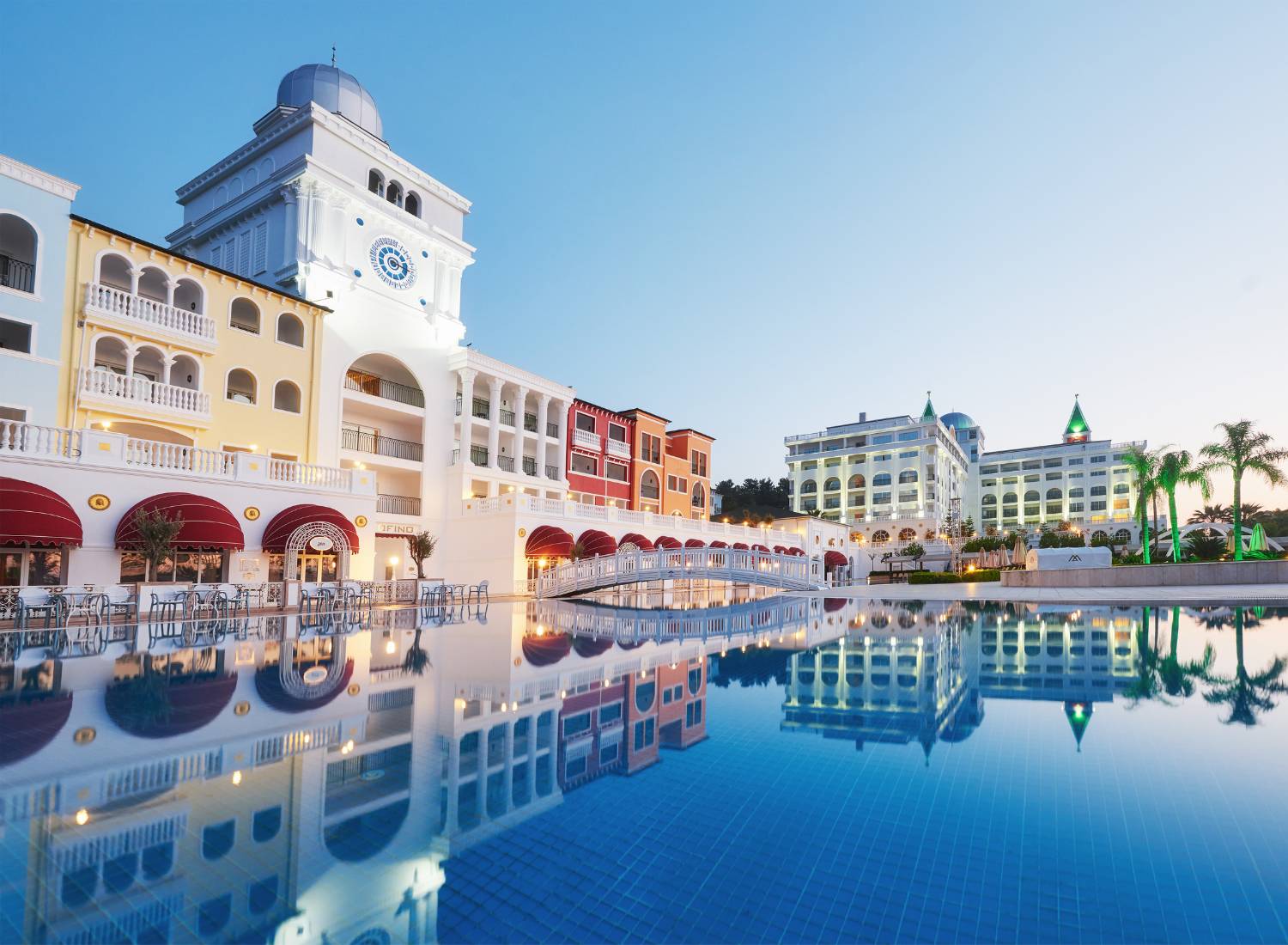 February 2026 — U.S. hotels are facing a difficult start to the year following a weak performance in 2025, but luxury hotels in select markets are emerging as strategic bets for recovery, according to industry forecasts.
Join us at caa’s upcoming leadership summits! These premier events bring together hundreds of public and private sector leaders to discuss the challenges and opportunities for businesses and investors. Find the next summit in a city near you!
“Growth will remain moderate and concentrated among higher-tier hotels,” Amanda Hite, president of STR, said in CoStar’s 2026 hotel industry outlook.
That uneven performance reflects the broader K-shaped U.S. economy, defined by a growing disparity between the top and bottom parts of the economy (sectors, industries, and income groups).
In the hospitality sector, this means that higher-income travelers continue to spend on premium travel, while more price-sensitive consumers are pulling back as costs rise and economic uncertainty persists.
“High-net-worth travelers are expected to remain one of the most reliable drivers of global travel spending next year,” Giray Boran, managing director of BLG Capital, told Hotel Dive. “As the gap between luxury travelers and the rest of the market grows, the industry is seeing clear differences in performance.”
The most striking divergence in the market is occurring by asset class. Luxury and upscale properties in major cities remain well-positioned to capture relatively stable demand. On the other hand, midscale and economy hotels are facing greater pressure to drive occupancy and rates as travelers become more price-sensitive.
A fragile national outlook
Forecasts released late last year underscore the fragility of the near-term outlook.
According to a report by CoStar, U.S. hotel performance in 2026 is expected to be “turbulent,” with revenue per available room growth (RevPAR), an industry standard performance benchmark, projected to hover near flat levels nationally.
Even modest gains in average daily rates (ADRs) are unlikely to fully offset soft occupancy and rising operating costs. While some demand remains resilient, particularly among affluent leisure travelers, analysts warn the industry overall is entering a period of slower and more volatile growth.
However, luxury demand shows little sign of cooling with rates increasing to the point of “near inflation,” according to Hotel price forecasts by Amex GBT Consulting.
In fact, per CoStar’s 2026 forecasts, luxury hotels are expected to produce the strongest RevPAR metrics relative to other segments (upscale, midscale, economy, and independent), despite slower growth compared to 2025.
This suggests that while most domestic markets continue to struggle with heightened uncertainty around travel patterns and cost pressures, new luxury hotel openings in a small but influential cluster of cities are emerging as industry bright spots.
Selective expansion
As a result, development and expansion activity is becoming more concentrated in regions that favor higher-end hospitality products, particularly in parts of the Sun Belt, while many secondary and tertiary markets continue to lag.
More specifically, markets such as Miami, Dallas, Phoenix, and Nashville are expected to lead the national hotel development pipeline, even as activity remains subdued across much of the Northeast and Midwest.
Even outside major metros, luxury-oriented development is appearing as part of broader mixed-use or lifestyle projects. In Franklin, Tennessee, The Factory at Franklin announced plans for a 120-room hotel focused on “wellness and quality of life” as part of its next expansion phase.
“Both are key elements of the holistic experience today’s guests seek,” Bill Simmons, area managing director of The Factory at Franklin, told Invest: Nashville.
Meanwhile, in Rowan County, two new upper-tier hotels — one Marriott-branded and one Hilton-affiliated — are in the pipeline. Tourism CEO James Meacham told Invest: Charlotte that strong occupancy and limited room supply helped justify the projects.
“We’ve maintained over 70% occupancy the past couple of years, which is strong,” Meacham said, while cautioning that the sector remains vulnerable to volatility.
“I always tell my board: I can tell you exactly what’s happening today and clearly describe what’s happened before, but I can’t guarantee tomorrow,” he said.
Key markets
Against a sluggish national backdrop, U.S. hotel brands are seeking to future-proof assets against softer mass-market demand through an emphasis on luxury and wellness, as Condé Nast Traveler indicates.
A slate of high-profile luxury and upper-upscale hotel openings scheduled for 2026 illustrate the trend toward experience-driven properties, especially in U.S. markets viewed as structurally advantaged.
In the Carolinas, for instance, The Cooper Hotel is set to open with a prime waterfront location overlooking Charleston Harbor, reflecting a broader trend toward boutique-style luxury in historic, tourism-driven cities.
The expansion of The Knox Hotel & Residences in Dallas by Auberge Resorts Collection is another prime example of the luxury sector’s growth and presence in Texas.
At the same time, Florida continues to attract capital toward the high-end segment as well, with Oetker Hotels preparing to open The Vineta in Palm Beach, targeting ultra-affluent leisure travelers.
What this means for hoteliers
The persistence of luxury development amid moderate national outlook reflects a calculated tradeoff.
As PERE reports, many hospitality investors are choosing to “stay through tough times,” betting that well-located and high-quality assets will outperform over the long run, even if near-term returns are compressed.
Overall, the U.S. hotel market is showing signs of deeper fragmentation in reflection of the country’s K-shaped economy.
But while the economy continues to grow, room demand is staying flat. “The American economy keeps growing, but the hotel industry doesn’t,” said Jan Freitag, CoStar’s national director for hospitality market analytics, to PERE.
”Over 30 years there was always this one-to-one relationship between GDP growth and room demand … That relationship doesn’t exist anymore,” he added.
But in a handful of cities and at the top end of the market, new luxury openings prove that right-placed products in the right locations can still drive demand.
According to Jacob Segel, senior managing director at private equity firm, Cain International, this performance gap highlights where demand remains durable.
“Other areas of the hospitality market flatline or dip a little,” Segel, who works across the firm’s luxury hospitality and branded residences, told PERE News.“But not where we play.”
Want more? Read the Invest: reports.