






Mark Epps, Founder & CEO, Epps Public Strategies
 In an interview with Invest:, Mark Epps, founder and CEO of Epps Public Strategies, discussed Nashville’s booming construction market, supplier diversity, and strategic community engagement. “We’ve met or exceeded all our inclusion goals on past projects,” he said.
What were some key milestones for your firm over the past year?
As Nashville continues to be a hotbed for construction, we have completed several significant projects. An exciting milestone we recently achieved was the successful delivery of 445 Park Commons, with Market Street being the Developer. RC Matthews Contractor served as the general contractor, with our team providing MWBE Consulting and Pay Application Review Services. Located adjacent to the soccer stadium, Park Commons features a dynamic mix of affordable housing, market-rate units, and mixed-use space. We’re proud to have played a role in a project that brings both economic opportunity and community growth to the area.
We recently reached an important milestone by completing Vanderbilt University’s Central Utilities Project. Partnering with Brasfield & Gorrie, this project was a major achievement for our team. We’re proud to have delivered strong results and grateful for our client’s satisfaction. This success marks a significant step forward in our continued growth and commitment to excellence.
How would you describe the state of the real estate and construction market in Middle Tennessee?
The real estate and construction market in Middle Tennessee remains strong, even amid some uncertainty in the broader economy driven by federal policy shifts. Despite those headwinds, we haven’t seen a slowdown in activity.
One of the most exciting developments on the horizon is the East Bank. With Oracle relocating its headquarters there, the area is primed for significant growth, not only from Oracle itself but also from a wave of other projects still in the planning phase.
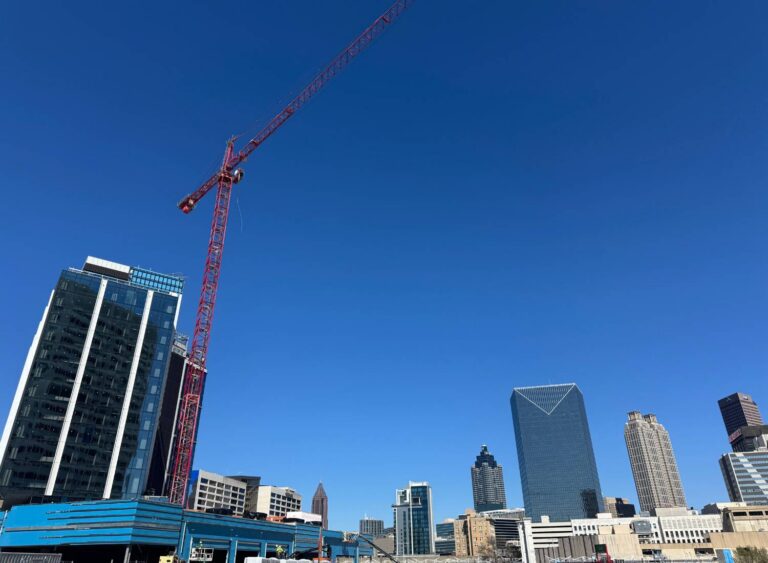
Beyond the East Bank, commercial and mixed-use development continues across Nashville. The Second Avenue corridor, for instance, is set for major redevelopment. Overall, we’re seeing sustained momentum in construction and development throughout the region, and we expect that trend to continue.
What services are clients asking for most right now, and what does that signal about the market?
Right now, our clients are most focused on procurement and supplier diversity services. They’re looking to expand their subcontractor networks and bring new partners into the fold. That signals a positive trend, a clear push to make Nashville’s construction boom more inclusive and to ensure broader participation across projects.
At the same time, we’re seeing some delays in project starts, largely driven by economic factors such as rising interest rates and a tight lending environment. Deals are taking longer to finalize and move into execution, which adds complexity to planning and timelines. Still, the continued demand for our services suggests long-term confidence in the region’s growth.
How do you view the state of small business inclusion and supplier diversity?
We’re making meaningful progress on small business inclusion and supplier diversity, but there’s still room and a need for acceleration. The city has been working hard to bring diverse vendors into its procurement system, and that effort is starting to show results.
That said, we need to see more movement in the private sector. Too often, diverse vendors are only engaged on public projects. Nashville has a real opportunity to lead by expanding inclusion within commercial development. That’s where the next big gains in equity and representation can happen.
How do you help organizations think more strategically about community impact on large-scale projects?
When it comes to large-scale projects, I help organizations think more strategically about community impact by prioritizing early stakeholder engagement, well before the project even breaks ground. It’s about being intentional from the start when it comes to inclusion. That includes reaching out to small, minority-owned, women-owned, and veteran-owned businesses, and hosting outreach events to ensure they’re aware of and prepared for upcoming opportunities.
I also advise breaking down the scopes of work to make them accessible to smaller firms. A small concrete company, for example, may not be able to take on an entire project, but it can handle a defined portion. Encouraging partnerships between large and small firms is another key strategy that creates value and opportunity on both sides.
This approach has proven effective. On past projects, we’ve met or exceeded all of our inclusion goals, and we’re committed to continuing that track record as we move forward.
What has been essential to growing your firm and guiding clients through complex projects?
Relationships have been absolutely essential to growing my firm and supporting clients through complex projects. While my background is in project management, I truly see myself in the relationship business. I make it a priority to connect with people, understand their past experiences, and learn what they’re looking for in future work. That approach has helped build trust and credibility for Epps Public Strategies.
I launched the firm in 2019, just before the pandemic. If I’d known what was ahead, I might have waited. It was a tough time to start, especially with only one client and one project. Growth was slow in the beginning because I couldn’t get out and build relationships the way I had planned.
Things really began to shift in 2022. The phone started ringing, and the momentum picked up. Now I have a steady flow of clients and inquiries. Some people even know my name, and that feels good. I’m excited about what’s ahead, including some great projects I can’t share just yet. The future feels bright, and I’m ready for it.
What sectors are you active in, and what future opportunities are you watching?
I’m currently active across several sectors, including commercial development, public projects, higher education, and infrastructure. One of the most exciting developments on the horizon is the recently passed transit referendum in Nashville, which will direct about $3 billion over the next 10 to 15 years toward transforming how people move around the city. That opens up major opportunities for future infrastructure work.
The East Bank remains a key area of focus, especially with the new Titans stadium driving momentum in the district. That project is acting as a catalyst, and I’m eager to see what additional developments will emerge around it.
Looking ahead, I believe growth will increasingly expand into surrounding counties like Rutherford, Wilson, Williamson, and Sumner. As affordability becomes more challenging in Nashville, these areas are positioned for significant development.
Another exciting area is the airport. There’s a wave of investment and construction happening there, and I’m hopeful about playing a role in some of those upcoming projects.