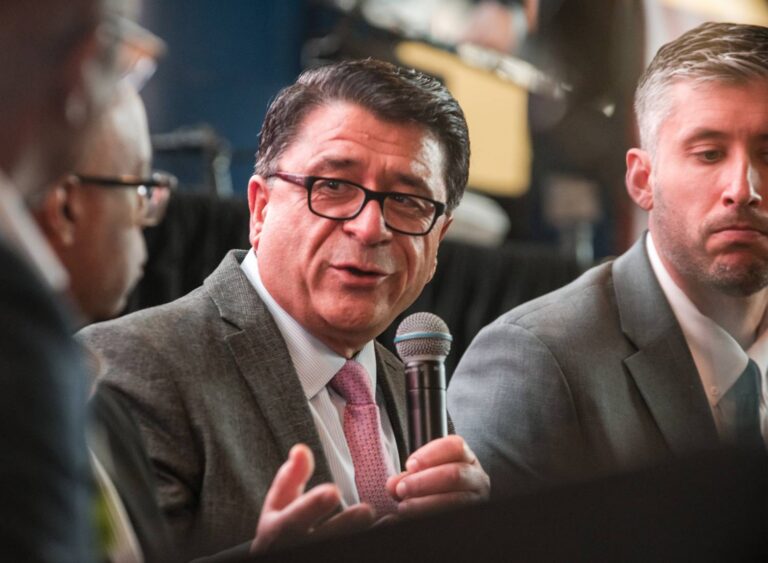







Mark Schneider, Chief Commercial Officer, Cordia Energy
 In an interview with Invest:, Mark Schneider, Chief Commercial Officer for Cordia, said that the unprecedented demand from data center development is fundamentally reshaping energy strategy and creating new opportunities. “Demand growth from data centers and other sources has impacted energy prices broadly, affecting everyone. That’s driving strategy shifts,” Schneider said.
Over the past year, what major changes within the company or the broader energy landscape have most influenced your strategy for the East region?
The biggest thing that has influenced our strategy in the last year or two is the same thing almost anybody in energy would say: data center development. It’s having a direct effect on the energy industry, especially in the Eastern United States, but also in other geographies. In Pittsburgh, we’re part of PJM, the independent system operator for the electric grid, which operates as its own market. Demand growth from data centers and other sources has impacted energy prices broadly, affecting everyone. That’s driving strategy shifts. Cordia provides on-site energy, from district systems to microgrids to combined heat and power, for critical infrastructure and energy-intensive institutions. So changes in market pricing have a big impact on us and our customers. It’s shaping our business direction, including how we control costs and where future opportunities lie.
Cordia Pittsburgh was named IDEA 2025 System of the Year. Which internal improvements or investments drove this recognition?
There have been a handful of different activities that culminated and drove that award. Cordia is a national company with a presence across major metro areas, and most of our assets are in high-energy-density zones. In downtown Pittsburgh, we’ve made several large investments over the past eight years. It started with our Uptown Energy Center serving Mercy Hospital and the Vision Rehab Institute. Then we acquired Duquesne University’s central energy system and structured an energy-as-a-service agreement. We also expanded services from a cooperatively owned steam system, winding down operations. Lastly, we acquired district energy and microgrid assets from People’s Gas, including systems at county facilities. These investments created a contiguous, interconnected system—rare in district energy, where growth is slow and systems are often over 100 years old. That scale and speed of development made our work in Pittsburgh unique.
With Cordia interconnecting the Allegheny County District Energy System to the downtown network, what benefits are early customers seeing?
Reliability is mission-critical to us. It’s why people work with Cordia. We have a record of extremely high reliability, and our key customers, which include hospitals, the Pittsburgh airport, and universities, view that as essential. Interconnecting assets builds redundancy. All buildings on our networks are served by multiple sources. On sustainability, we helped retire and rebuild the 100-year-old Pittsburgh Allegheny County thermal system and replaced Mercy’s central plant with efficient technologies. Steam is hard to fully decarbonize, but we have targets for 2030 and 2050. We help customers minimize use and apply best practices. We’ve improved efficiency and emissions controls, replacing outdated boilers. Duquesne’s combined heat and power plant recovers waste heat, and our integration lets us extend that efficiency to nearby buildings on our steam system.
As energy systems evolve, which skills or roles are most critical for Cordia, and how are you attracting or developing local talent?
The energy sector is currently in an interesting space, requiring a blend of new and conventional skill sets. We are seeing increasing value in expertise related to instrumentation and automation, as energy systems become more automated. This includes professionals experienced in troubleshooting, programming, and operating this type of equipment. Looking ahead, AI will undoubtedly play a greater role in energy systems. Anything that can be optimized will incorporate AI, and this is a skill set we recognize the growing need for internally. However, a greater challenge for us remains finding and retaining talent with what we term the “conventional” skill sets.
Beyond building the right team, what are your biggest hurdles, and where do you see the greatest emerging opportunities?
The energy sector is experiencing both great opportunity and uncertainty, largely driven by AI, data centers, and low growth trends. A major challenge is supply chain constraints, particularly affecting the procurement of essential equipment for new projects like data centers. This equipment includes electrical generation, heating, cooling, and industrial cooling systems such as chillers. These market and supply chain shifts are, however, driving the adoption of new solutions and commercializing technologies whose economic viability has improved. A prime example is fuel cells. Cordia Energy already uses them for electricity generation and heat recovery in its fleet. Increased demand from data centers is helping to scale up production, which is expected to lower costs. This illustrates how new technologies are becoming more viable across the energy and HVAC industries.
Cordia emphasizes long-term community value. Which initiatives or partnerships best reflect that in Pittsburgh or your other key cities?
In the cities where we operate, many of our systems have been in place for decades, some for over a century. We are deeply involved in local economic development and frequently collaborate directly with our partners. Duquesne University is a prime example; we are heavily invested in sponsoring its sports programs. Our goal is to align our initiatives with the missions of our community customers. We are currently working with them on several meaningful local initiatives, including scholarship opportunities. We have several programs like this, underscoring our focus on supporting economic development and growth in the cities where we have a presence. Ultimately, we try to ensure our community engagement actively helps drive the missions of the key institutions we partner with.
Looking ahead two to three years, what are your top goals for the East region?
We’ve seen considerable growth and continue to pursue it, but our focus has shifted. While we’ve experienced significant economic expansion, the priority now is ensuring that future growth is also sustainable. Given the rising demand in energy markets, opportunities abound. We are being deliberate: growth must align with our sustainability goals and support decarbonization. This is a complex area with various dimensions, so it’s difficult to pinpoint one specific approach. Ultimately, our biggest operational shift is the intentional pursuit of sustainable growth.