





Michael Bergman, President & CEO, Bergman Real Estate Group
Despite economic shifts, Bergman Real Estate Group has achieved significant leasing success, including fully leasing a property it acquired in 2021. “By the end of 2024, the property reached 97% occupancy, validating the strategy of acquiring distressed real estate during that period,” Michael Bergman, president and CEO of the company, told Invest:.
What have been the most significant milestones or achievements for Bergman Real Estate Group during the last year?
Bergman Real Estate Group acquired an office property in 2021 at the onset of the pandemic, which needed substantial capital investments and repositioning. By the end of 2024, the property reached 97% occupancy, validating our strategy of acquiring distressed real estate during that period. This milestone was achieved through three major lease agreements finalized in the last quarter of 2024 with prominent New Jersey law firms. Riker Danzig leased 45,000 square feet, Saber Law leased 34,000 square feet, and Kelly Drye & Warren (KDW) leased 17,000 square feet.
How have ongoing changes in the economy impacted your company?
Although our portfolio mainly consists of commercial office buildings with some retail, tenant leasing decisions for new or expanded spaces have recently slowed from the Q4 2024. We experienced delays in signing leases and some cancellations of pending leases, likely due to the new administration’s trade policies and the cutting of certain federal programs. This has particularly affected companies dependent on grants or funding, creating uncertainty. Furthermore, the implementation of significant tariffs has increased concerns among business owners, leading to a reduction in leasing activity compared to previous years. This slowdown in leasing is the most notable impact we’ve observed.
How would you describe the commercial landscape in New Jersey, particularly in the office sector?
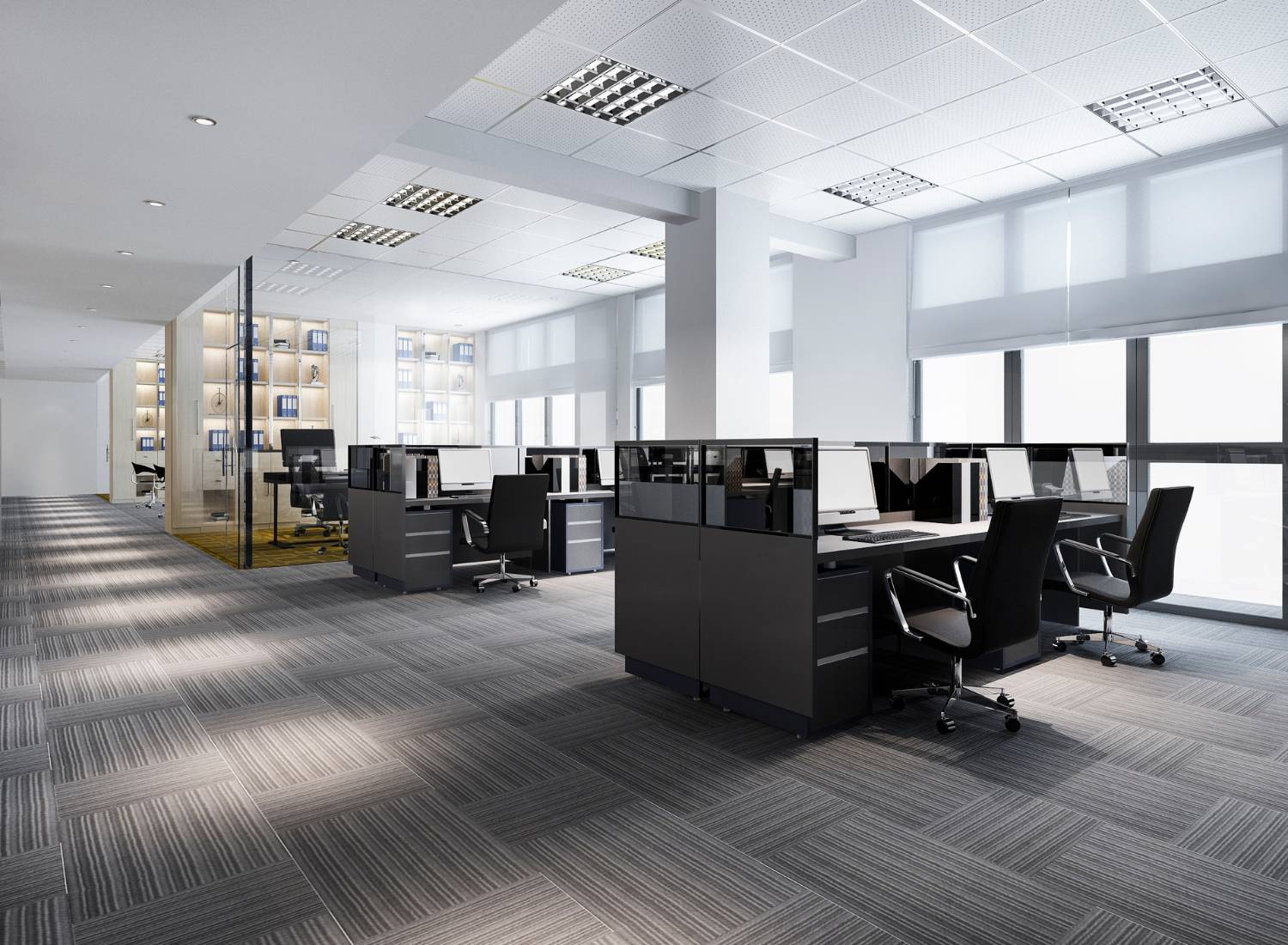
In the post-pandemic world, leasing office space has changed. We’ve seen more of a hybrid work model develop over the last several years, although there has been a lot of discussion of larger national companies mandating that their employees come back to the office full-time, or the majority of the time. The New Jersey and national office markets are still adapting to these hybrid work models. We’ve also seen some of the large corporations reduce their office footprint, leading to less positive absorption. Conversely, the soft office market has spurred a trend of repurposing commercial office buildings, with 10%-15% of the total office rental inventory converting to industrial and multifamily properties in recent years – a “right-sizing” of the market. Higher interest rates and economic pullbacks have further challenged office building owners, particularly those that are less financially stable and able to handle market fluctuations, paying upfront broker fees, and hefty tenant improvements. However, we are seeing more and more cars on the highways during commuting hours, and our parking lots are slowly filling up, suggesting a return to more in-office work.
What is your assessment of the mixed-use developments in the region?
Mixed-use developments, particularly in urban areas, are becoming increasingly common, combining office, residential, and retail spaces. Many buildings are being improved with more amenity spaces and services to better serve tenants. These include on-site food, fitness and yoga centers, and conference training rooms. Some properties also feature tenant engagement programs. These programs involve contracting with a concierge-like service to organize quarterly events with seasonal or holiday themes. These events aim to connect tenants and often include food, music, and arts and crafts.
To what extent is your company considering other real estate sectors?
While our current strategy emphasizes diversification due to recent office sector challenges, new opportunities are emerging in this market. Real estate is cyclical, and the currently depressed office market is likely to recover once the regional and national banks and other lenders resume financing these properties. Our need to diversify stems from a desire to reduce our reliance solely on the office sector and to capitalize on investment prospects in other commercial real estate areas. We recently acquired a shopping center and have been actively pursuing retail acquisitions, which we find appealing. However, the multifamily and industrial sectors appear overpriced according to our value-add investment approach and haven’t presented attractive acquisition opportunities to meet our objectives. Nevertheless, we are actively exploring other real estate sectors for diversification.
What are the top priorities and goals for Bergman Real Estate Group for the next three to five years?
Our main goal is to maintain high operational standards and occupancy rates across our office properties, which have improved since the pandemic started. Despite market softness, most of our portfolio maintains 85%-90% occupancy. We aim to further increase this and identify attractive acquisition opportunities to grow within the office sector, as well as selectively in retail and multifamily properties. Achieving this is somewhat dependent on the economy remaining stable.