






Michael Hightower, Managing Partner, The Collaborative Firm
 In an interview with Focus:, Michael Hightower, managing partner of The Collaborative Firm, discussed the organization’s growth in transit-oriented development, data centers, and community planning, as well as the need for future-focused strategies. “I’ve challenged our team and clients to think more futuristically about planning and to embrace nontraditional approaches that use technology and AI. The industry is changing, and our strategies must evolve with it,” Hightower said.
What were the most important developments for the firm over the past year?
During 2025, our firm continued to grow in several key areas, particularly in transit development with MARTA, the region’s major transit system. We’ve also been heavily involved in projects related to the Special Purpose Local Option Sales Tax, a local taxing process in Georgia that funds community improvements.
Given Atlanta’s ongoing traffic challenges, which have persisted for years, there has been a strong regional focus on improving mobility. Beyond that, we’ve seen many local governments retooling their development codes. These updates are designed to make the codes more user-friendly for the development community while also addressing residents’ concerns about land use and quality of life.
Another major focus for us has been the city of Savannah. It’s one of Georgia’s fastest-growing cities and home to the Georgia Ports Authority. Savannah’s economic and population growth has created exciting planning and development opportunities, particularly given its national prominence and thriving events scene.
What trends are you seeing in the types of planning or development projects that local governments are prioritizing today?
There’s definitely a growing trend toward transit-oriented development, or TOD, as cities look to concentrate growth around transit hubs and mass transit stations. That’s a consistent theme across many regions.
Another major trend is the rise of data centers. We’re seeing a surge in these projects, and they’re bringing new discussions about power usage, water access, and community impact. At our upcoming conference, data centers and AI will be central topics of discussion.
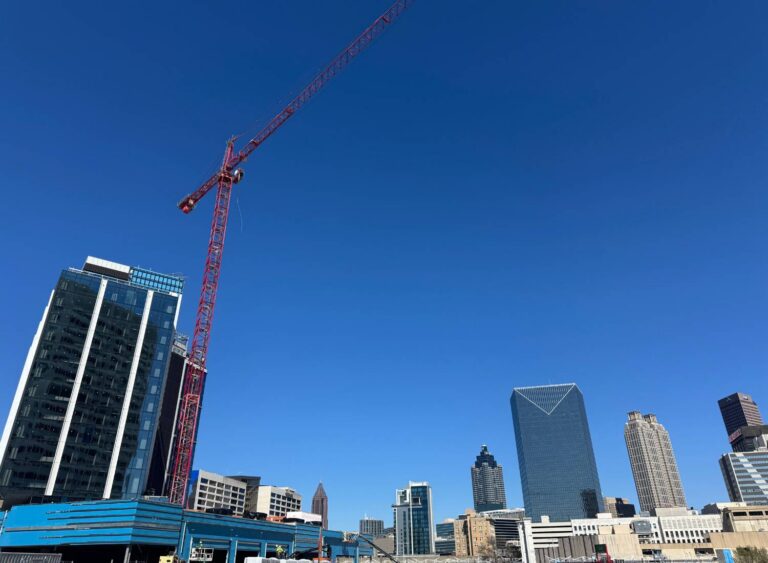
In downtown Atlanta, there’s been a lot of in-town redevelopment, particularly around the Mercedes-Benz Stadium and other sports facilities. These areas are attracting mixed-use and housing developments that bring new life to the city’s core. We’re also seeing more suburban counties initiating their own mixed-use developments, signaling broader regional diversification.
How has community engagement evolved within the public planning process?
Community engagement has become an essential, expected part of every major project. Whether the topic is transit, new housing, or data centers, citizens are highly involved and expect to have meaningful input. Local governments are working to balance business and community priorities, ensuring that new projects consider infrastructure, schools, and environmental impacts.
There has also been growing attention on emerging technologies like electric and autonomous vehicles. These changes are shaping discussions around infrastructure and long-term planning. Overall, engagement isn’t just encouraged, it’s required in most jurisdictions as a formal part of the planning process.
Where are you seeing the strongest demand for public and private collaboration in development?
Right now, collaboration is strongest in in-town redevelopment. Many people still want to live and work downtown, and with the city’s population continuing to grow, public-private cooperation is essential to address infrastructure and livability challenges.
We’re also seeing more collaboration in suburban areas. These regions were once seen as escapes from the city, but as growth continues and available land becomes scarce, they’re facing similar pressures, from traffic to public services. While not always formal public-private partnerships, these dialogues are increasingly necessary to guide sustainable development in both urban and suburban settings.
How are rising construction costs and regulations affecting development today?
Rising construction costs are absolutely one of the dominant topics in development discussions right now. In the Atlanta region, trade associations that represent developers, such as the Council for Quality Growth, are working to ensure that new rules and regulations from the public sector are implemented in ways that don’t unnecessarily increase project costs.
These organizations, along with industry professionals, play an important role in educating both the public and decision-makers about the implications of proposed regulations. Progressive local governments and trade associations are managing this challenge effectively by promoting greater understanding of how certain policies can impact development costs and timelines.
How is The Collaborative Firm helping clients navigate these pressures and uncertainties?
We’re having more direct and candid conversations with decision-makers than ever before. These discussions, which might once have been avoided, are now essential to address the real impacts of rising costs, regulatory shifts, and development challenges. It’s about creating an honest dialogue that benefits both public and private stakeholders.
At the same time, we’re also helping local governments better understand the challenges that developers face. This balance is critical, as it allows the public sector to appreciate private-sector realities and vice versa.
For example, in Savannah, we’ve been discussing new development activity and the concept of community benefit plans. The idea is to foster collaboration between developers and residents so both sides can find reasonable areas of compromise. When developer A joins hands with citizen B, everyone wins. I believe we’ll continue to see more of this kind of benefit-focused dialogue moving forward.
How has your experience in both the public and private sectors shaped your approach?
I spent my first 20 years in public office, serving six years as a council member and 15 on the county commission. That experience taught me a lot and, at times, tested me. For the past 20 years, I’ve owned and led my own firm, which has given me a full understanding of both sides of the table.
Having that balance between public service and private business has been invaluable. It allows me to speak from both perspectives and connect with people across the spectrum, from elected officials to developers. That dual experience earns me respect and helps me navigate conversations that might otherwise be difficult.
What are your firm’s strategic priorities for the next three to five years?
We’re putting a stronger focus on economic feasibility and market analysis. I recently hired an economic development associate to expand our capacity and assess the broader impact of projects we’re involved in, directly or indirectly.
We also plan to increase our support for city and county planning departments. I’ve challenged our team and clients to think more futuristically about planning and to embrace nontraditional approaches that use technology and AI. The industry is changing, and our strategies must evolve with it.
As we move toward 2030, we need to stay ahead of shifts in development and technology. The growth of autonomous vehicles, for example, will reshape how cities and counties plan. Success will depend on how adaptable we are to these future issues.
What other factors will be key to long-term success?
Workforce development is one of the most pressing challenges today. The post-COVID labor environment, shaped by hybrid and remote work, continues to evolve. Younger generations are approaching the labor market differently, creating new cultural and operational challenges.
We’re also seeing workforce issues tied to diversity, equity, and inclusion, as well as generational differences. At the same time, there’s strong demand for skilled labor that doesn’t require a four- or six-year degree. Addressing that demand and ensuring affordable housing for workers are essential.
Affordable housing has become a top priority in Atlanta. The current mayor has made it a central focus, advancing policies and projects that make the city more accessible. It’s a critical issue for residents and for the region’s economic sustainability.