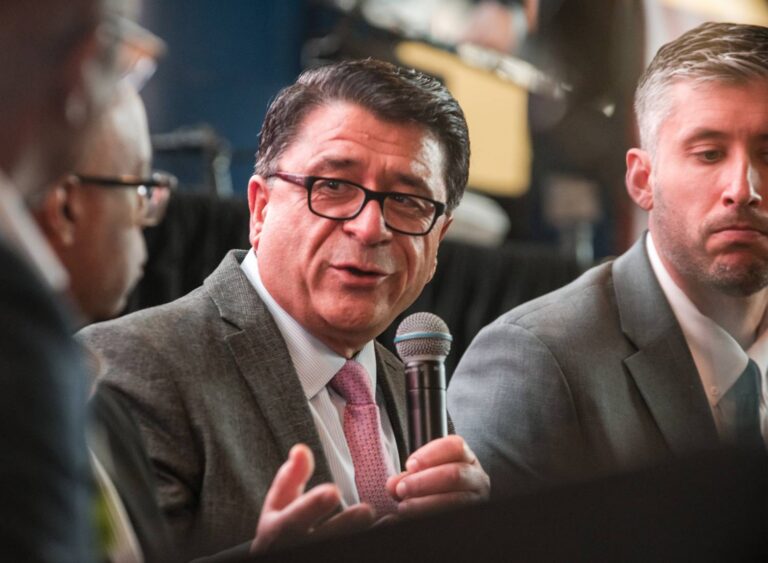







Michael Johnson, President, University of West Georgia
 In an interview with Focus:, Michael Johnson, president of the University of West Georgia, emphasized student success and regional impact as his top priorities. “We generate over $654 million in economic impact,” he noted, citing UWG’s central role in workforce development. Johnson also highlighted the university’s Division I athletics transition as a powerful tool for visibility and community pride.
What has your initial experience been like in your first months leading the University of West Georgia?
I’ve spent much of my time visiting with students, faculty, and staff — listening to their perspectives and learning what makes this institution special. As a first-generation college graduate, I’ve always believed in the transformative power of public higher education, and that belief has only deepened since arriving here.
What really stands out is how central the university is to the region — not only as an educational institution but as a driver of economic development. We generate over $654 million in economic impact, and more than 90% of our students are Georgia residents. Many of them go on to serve their communities, becoming force multipliers in terms of workforce, leadership, and future generations of college-goers.
What key trends do you see affecting regional universities like West Georgia?
One of the biggest challenges is demographic: fewer high school graduates due to declining birth rates mean more competition among the more than 4,000 colleges and universities for those students.
However, Georgia has a strong advantage with its HOPE Scholarship program, which helps give institutions like ours a stable pool of in-state students. Because over 90% of our students are Georgia residents, we are well-positioned to serve local and regional needs.
Some pressures — international recruitment, heavy research funding — don’t impact us quite as directly as they might at larger research universities. That gives us some flexibility.
What drew you to the University of West Georgia, and what do you see as West Georgia’s appeal to prospective students, faculty, or businesses?
I grew up in a small town in Florida – not far in spirit from where West Georgia is. In many ways, Carrollton reminded me of home. But more than that, I’ve always believed deeply in public higher education, especially as a first-generation college graduate myself. That mission aligns so closely with what a regional comprehensive university offers.
Approximately 46% of our students are first-generation, so being here allows me to make a direct impact. I felt drawn to a place where I could lean into that mission.
From a regional perspective, I believe West Georgia offers a compelling proposition. We have D1 athletics, growing academic offerings, and the ability to build tailored pathways to meet workforce needs.
What steps are you taking to build partnerships with industry and ensure curriculum is responsive to the workforce?
I’ve met with business leaders to truly understand what they need from universities — whether that’s accountants, engineers, IT pros, or emerging fields like AI, data science, or new technologies.
The goal is to adapt the curriculum so that when students graduate, they can hit the ground running — on day one. We’re talking with industries about co‑designing programs, creating experiential learning options, and ensuring internships are meaningful (not busywork but deep, career‑relevant experiences). Many of those internships lead to job offers, especially in fields where demand is strong, such as nursing, education, and health care.
Which degree programs are seeing the greatest demand today, and how do you see that evolving?
Our top five undergraduate programs currently are psychology, business, nursing, education, and biology. Many students gravitate toward those pathways because they align with workforce opportunities and personal interests.
That said, we’re also planning ahead. We want more undergraduate research opportunities and stronger ties between academics and industry. We’d like to see more faculty engaged in projects with local businesses, incubator initiatives, and even translating research to market.
How is the university managing talent recruitment and retention?
Hiring and retaining quality faculty and staff is complex, especially with so much competition across higher ed. But we try to emphasize work-life balance, smaller class sizes, meaningful faculty-student interaction, and a strong sense of mission.
Housing is a challenge in many places, and we are mindful of that here, but I believe our university offers unique appeal: smaller scale, close relationships, and a chance for faculty to shape programs in meaningful ways. I’m encouraged by the caliber of people joining us — they bring impressive backgrounds and see West Georgia as the place they want to make an impact.
How are you leveraging athletics to elevate West Georgia’s visibility and student engagement?
Athletics is absolutely part of the university’s front porch — the public face. We’ve transitioned to D1, and early results, especially a great football season in 2025, have generated real excitement.
You simply can’t buy that kind of attention. It resonates with alumni, prospective students, and regional visibility. While it’s early, we expect that the athletics success will feed into applications, branding, and community pride.
We also have 12 other NCAA sports beyond football, and each contributes to the student experience and the broader identity of the university, and our UWG Cheerleading program now boasts 40 national championships.
What are your top priorities for your first year in office?
My top priority is student success. That has to be the core of everything we do. Currently, only about 43% of our students graduate, and that number needs to improve. We’re committed to understanding why students are falling behind and to making meaningful changes to help them succeed. That includes everything from using data more effectively to making sure students know where to turn for support. I’ve told them directly, “Here’s my email address. If you run into a problem, reach out.” We don’t want a single student leaving because they couldn’t get an answer.
Another key focus is elevating our research activity. While we are currently producing around $700,000 in research expenditures, there’s significant room to grow. I want to see more undergraduate research, deeper faculty engagement in applied projects, and more collaboration with local industries. Expanding that part of our mission will help us serve both our students and the region more effectively.
Lastly, as we transition more fully into Division I athletics, I see a real opportunity to use that momentum to build awareness and pride in the university. Athletics is often the most visible part of a university’s brand — it’s the front porch. I want to make sure we’re leveraging that visibility to engage prospective students, energize alumni, and strengthen our identity.