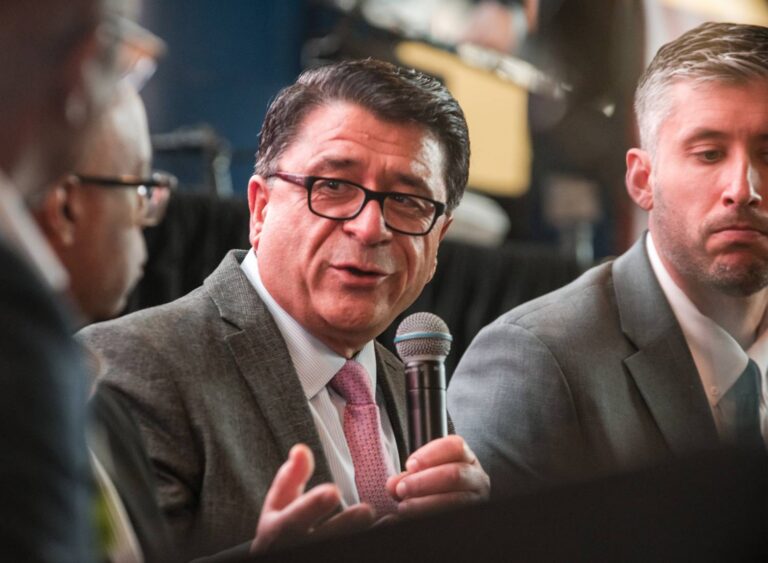







Michael Peduzzi, President & CEO, CNB Bank
 Invest: sat down with Michael Peduzzi, CEO of CNB Bank, to discuss its recent acquisition of ESSA Bank Corp., its approach to workforce development, and its ongoing commitment to community and client relationships. “In western Pennsylvania — Greater Pittsburgh, the Greater Erie area, and east into Greater Clearfield — there’s ample room to deepen penetration. Our platform is strong; the task is to expand relationships where we already operate,” he said.
What ultimately differentiates CNB Bank?
A combination of disciplined risk management, localized decision-making, and technology that keeps service personal. We hire people who know their communities. We invest in tools that extend access and hours without removing the human from the experience. And we structure solutions so clients aren’t set up for surprises if conditions change. That’s how we think about growth — not as a number, but as a responsibility to do more of what works for customers and communities.
What developments over the past year most materially influenced CNB Bank’s operations and strategy?
We completed the acquisition of ESSA Bank Corp. in northeastern Pennsylvania, which brought balance to our footprint and expanded assets from $6 billion to $8 billion. ESSA was a strong cultural fit. That was key: We weren’t chasing growth just to be bigger. We wanted to extend what I view as premier banking services and employee experiences across more of Pennsylvania. We prepared for the integration with intention; for example, we placed a hiring freeze on back-office roles at our main organization so we could minimize displacement for ESSA employees after the merger. Technology helped too. Today, team members don’t have to be next to the main systems in Clearfield; our remote platforms allow qualified people across western Pennsylvania and beyond to contribute, which strengthened the combined workforce.
How are you approaching workforce development, both in attracting top talent and shaping culture?
Roughly 10% of our workforce is remote, and that flexibility widens our recruiting aperture. Many roles can be executed electronically, with people coming in a couple of days a month for meetings. We also deploy technology that pairs convenience with human connection. A good example is our enhanced teller machines. From 7 a.m. until branches open — and again from close until 7 p.m. — customers can tap the screen and speak live with a banker who can take deposits, initiate loan applications, and handle day-to-day needs. Behind the scenes, we staff those live bankers from multiple sites across our footprint. The goal is to put great talent in front of customers wherever they are, without forcing staffing into one geography.
How do you balance technology with the human side of banking?
Technology should enable better conversations, not replace them. Many consumers have experienced chatbots that can’t solve a real issue. Our model keeps the convenience — extended hours, digital access — but ensures you can talk to a qualified human when it matters. Whether you’re standing at one of our enhanced machines or connecting digitally, you still get a banker who can actually resolve a problem or advance a goal.
What trends are most shaping the banking landscape right now, and how is CNB responding?
Digitization is universal, but customers still want choice. Plenty of people prefer to bank by phone or laptop, until it’s time to transmit sensitive information or complete a complex step, like a loan application. Then many want an in-person or live, person-to-person experience. We’ve invested heavily in security so that when customers do communicate or transmit data electronically, it’s protected. Just as important, we educate clients on best practices: secure networks, avoiding password sharing, and using the tools we provide safely. Ease of use matters, but never at the expense of safeguarding personal and business information.
Interest-rate volatility has challenged the sector. How are you managing risk while supporting clients?
When rates spiked in early 2023 and then began to pull back, our interest rate risk management framework helped us stay agile. We do extensive modeling so borrowers and depositors aren’t exposed to “everything must go perfectly” scenarios. If a customer’s rate changes, we work through whether they can handle that before structuring a solution. It’s proactive and transparent — we alert clients to the relevant risks and tailor structures accordingly. Again, growth is fine, but we focus on smart growth that both the bank and the customer can embrace.
CNB has deep local roots. How does community engagement shape mission and strategy as you grow into new markets?
For the first 140 years, we were concentrated in central Pennsylvania; our four-state expansion took off around 2005. Even so, we don’t “export” bankers. When we launched in places like Erie, Buffalo, Columbus, or Roanoke, we hired people from those communities — people who already understood local needs and had relationships with civic organizations. That local knowledge is foundational. We also give every employee two full days of paid volunteer time each year during the workday. Many community needs are addressed during business hours, and we wanted our teams to engage meaningfully. Most employees use the full 16 hours because they’re deeply connected where they live and work.
How would you describe CNB’s regional economic role, especially in small-business lending, commercial real estate, and reinvestment?
We try to be self-funded and self-investing. The deposits we take in a community are tracked and reinvested back into that community. That discipline supports deeper relationships, because local economies drive our customers’ success, from keeping people employed and paying mortgages to helping families plan for education and build wealth. We also look closely at local demographics to ensure our teams reflect the communities we serve. In areas with more Spanish speakers, for example, we prioritize bilingual staff so newcomers can access services and keep progressing financially.
What are your top priorities over the next two to three years?
Depth over breadth. We don’t need new states or cities to grow. In western Pennsylvania — Greater Pittsburgh, the Greater Erie area, and east into Greater Clearfield — there’s ample room to deepen penetration. Our platform is strong; the task is to expand relationships where we already operate. Technology is a force multiplier here. For instance, customers can already open accounts online, so they don’t have to be near a branch to benefit from our services. We’re also proud of Impresia Bank, our division by women, for women. That focus reflects our broader view: when you align culture, capability, and community needs, you serve more people — and you serve them better.