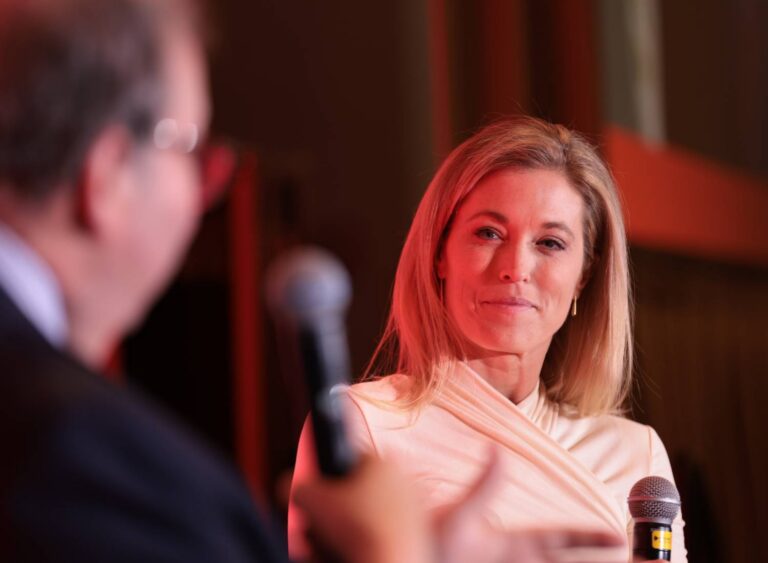







Morgan O’Brien, CEO, Hope Gas
 In an interview with Invest:, Morgan O’Brien, CEO of Hope Gas, said that the company’s transformation into a fully independent utility has opened new opportunities for job creation, infrastructure investment, and community impact in West Virginia. “This year marked the first time we’ve been fully independent, managing every aspect of the business locally with a West Virginia-based team.”
What changes over the last year have had the greatest impact on Hope Gas, and in what ways?
We’re a 127-year-old company that has had many different owners over the years. My leadership team and I came on board about three years ago, and since then, we’ve been working to transform the company from being part of a large, national energy conglomerate into a fully independent, standalone business.
Over the past year, we’ve made major strides in this evolution. We’ve established our corporate headquarters here in West Virginia and built out an entirely new infrastructure — standalone IT systems, a dedicated call center, gas control, dispatch, and more. Every function that used to be shared across a holding company is now operated solely by us here in West Virginia.
This year marked the first time we’ve been fully independent, managing every aspect of the business locally with a West Virginia-based team. It’s been an exciting journey. We’ve been creating jobs, becoming more engaged in our communities, and doing what utilities should do — serve the people. But now, we’re doing it with a sharp focus on West Virginia. Historically, West Virginia was just a small part of a larger national operation. Now, we’ve written a new chapter of local ownership, local jobs, and local pride. It’s been a year of growth and deepened commitment to this state.
What impact have those investments and this local focus had on West Virginia communities?
From day one, our goal has been to make a tangible impact in the communities we serve. Over the past three years, we’ve grown our customer base by about 30% in West Virginia. We’re now operating in two-thirds of the state’s counties.
A key priority has been contracting with West Virginia-based businesses. One major pipeline project we’re undertaking is being built entirely by local contractors who hire from West Virginia’s labor halls. That approach matters — it keeps investment and opportunity right here at home.
Since launching Hope Gas, we’ve doubled our state employee headcount. And this year alone, we expect to have over 1,100 West Virginia-based contractors laying pipeline across the region. In a state of 1.8 million people, that’s a meaningful economic impact. We’re not just upgrading infrastructure, we’re creating jobs and opportunities. We’re focused on long-term transformation, not only of our systems but of the communities we serve.
What trends in natural gas distribution and clean energy integration stand out to you?
A major trend we’re watching and actively engaging in is the rise of AI-driven data centers. These facilities consume massive amounts of energy and are increasingly being located near energy sources instead of having energy transmitted to them. That’s a shift in thinking and a game-changer for energy-intensive industries.
The new model is to build a large data center and place a dedicated power plant right next to it. States like Pennsylvania, West Virginia, and Ohio — with abundant natural gas — suddenly find themselves with a strategic advantage. Natural gas is the energy source of choice for these centers.
Everyone is competing to bring these projects to life. We’re partnering aggressively to attract and support data center development in the region. It’s an exciting opportunity, and the momentum feels almost limitless right now because of our energy resources. We’re making significant investments and forming strong partnerships to help power this next wave of innovation.
What are some of the biggest obstacles Hope Gas faces today, and where do you see opportunities to overcome them?
The energy landscape in the U.S. is evolving quickly. For years, there was an intense focus on green energy — solutions like wind and solar were seen as the answer to everything. But the reality is that those sources alone haven’t proven adequate to meet the demands of a growing economy.
We’ve come to recognize that natural gas isn’t just important but essential. It’s abundant, affordable, and reliable. The challenge now is reshaping the national conversation to acknowledge that reality. We’re seeing a pivot — one that recognizes natural gas must be part of the mix. But pivoting national policy and public perception isn’t easy.
That said, it’s also a huge opportunity. We’re in a position to lead, to educate, and to demonstrate how natural gas can complement other energy sources. We’re focused on helping people see the bigger picture: growth, sustainability, and energy reliability can all coexist when natural gas is part of the equation.
Can you share some ways the company has strengthened its community ties in recent years?
Each state has its own unique challenges, and here in West Virginia, one of the biggest is that many young people believe they have to leave the state to achieve their dreams. One of our core missions is to change that mindset and create opportunities so that young people see a future for themselves right here.
We’ve partnered with universities to offer internships and summer jobs, and we’re even outsourcing some of our work to graduate students instead of external consultants. This not only supports students financially but also helps them build a career pipeline within West Virginia. They begin to realize they can achieve great things without leaving home.
Beyond the universities, we’ve also launched “Hope Academy,” partnering with vocational and technical schools across the state. These are high school students who spend part of their day learning trades like welding, electrical work, and heavy machinery operation. We’re introducing them to the natural gas industry, offering training programs and summer jobs to help them see what a career in this sector looks like.
This is a long-term investment for us — just as important as building a pipeline. We’re preparing the next generation of energy workers. Whether it’s hands-on trade work or more technical and academic roles, we’re opening doors for young people to build a future here. While we support many community initiatives, this is by far the most impactful work we’re doing.
I always tell people, brands like Nike or Pepsi had to build their names. Ours was given to us over a hundred years ago. “Hope” is the perfect name to represent a bright future, full of opportunity. It truly captures who we are and what we want to represent for West Virginia.
What are Hope Gas’s key priorities and goals over the next two to three years?
Our main goal is to continue the momentum we’ve built and to deepen our impact. We see ourselves not as an isolated utility, but as a partner working alongside the state, local businesses, educators, and the broader community.
Natural gas offers tremendous opportunity, especially in a state like West Virginia that already has so many incredible assets. The challenge is turning that potential into real, lasting outcomes: more jobs, better wages, and more reasons for young people to build their lives here.
We’re also focused on continuing to invest in infrastructure and reliability, but always with an eye on how it benefits the people who live here. This state is stunning — mountains, rivers, the outdoors, and communities filled with good, hardworking people. Our job is to align our business goals with the broader goal of making West Virginia an even more vibrant, opportunity-rich place to live and work.