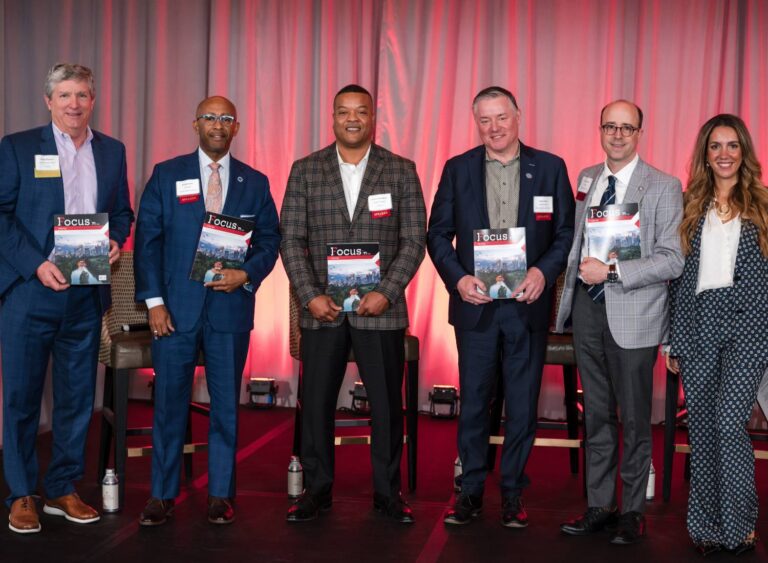







Myron Rolle, Pediatric Neurosurgeon, Nemours Children’s Health
 April 2026 — Invest: spoke with Myron Rolle, pediatric neurosurgeon at Nemours Children’s Health, about his journey from professional football to medicine, his approach to patient care, and the role of neurosurgery in the community. “The organization shares my belief that medicine should extend beyond the hospital and into underserved communities,” Rolle said.
What led you to your current role, and how did your journey evolve from football to pediatric neurosurgery?
I played football my entire life, starting at 6 years of age, and I always felt that I could go far in that sport. I knew it had an expiration date, so my parents emphasized education and having a plan for what came next.
I was an All-American at Florida State University and went on to play in the NFL with the Tennessee Titans and Pittsburgh Steelers for three years. After that, I transitioned to medical school to pursue neurosurgery, which had long been a goal of mine. I was inspired early on by the book Gifted Hands by Ben Carson, which solidified my interest in the field, particularly pediatric neurosurgery.
What drew me to pediatric neurosurgery is the breadth of what you can do. You can treat brain tumors, vascular conditions, spinal deformities, and more, all within a very vulnerable patient population. After completing medical school at Florida State and residency at Harvard, I wanted to return to Florida to build both my career and my family life.
Nemours was a natural fit. The organization shares my belief that medicine should extend beyond the hospital and into underserved communities. That alignment made the decision very clear for me.
How does your “2%” philosophy apply to patient care and recovery?
The 2% philosophy comes from my time playing football at Florida State, where the focus was on improving incrementally every day. I’ve carried that into my professional and personal life.
In neurosurgery, recovery is rarely immediate. Patients, especially children, want to get back to normal life as quickly as possible, but the process takes time. I explain to families that this is a journey. We’re not sprinting to recovery; we’re progressing step by step.
That includes the surgery itself, post-operative care, rehabilitation, therapy, follow-up imaging, and ongoing treatment. Each stage represents incremental progress. This approach helps manage expectations and reassures families that we are committed to the long-term outcome, working alongside them every step of the way.
What drew you to focus on complex areas like cerebrovascular conditions and brain tumors?
I gravitated toward these areas because of their complexity and the level of challenge they present. Cerebrovascular conditions, such as arteriovenous malformations and aneurysms, are high-risk and require a high level of precision. Not everyone is drawn to that level of intensity, but I find it incredibly rewarding.
The same applies to brain tumors. These are life-altering diagnoses that often come unexpectedly. A child may present with relatively common symptoms, and then imaging reveals a serious condition that requires immediate intervention.
I value the opportunity to step in during those critical moments when families are at their most vulnerable. Being able to provide solutions in those situations is a responsibility I take seriously, and it is one of the most fulfilling aspects of my work.
How has your experience in professional sports shaped your approach to medicine?
Football taught me how to manage pressure. While the stakes are different, the ability to perform under scrutiny and in high-stress environments translates directly to medicine.
In sports, you learn to prepare thoroughly, focus in the moment, and rely on your training. That same mindset applies in the operating room. I focus on fundamentals, maintain composure, and block out distractions so I can address the problem effectively.
That foundation has been invaluable in helping me navigate the demands of neurosurgery.
What role should neurosurgeons play in the broader community?
Neurosurgeons have a unique platform, and I believe it is important to use that platform to engage with the community. There is often a perception that neurosurgery is distant or inaccessible, but we have an opportunity to bridge that gap.
My interests include pediatric gun safety, helmet safety, and mental health awareness, particularly in underserved communities. I also focus on issues like food security and nutrition, which play a critical role in early brain development.
When you enter these communities as a neurosurgeon, there is an immediate level of trust and attention. It is important to use that access to educate, advocate, and make a meaningful impact beyond clinical care.
What should families in Central Florida understand about pediatric neurosurgery at Nemours?
Families should know that we take a highly collaborative, team-based approach to care. We work closely with specialists across multiple disciplines to ensure that every aspect of a patient’s condition is addressed.
Our process is evidence-based and rooted in extensive training and experience. We review cases thoroughly, consult with colleagues, and use all available resources to determine the best course of action.
The focus is always on achieving the best possible outcome for the patient. It is not about individual recognition; it is about delivering results through teamwork and shared expertise. I am very proud to be part of an organization that operates with that mindset.
Want more? Read the Invest: Greater Orlando report.