






Nashville’s real developers? Healthcare and higher ed

Key points:
- • Universities and healthcare systems are anchoring long-term development and shaping regional growth patterns.
- • Higher borrowing costs and tighter lending standards are driving more selective, fundamentals-based project evaluation.
- • Workforce alignment and institutional collaboration are becoming critical to sustaining Middle Tennessee’s expansion.
 March 2026 — Healthcare systems, universities, and financial institutions are playing an increasingly central role in shaping how and where development takes place across Nashville. As population growth continues and capital markets tighten, institutional investment and financial discipline are emerging as key forces behind the region’s real estate activity.
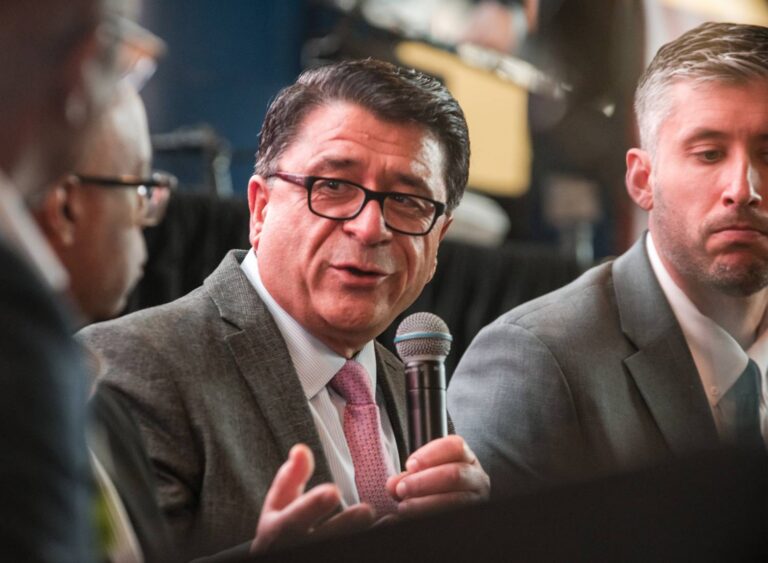
“When universities and healthcare systems invest in land and facilities, they are making a long-term commitment to that community,” said Harry Allen, executive vice president of financial excellence and chief financial officer at Belmont University, during the Invest: Nashville 4th Leadership Summit. “These are not short-term investments. They are meant to shape the community for decades.”
Anchor developments
Education and healthcare campuses often anchor surrounding development, influencing nearby business activity, workforce formation and long-term land use patterns. From a research perspective, they play a critical role in sustaining economic momentum.
“These institutions bring stable employment and long-term activity to the region,” said Murat Arik, director of the Business and Economic Research Center at Middle Tennessee State University. “They are not going anywhere, and that stability creates a foundation for growth around them.”
Healthcare development, in particular, is driving both economic and physical expansion across Middle Tennessee. Ascension Saint Thomas, one of the largest health systems in the region, announced more than $537 million in capital investments to expand facilities, modernize hospitals and increase capacity across multiple counties. Smaller-scale projects are also contributing to that growth, including a $25 million expansion at TriStar Centennial Medical Center in Nashville, following multiple projects by HCA Healthcare.
“We are seeing a shift toward care being delivered closer to where people live,” said Blake Bratcher, partner and executive vice president at Flagship Healthcare Properties. “That is changing how and where healthcare real estate is developed.”
This trend is influencing site selection and development patterns, as providers prioritize accessibility and proximity to growing population centers. Across the United States, more procedures are moving into outpatient settings, as a result, ambulatory surgery center volumes are expected to grow by about 9% between 2023 and 2028, outpacing hospital outpatient departments. It is also expanding the scale of the sector, with procedure volumes projected to increase by more than 20% over the next decade.
As these systems expand, their impact extends beyond real estate into workforce development. Colleges, universities, and healthcare providers are increasingly working to align training programs with labor market needs, helping address workforce gaps while supporting regional growth.
“Workforce development does not happen in silos,” said John Cunningham, director of healthcare partnership solutions at Nashville State Community College. “It requires coordination between education providers, employers and institutions to make sure training aligns with real opportunities.”
Development in a more selective market
Panelists noted that financial conditions are reshaping how projects are evaluated and financed. Borrowing costs remained elevated compared with prior years, with new commercial real estate loans in 2025 averaging around 6.2%, up from roughly 4.7% on loans originated earlier in the decade, according to S&P Global Market Intelligence. Rates vary widely depending on the asset and structure, with many deals pricing between 5% and 8.75% in early 2026.
“It is a different calculation to get deals to pencil today. Costs are higher, rates are higher, and sponsors are having to bring more equity and stronger fundamentals to each project,” said Bradford Vieira, regional president & CEO at ServisFirst Bank.
This discipline is also visible in lending conditions, with banks maintaining tighter standards compared with historical norms and requiring stronger fundamentals across projects.
“Deals are getting done, but they are getting done with a lot more scrutiny. Everyone is paying closer attention to fundamentals, whether that is location, demand or long-term viability,” said Alex Sanders, president and CEO of Pinnacle Construction Partners.
Banks have kept commercial real estate lending standards tight compared with historical norms, according to Federal Reserve data, while lower loan-to-value ratios and higher return thresholds are requiring developers to bring stronger fundamentals and more equity into each project.
“There is still capital in the market, but it is being deployed more selectively,” said Kelley Kee, Tennessee state president at United Community Bank. “Lenders are looking closely at fundamentals and making sure projects are positioned for long-term success.”
Even as financing conditions change, population gains, job creation and business expansion continue to support investment across Middle Tennessee. As projects become larger and more capital-intensive, development is increasingly defined by how well institutions, investors, and operators align early in the process, particularly in a market where long-term demand remains strong but financing has become more selective.
“Success really depends on having the right team together from the start,” said Sanders.
Interested in reading the Invest: Nashville report? Sign up today!
For complete conference panel discussions, tune in to our YouTube Channel.