




No Playbook: Leadership in the Face of Uncertainty
Key points:
- • Rare diseases expose families to profound uncertainty, with most lacking approved treatments.
- • Leadership is forged in moments without clear answers, requiring action despite incomplete information.
- • Progress depends on resilience, preparation, and contributing where control is possible.
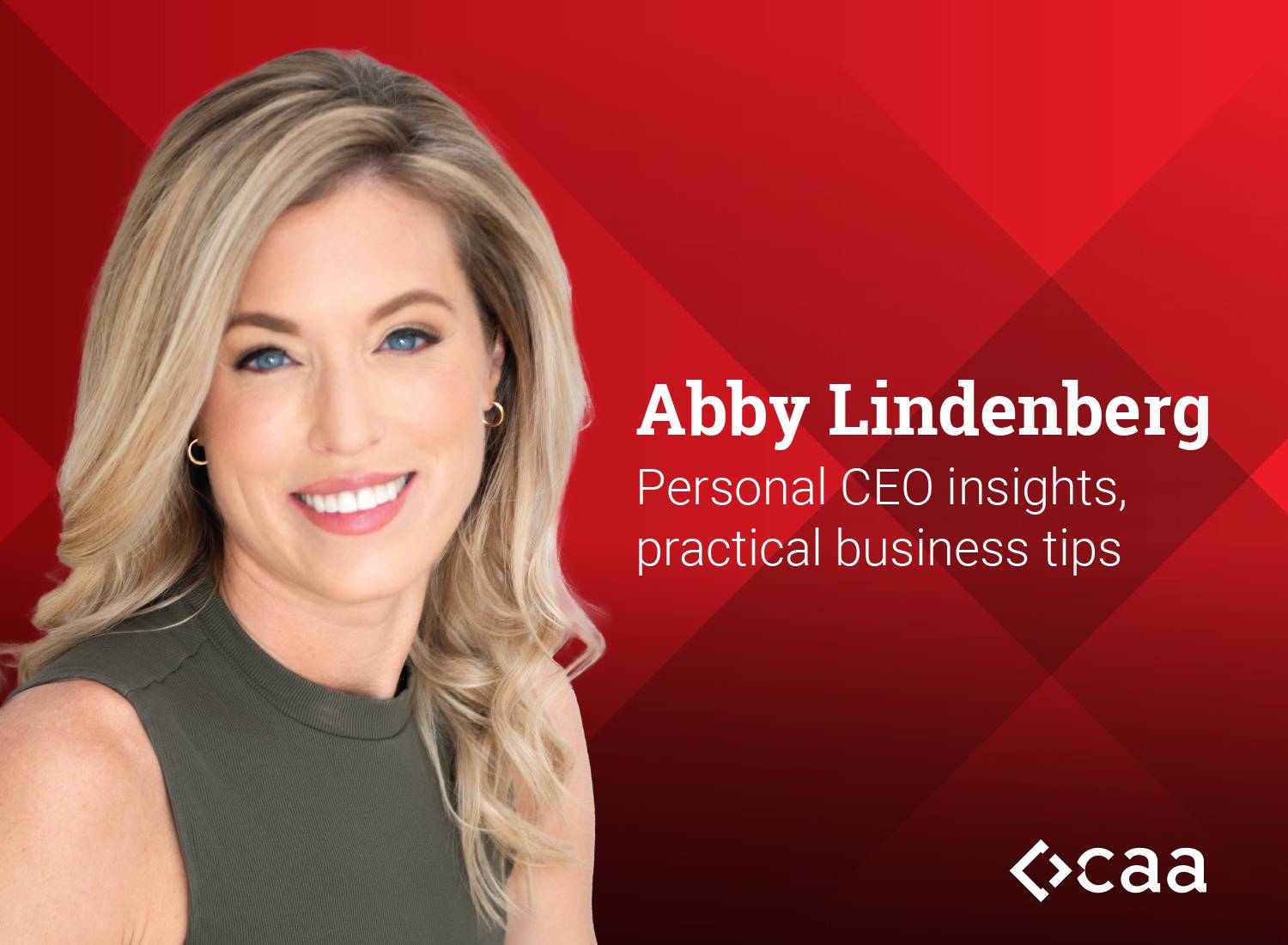 February 2026 — Every Feb. 28, Rare Disease Day comes and goes. For most people, it’s a date on a calendar. For some of us, it’s a lived reality. When you’re a parent sitting in a doctor’s office hearing, “We don’t know what this is,” uncertainty stops being theoretical. It becomes your life.
Join us at caa’s upcoming leadership summits! These premier events bring together hundreds of public and private sector leaders to discuss the challenges and opportunities for businesses and investors. Find the next summit in a city near you!
The fact is that 1 in 10 Americans is affected by a rare disease. There are more than 7,000 identified rare diseases worldwide. But nearly 95% have no approved treatment. No cure. No clear roadmap.
How’s that for uncertainty? And how on earth do you push through?
What I’ve come to understand — as a mother, as a founder and CEO, and now as vice president of ISMRD — is that leadership is forged in exactly these moments.
Not when the path is obvious, but when it isn’t.
The Diagnosis That Didn’t Come
When my daughter Layla began showing signs that something wasn’t right, I did what any parent would do: I went to doctors. Lots of them.
One.
Two.
Five.
Thirteen.
More than 13 doctors, in America and abroad, and not one could definitively tell me what was happening. It took me close to three years to finally get the diagnosis. Many families go to far more. Some spend years searching for answers.
There is a particular kind of exhaustion that comes from sitting across from experts who don’t have one. You leave with more questions than you arrived with. I grew more unsettled and more frustrated.
Eventually, you realize something every leader recognizes at some point: No one is coming to hand you the solution. If progress is going to happen, you are going to have to help create it.
Leadership Is Not Certainty
What I’ve experienced in my years running my company, caa, is that people often assume leadership means confidence, clarity, decisiveness. But those qualities are often the result, not the starting point.
Real leadership is about what you do when there is incomplete information. When the path to success hasn’t been paved yet.
When I started caa, I didn’t have outside capital. I didn’t have investors guiding the strategy. I didn’t have someone mapping the expansion playbook for me.
I had to figure out what I didn’t know. I then needed the discipline to ask better questions.
When I prepare to interview a CEO, I do deep research. I study the industry. I look for patterns. I push past surface answers. When the stakes are high, preparation matters.
After I finally received Layla’s diagnosis and knew her health was on the line, that same muscle activated, but at a whole different level. I spoke to every parent who would talk to me. I spoke to every association, specialist, and every center with even limited experience in her condition.
The decision to take her to Minneapolis came after relentless research and difficult conversations. It wasn’t convenient. It wasn’t certain. It absolutely wasn’t easy. I was having these discussions fighting back tears. I still have mountains of notebooks documenting each and every conversation, water marks smudging the ink. But I knew all these conversations were essential to make the decision I knew I would have to make: how to give her the best chance at a future.
That is what leadership looks like in uncertainty. You move with the best information available, even when it’s incomplete, because waiting for perfect clarity is a luxury leaders rarely have.
Something Borrowed: Strength in Its Purest Form
For a parent — and for anyone, I imagine — there is nothing worse than watching a child suffer. During Layla’s treatment, which was a bone marrow transplant, there were days when her hair was falling out from chemo. She was so thin because she couldn’t eat. There were wires coming out of her chest to make bloodwork and transfusions easier. A G-tube supported nutrition. Machines and monitors dinging all the time, surrounding a child who should have only known playgrounds and birthday parties.
It was devastating to watch.
And yet, every single day, she got out of bed. Every single day, she ate something; not much, but something. Every single day, she played with therapists and volunteers. Every single day, she put on her princess dresses.
The doctors were shocked at how strong she was. And she gave me strength. When I felt emotionally paralyzed by fear, she modeled resilience in its simplest form: show up anyway.
Leadership isn’t always loud. Sometimes it is quiet endurance.
Taking Control Where You Can
Today, as vice president of ISMRD, I see uncertainty at scale. Families navigating diagnoses without treatments. Researchers racing against time and limited funding. Diseases most people have never heard of.
With rare diseases, we cannot control timelines. We cannot promise outcomes. We cannot will cures into existence. But we can control contribution.
This means funding research, advocating and building infrastructure. It also means bringing the right experts into the room and moving science forward incrementally.
Leadership, at its core, is about taking ownership of what is within your control, and acting there relentlessly. That applies in healthcare, business, and in life.
You may not control market shifts. You may not control economic cycles. You may not control every outcome. But you control preparation. You control effort. You control the questions you ask. And you control the contribution you choose to make.
The CEO Parallel
As CEOs, we operate in uncertainty every day: markets shift, technology evolves, talent moves, and industries disrupt themselves overnight.
The instinct can be to wait — for more data, more assurance, more stability — but the leaders who move organizations forward are those who make informed decisions with imperfect information, rather than waiting for perfect clarity.
Strong leaders do the homework, build strong networks, and ask sharper questions. Then, they take the next step. When doubt creeps in, they borrow strength from mentors and peers. And sometimes even from the unexpected resilience of a child in a hospital bed.
A World of Uncertainty
Rare Disease Day is a reminder of how much uncertainty exists in the world. But it is also a reminder of something else: Progress does not require certainty. It requires commitment.
When there is no playbook, leaders write one.
When there is no guarantee, leaders contribute anyway.
And when the outcome is unclear, leaders focus on what they can control — and move. That is true in both the boardroom and the hospital room.
In both places, I’ve learned the same lesson: You don’t wait for certainty. You lead through it.
Want more? Read the Invest: reports.