



Caroline Whaley, Executive Director, Gateway Marietta Community Improvement District

Caroline Whaley, Executive Director, Gateway Marietta Community Improvement DistrictCaroline Whaley, executive director of the Gateway Marietta Community Improvement District (CID), spoke with Invest: about creating a welcome gateway to both the district and city of Marietta. “When our partners bring businesses into the area, they know it’s an area that is being taken care of, one where those businesses will be successful.”

What is the mission of Gateway Marietta CID, and what are some of the infrastructure upgrades or projects that have been prioritized over the last year?

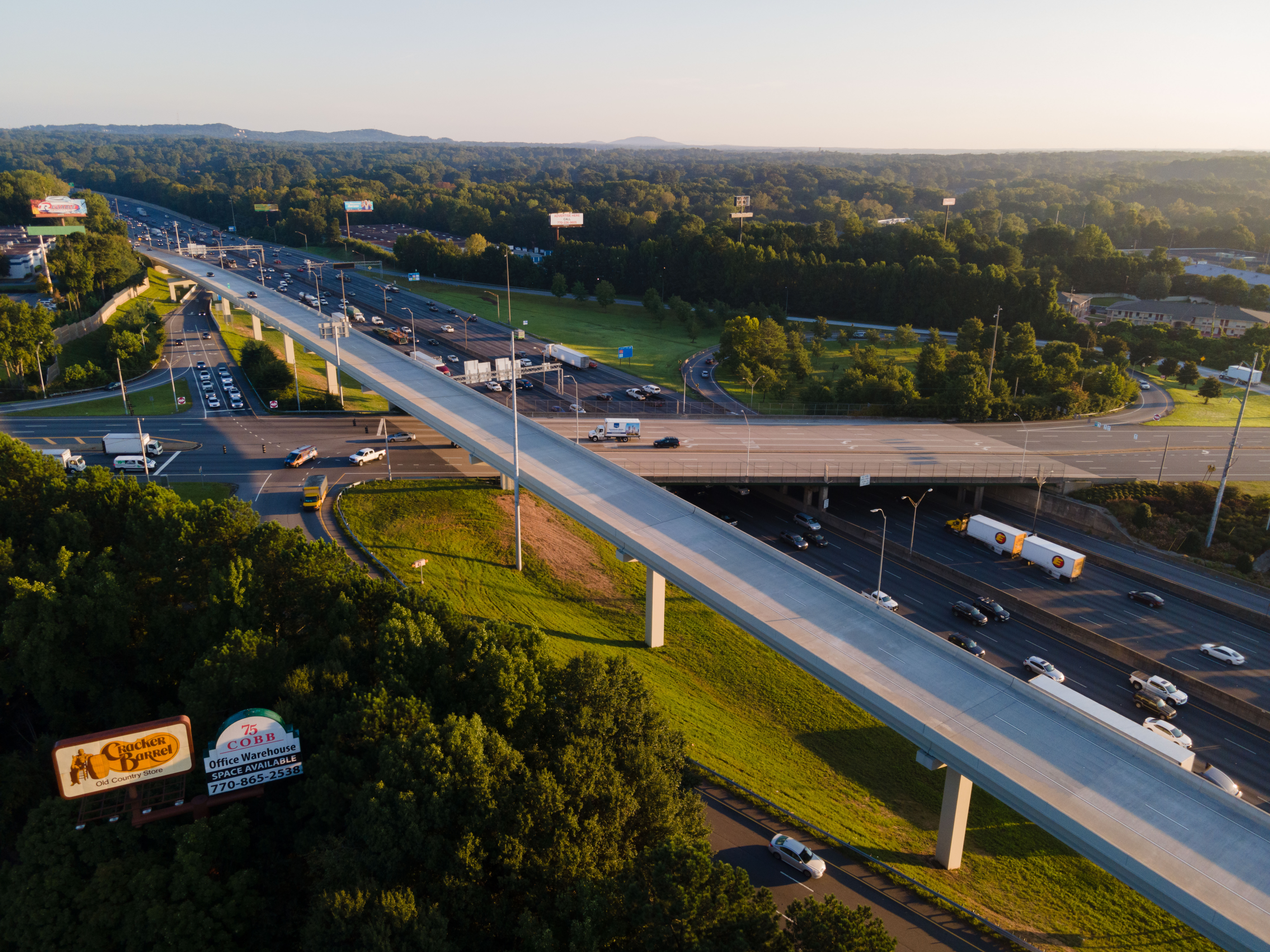
Established in 2014, the Gateway Marietta CID’s goal is to encourage revitalization and redevelopment of Delk Road, South Marietta Parkway, and Franklin Gateway. Gateway Marietta CID is a coming together of commercial property owners in a set, defined area who agree to invest their own money back in the area by levying an additional tax on themselves to be spent on projects that benefit the entire community. The revenue generated is used to make improvements in a specific area pertaining to infrastructure, beautification, and public safety. There are three CIDs in Cobb County, and even more throughout the state of Georgia. Gateway Marietta CID is relatively young, just over 10 years old. We are very small in size, a 1.2-square-mile area with 76 commercial properties that contribute. This year’s contributions will amount to over $600,000 in revenue. We are smaller in comparison to other CIDs, but we like to say we are “the little CID that can.” We aren’t taking on major infrastructure projects, but the things we have done are making a big impact on our area. We develop ideas and bring partners together to make them happen. Beautification efforts include landscaping enhancements at I-75 and the corridors along Delk Road and South Marietta Parkway. The landscaping enhancements create a boulevard-type feel as you come into Franklin Gateway. We started these projects in 2014 and have been slowly working on them. This past year, GMCID invested approximately $700,000 in landscape enhancements in partnership with the City of Marietta and GDOT. The South Marietta Parkway Interchange Project was funded in partnership by a GDOT Roadside Enhancement Beautification Council (REBC) grant.
Public safety is often a priority for CIDs. How does Gateway Marietta collaborate with local law enforcement or other agencies to enhance safety in the district?

GMCID works closely with the Marietta City Police to best understand how we can offer support regarding public safety. In 2019, GMCID was one of the first CIDs to install Flock Safety mobile license plate readers.  The cameras capture the license plate number, make, and model of the car as it passes by. This information is used by law enforcement to help their investigative efforts. The cameras are linked into the regional law enforcement network to help public safety efforts more broadly. GMCID’s pool of cameras has grown from four solar-powered cameras to 13, and this past summer GMCID added four hardwired Condor 360 cameras.

What are some recent projects to enhance the district’s aesthetics or overall appeal? How do these plans fit within the CID’s Master Plan goals and objectives?

We are wrapping up a major landscape installation at I-75 and Delk Road, transforming this key gateway into a more welcoming and visually appealing entrance to the district. This project has transformed the area into a landscaped “welcome mat” for visitors entering from the interstate — and then proceeding along Delk Road, creating a parkway-like feel that aids in calming traffic.

Later this fall, we’ll be breaking ground on the Blanche Underpass beautification project, which will further enhance connectivity and aesthetics in the area. This project builds on recommendations from the 2020 Atlanta Regional Commission (ARC) study that focused on beautification and placemaking within our corridor. The Blanche Underpass Project will feature enhanced landscaping and design elements that create a sense of arrival and belonging.

All of the beautification efforts align with the CID’s Master Plan goals of fostering a cohesive and attractive environment that supports economic vitality, safety, and quality of life. Together, these projects support our broader vision of shaping Franklin Gateway into a vibrant, well-connected, and visually distinctive corridor that reflects the city’s commitment to progress and community pride.

What role does Gateway Marietta CID play in attracting and retaining businesses in the district, and how do you support local businesses through your initiatives?

Gateway Marietta CID plays a vital role in creating an environment where businesses can thrive. Our district includes 76 commercial properties. Through an active Board of Directors, composed of property owners and key stakeholders, their insight ensures that our projects align with the real needs and priorities of the business community.

We work closely with the City of Marietta, our primary economic development partner, as well as with Select Cobb and the Cobb Chamber of Commerce to attract and retain quality businesses. Our goal is to enhance the overall appeal and functionality of the district through strategic investments in infrastructure, beautification, and connectivity.

By maintaining an attractive, well-managed area, we help create a positive first impression for prospective businesses and a strong sense of pride for those already here. When our partners bring businesses into the area, they know it’s an area that is being taken care of, one where those businesses will be successful.
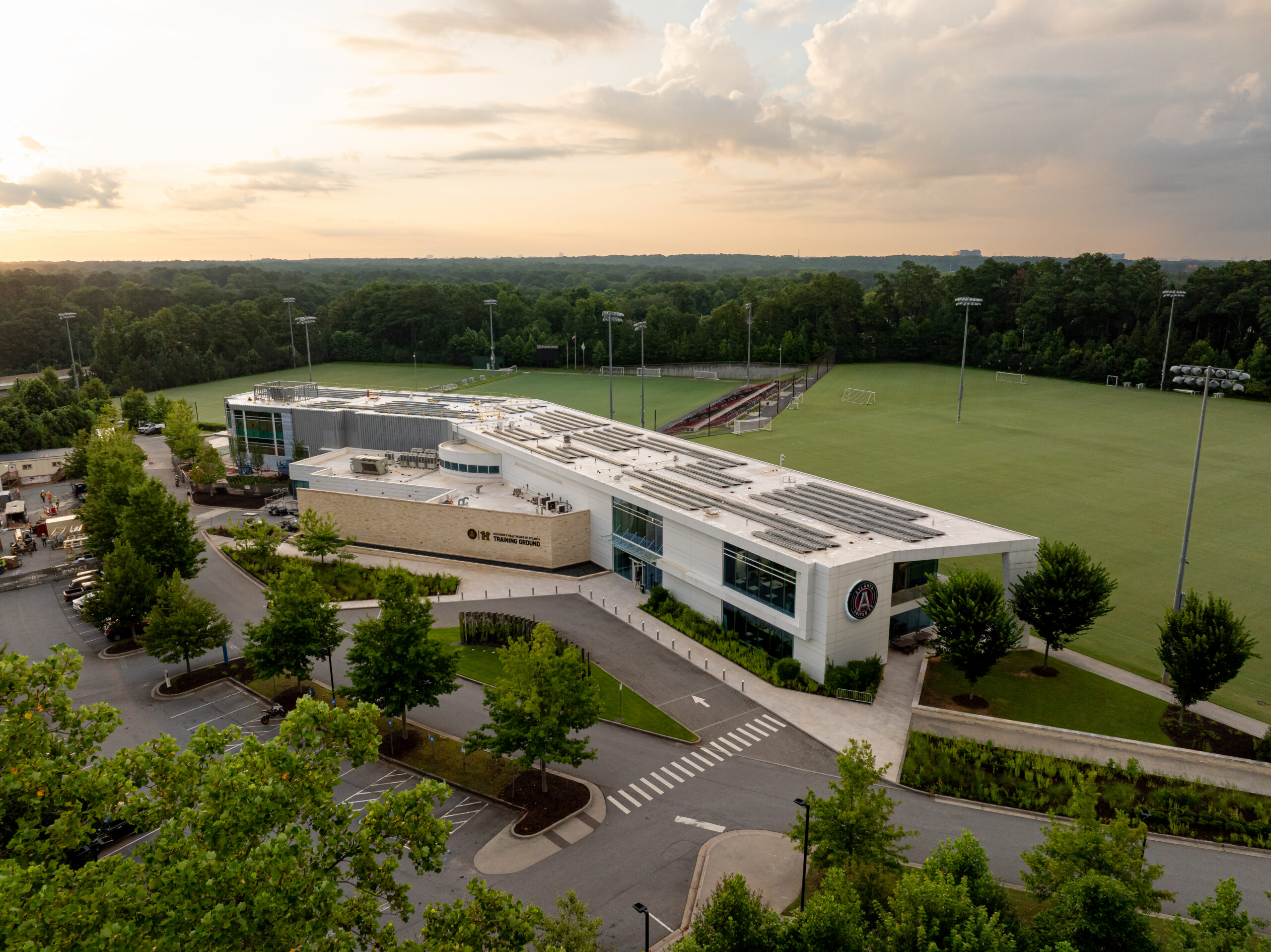
Done images captured at the Children’s Healthcare of Atlanta Training Ground in Marietta, Ga. on Wednesday, May 21, 2025. (Photo by Julian Alexander/Atlanta United)

How does Gateway Marietta CID handle parking and traffic challenges, particularly in busy areas? 

While the City of Marietta manages most parking and traffic operations, Gateway Marietta CID actively supports projects that make the district more efficient, pedestrian-friendly, and connected. Our focus is on creating a balanced, multimodal environment that works for drivers, cyclists, and pedestrians alike.

In January 2026, the city of Marietta will break ground on the Rottenwood Creek Trail, a transformative project that will include a trailhead along Franklin Gateway within our CID. This trail will provide new options for recreation and commuting, enhancing connectivity throughout the area. Phase One will link Franklin Gateway to Life University, Kennesaw State University, and the Marietta Square, while Phase Two will extend along Delk Road, cross I-75, and connect to the Bob Callan Trail within the Cumberland CID.

By investing in projects like this, we’re not only improving mobility but also helping to create a more vibrant, accessible, and sustainable community for businesses and residents.

How does Gateway Marietta CID work with the city of Marietta to align its initiatives with the city’s broader growth plans?
GMCID works closely with the City of Marietta to understand the vision of the City and how the CID can play a role in furthering these initiatives. One example is that GMCID partners with the city of Marietta on public safety efforts. In 2019, in partnership with the Marietta City Police, GMCID installed the first Flock Safety Cameras. This partnership has been beneficial in assisting the city and its efforts to grow their network of cameras. As GMCID is working through our first Master Plan, we are working closely with the city staff, and council members to align our vision with that of the city.

What upcoming or ongoing public-private or other partnerships within Gateway Marietta CID are particularly promising or have had significant success?

One particularly successful partnership has been the Blanche Drive Underpass project, a collaboration between the Atlanta Regional Commission (ARC) and the Gateway Marietta CID. Through this effort, we secured an $80,000 grant to advance placemaking and beautification initiatives that enhance connectivity and visual appeal in the district.

Another promising collaboration is our REBC grant through GDOT, which demonstrates how we’re able to leverage CID resources with external funding to make larger, more impactful projects possible. These partnerships exemplify how we maximize public and private investment to create visible, long-term improvements within the Gateway Marietta area.

Gateway Marietta CID is involved in enhancing the overall experience for visitors. What initiatives are in place to attract tourists or encourage foot traffic to the district?

Visit Marietta serves as the hospitality arm for the City of Marietta, with Cobb Travel & Tourism supporting the broader Cobb County area. The Gateway Marietta CID complements these efforts by focusing on beautification, safety, and connectivity improvements that make the district more inviting for visitors. Through enhanced public spaces, improved walkability, and coordinated placemaking projects, we’re helping to create an environment that encourages people to explore and spend time in the area, ultimately strengthening its appeal as a destination.

How does Gateway Marietta CID measure the long-term impact of its projects on the local economy?

CIDs evaluate economic impact through job creation, business growth, investment activity, and other factors. Within the Gateway Marietta CID, business activity generates an estimated $703 million in annual economic impact, underscoring the district’s vital role in the regional economy. Our master plan is focused on understanding and supporting that continued growth.

Within our compact 1.2-square-mile area, we have over 4 million square feet of commercial space, much of which is active and thriving. Parkway Place, a Class A office development, is fully leased, one building is owned by Wellstar Health System, while the other houses a new nursing college, further strengthening our healthcare and education presence. As employers continue to bring their teams back to the office and visitors return to the area, we’re seeing renewed energy and occupancy throughout the district.

Christopher Sanders, Executive Director, East Metro CID

Christopher Sanders, Executive Director, East Metro CIDRising property values mean more available funds for Community Improvement Districts (CID). As one of the larger CIDs in the Atlanta area, East Metro is hard at work making its district a safe and desirable place for local businesses and corporations. In an interview with Focus:, Executive Director Christopher Sanders highlights key infrastructure projects for the CID and how it is preparing for the continued growth slated for the Atlanta region.

What have been some key highlights for the East Metro CID over the past 12 months? 

Our public safety initiatives have continued to grow, especially as it relates to our partnership with FLOCK Safety, our license plate reader camera provider. We have been able to advance our beautification efforts. Thanks to increasing commercial property values in the area, we have received more funding from our members, which allows us to deploy those resources back into the community. Our focus is to help maintain or increase the value of commercial and industrial properties. Additionally, beautification and public safety are among our top priorities. We want to make sure that the public feels safe and that the area is clean and inviting for the public so they feel encouraged to come into the area.

How would you characterize the recent growth of the CID?

Our growth is always a key goal. Our focus year after year is to get more property owners involved. The best way to demonstrate this is by showing how we are utilizing the resources that we currently have in the most effective manner. Property owners can walk outside and see the work that we do. They can see our landscape crew maintaining our spaces. They can see our cameras and the impact they have in helping the DeKalb Police Department. We are constantly focused on getting more members involved by showing the impact of the resources entrusted to us by the district members. This has been our main objective.

What have been some new emerging partnerships for the CID?

One of our key ongoing partnerships is with the Georgia Department of Transportation. We have two major infrastructure projects that impact business owners in the CID. One of the projects is the I-285/I-20 Interchange. This work also encompasses the reconfiguration of a bridge located on Panola Road slated to improve the flow of traffic. We also work closely with our government partners, DeKalb County and the City of Stonecrest, to make sure that we all help each other meet our objectives to make DeKalb County the best place to live, work, and play. We also work closely with the Dekalb County Chamber of Commerce and Decide DeKalb where we connect with business and help advocate for their needs. 

What key trends are shaping commercial development in the area?

From an industrial standpoint, we are seeing strong activity in our Panola Industrial Corridor. We see the same happening in the Stonecrest Industrial Park with companies such as Home Depot and Amazon. Our strength is our location. We are a secondary route to the Port of Savannah, which is a huge advantage. Also, our proximity to the airport cannot be beat. When we have products or people coming and going, the proximity to Hartsfield Jackson Airport is a major plus. In our CID, our major areas are light industrial and manufacturing, as well as retail and small business. 

How is the region’s growth in population density shaping the CID?

The population in the Atlanta MSA is growing, which means that more people are going to need to rely on local gas stations, grocery stores, and other local businesses. Those businesses are seeing more activity due to the increasing population. There are more townhomes and detached single-family homes being developed which shows that local areas are seeing investment. This is expected to continue over the next couple of years and projections show that the Atlanta MSA will see continued population growth. We are looking forward to this growth, but it also means we have to be proactive with infrastructure projects.

What challenges are currently impacting the CIDs in the area?

CIDs need to make sure that they have qualified member properties involved in their districts. Then what follows is leveraging funds to get projects off the ground. Going after the same statewide or federal grants to fund projects is a competitive process. CIDs need to make sure that they have the most desirable and most competitive projects and that they remain lockstep with the overall vision of their boards and property owners. There is a limited amount of funds available, so CIDs need to consider how to find what they need and how to leverage resources to get projects rolling that will continue to make their areas better. 

As commercial property values rise, how does the CID ensure the benefits of the projects meet the expectations of all stakeholders? 

For us, this is a wonderful challenge to have. We have a larger landmass than other CIDs. We have to constantly communicate with stakeholders, especially if projects are happening in phases. We want to show what the current priorities are and what new projects will surface once other projects are completed. CIDs hold a long-term vision for many ongoing projects, so being able to communicate our methodology and have complete board buy-in is key.

A.J. Robinson, President, Central Atlanta Progress (CAP) /Atlanta Downtown Improvement District (ADID)

A.J. Robinson, President, Central Atlanta Progress (CAP) /Atlanta Downtown Improvement District (ADID) In an interview with Focus:, A.J. Robinson, president of Central Atlanta Progress (CAP) and the Atlanta Downtown Improvement District (ADID), discussed downtown revitalization, mixed-use growth, equitable housing, and public-private collaboration. “Our greatest opportunity in the coming decade is to continue on this path and shape a downtown that truly supports the people who live, work, and visit here.”

What changes over the past year have most impacted the organizations you lead and the work they do in downtown Atlanta?
The most exciting part of the past year has really been looking ahead to 2026, when the world comes to Atlanta, as it does to most major North American cities. That has given us a clear point in time where everyone is focused on how best to present the city to the World Cup visitors arriving for eight games next June.

Atlanta is no stranger to major events. We’ve hosted Super Bowls, Final Fours, and recently a massive international soccer tournament. But this one is unique. It’s created an opportunity for everyone to rally and get things done.

This past year has been about preparing for that. Most of the activity will be concentrated in downtown, and the city, the state, and local venues are all aligned on addressing critical improvements before then.

We’re also seeing major development projects push to be ready by that time. Centennial Yards and in South Downtown, for example, are accelerating to have a good portion open before next June. Centennial Yards, formerly known as “the Gulch,” was historically neglected as it sits over a web of railroad tracks and is a challenging area of 40 to 50 acres. There’s been little attention paid to this part of the city for decades, so seeing it activated again is very exciting.

We’re also continuing long-term infrastructure efforts like the Stitch, which will cover part of the downtown highway with a green park on the northern side of our core. It’s a complex project that’s been in the works for decades, and while it has a longer timeline, we’re making meaningful progress.

So, all together, these initiatives represent the momentum from the past year and carry us into a critical period ahead.

What role has the rise of mixed-use urban districts played in shaping your approach to revitalizing downtown Atlanta?
Over the past 20 years, there’s been a rediscovery of urban Atlanta across neighborhoods like Ponce City Market, the Beltline, Krog Street, East Atlanta, West Midtown, and Downtown. The urban core is experiencing a renaissance with population growth, new development, and historic buildings being reimagined.

Mixed-use has become the model. Rarely are these standalone projects. More often, it’s older buildings being converted into retail spaces with housing above or innovation hubs. Atlanta has embraced this form of development, largely driven by young people and families moving into the urban core.

Downtown, as the oldest part of the city, fits naturally into this trend. It holds many of Atlanta’s historic buildings and character-rich spaces. As I mentioned earlier regarding South Downtown, especially, there’s a smaller-scale, mixed-use district emerging, blending tech, residential, and legacy entrepreneurial spaces that shaped the city’s origins.

This trend is now extending to suburban Atlanta. While the buildings there may not be as old, there’s growing recognition that this is what the market wants. Trails like the Beltline are inspiring similar projects, and even traditional shopping centers are being reimagined into livable, workable spaces. It’s a movement that shows no signs of slowing down.

How has the current economy impacted capital flows into revitalization projects, and what barriers remain to large-scale reinvestment?
The biggest challenge for urban cores like Atlanta is what to do with older office buildings. This is a national issue that was accelerated by COVID, remote work, and companies becoming more efficient.

There’s simply less demand for office space, especially in buildings that lack the amenities needed to compete with work-from-home flexibility. Newer buildings have the upper hand; older ones are struggling.

We’re addressing this by identifying strong candidates for conversion, whether into housing, hotels, or something else. But these conversions are costly and complex. These buildings weren’t designed for residential use, so retrofitting them takes serious planning and resources.

That’s where we’re working closely with city development partners to enhance the tools available to developers. The city has some useful incentives, and we’re advocating to expand them to make these conversions more feasible.

This is probably the most significant issue facing downtown Atlanta today, and it’s not unique, as urban centers across the country are dealing with the same overhang of outdated office space.

How is your organization leveraging public-private partnerships to advance redevelopment efforts?
Atlanta has a long history of public-private collaboration. The business and civic communities here work closely with the city, county, state, and federal governments. It’s a very open, civically engaged city.

Nearly every major project in Atlanta, from the airport to Centennial Park, the Beltline, stadiums, and cultural attractions, has involved some form of partnership between government and the business community. That’s the model we promote.

Our organization focuses on identifying efforts that neither the city nor the business community could accomplish alone. Then we help build a framework to bring each side’s strengths to the table. The business community contributes creativity, entrepreneurship, and vision; the city brings fiscal tools and a tax base to support execution.

It’s a system that works well in Atlanta. Projects like the Stitch are strong examples of public-private collaboration. Hosting the FIFA World Cup is another milestone, requiring cooperation between local businesses, the city, and the state.

Almost everything major in Atlanta has some element of shared effort, and that approach is part of what sets the city apart.

How is the organization working with others to ensure equitable housing strategies in the downtown core?
Our organization has been focused on affordability for several years. Historically, Atlanta has been one of the more affordable major cities in the South, which has attracted people seeking opportunity and growth. But that’s changing quickly. The city is becoming less affordable.

The good news is there’s strong leadership around this issue. Our mayor has made affordability a top priority, and the civic and business communities have rallied behind that goal. There has also been significant philanthropic investment aimed at increasing affordability.

The mayor set a goal of 20,000 new housing units, and we’re already more than halfway there. Like everything else, it’s expensive and complicated, but we’re making real progress.

Downtown Atlanta, in particular, is proud to be a diverse marketplace. It likely has the highest concentration of affordable and market-rate housing units in the city. Nearly every housing project built downtown over the past 10 years has included some level of affordability; sometimes with incentives, sometimes without.

We want to foster a mixed-income community. That’s reflected in the results so far, especially compared to other parts of Atlanta. While there’s always more to do, in our area, any housing project that seeks city support or incentives through Invest Atlanta must include some component of affordability.

What are the organization’s top priorities over the next five to 10 years?
Our biggest opportunity, and one we’ve been working toward for some time, is building a more livable downtown.

Historically, downtown Atlanta has served as the commercial, civic, and cultural heart of the city. It’s the postcard image of Atlanta. But despite that, it hasn’t always been an ideal place to live, even though there are housing units and major universities nearby.

We’re on a mission to change that. Our focus is on improving infrastructure across the board: roads, bike paths, lighting, parks, and services for the unhoused. Every improvement is aimed at making downtown more livable and attracting private capital to invest in new housing.

Downtown already has a strong foundation. We have a vibrant hospitality sector, major events, thousands of hotel rooms near attractions and convention facilities, and a cluster of educational institutions. All levels of government, federal, state, county, and city, are located here. MARTA provides excellent transit access, and the road infrastructure is strong.

The challenge now is making all of this more livable. We are focused on increasing density. Unlike many communities that resist it, we welcome it. We also welcome diversity and have been advancing steadily toward these goals for several years.

Our greatest opportunity in the coming decade is to continue on this path and shape a downtown that truly supports the people who live, work, and visit here.

Rich Johnson, Executive Director, North Fulton Economic Alliance

Rich Johnson, Executive Director, North Fulton Economic AllianceThe North Fulton Economic Alliance was created to unite the six distinct cities of North Fulton to develop a regional brand and amplify their collective strengths in economic development, talent and workforce readiness, and quality of life across the country and globally. “What was really lacking was that cohesive voice for the region in its entirety,” Rich Johnson, NFEA Executive Director, told Focus:. “We created this to bring focus and alignment — one place where the region could intentionally build a unified and compelling brand.”

What were the conditions that prompted the formal launch of the North Fulton Economic Alliance?

It has been something that’s been in the works for a couple of years, with the chamber and chamber leadership identifying the need for North Fulton as a region, encompassing six cities, to come together and to work together. Each of these cities does such amazing things. They each have such unique qualities. They’re doing just fantastic concerning recruiting new companies, for businesses that are expanding, for opportunities for education and for workforce development. So many great things are going on in each of these communities. What was really lacking was that cohesive voice for the region in its entirety. We created this to bring focus and alignment — one place where the region could intentionally build a unified and compelling brand where we could highlight these cities and all the great things that they’re doing.

Each of our six cities brings distinct strengths, but together they create an opportunity-rich region that deserves national and global recognition as a place where businesses thrive.

It’s a great place to raise a family, and has some of the top-performing schools in the state. With so many assets right here in North Fulton, we knew we had to focus on creating that unique overarching brand, bringing everybody together, being that sounding board for the community, and then helping to pool the resources that each city has to tell our story.

What is the main goal of the organization?

In addition to branding and marketing North Fulton, we’re also focused on developing the region’s talent pipeline. North Fulton is one of the most highly educated regions in the country, but ensuring our companies have the workforce to succeed tomorrow is critical. The state has built powerful workforce resources through partners like the Technical College System of Georgia, the University System of Georgia, and local schools — our role is to bring those pieces together around employer demand. One of the things that we’ve seen early on is that a lot of companies don’t even know these programs exist, that these opportunities exist. Georgia offers a deep bench of workforce programs — our job is to connect employers to those resources in a streamlined, strategic way. We want to make sure that the businesses here understand that and know that.

What are some of the challenges that you see in the region today?

One challenge is the workforce. That’s just a reflection of how things like AI are impacting businesses and what that’s going to do down the road. We want to make sure that our folks are skilled and have the tools to meet the need. Right now, North Fulton has an amazing workforce. It’s highly educated. But if we stop here, I think you’re going to look a couple of years down the road and find yourself in a gap. 

Just like many places in Atlanta, another big challenge is that infrastructure, transportation, and access to the region are obviously really important. Georgia 400 is the biggest corridor that runs right through the heart of North Fulton County. Through GDOT and others, there is work on the express lanes that are going to start here soon. Eventually, the MARTA rapid bus transit lanes will be coming through here. The 400 project is expected to be completed by 2031, which seems like a long time away. But if you wait until 2031 to start it, it’s even later. We need to invest now in the future of the region, invest now in the infrastructure of the region, because without it, I think you could find yourself crippled.

What are the main assets or differentiators that set the region apart?

When we look at North Fulton, it really is the intangibles. It is that each of our cities is so different and so distinct that there is something for everyone. That’s what makes North Fulton so great. It’s that ability to have something for everyone, and our ability to work together and make it as seamless as possible. When a new company is looking here or someone is trying to expand here, they know that they’re in North Fulton. They’re going to get leadership that is invested in their success and in the growth of their community.

It speaks volumes when somebody comes here and it’s not a painful process. It’s as streamlined as it can be.

We want to put our best foot forward and showcase what makes this place so great, and do it in a way that’s simple and easy for folks who want to move here. But I think when they get here, they’re going to find more than the right infrastructure and connectivity — they’ll find a high quality of life and a community they’d be proud to call home, where growth is just the beginning of their success.

How do you envision the Alliance evolving over the next five years?

We want to be a trusted partner at the end of the day. 

We want to help build a brand that tells North Fulton’s story, about what makes this place so great, and that when people think about North Fulton, there’s a very clear image, a very clear brand that resonates with them. 

I think that there’s really nothing but great things ahead for us. I’m looking forward to being a part of it and being the team that will help drive it forward.

Romona Jackson Jones, Chairwoman, Douglas County

Romona Jackson Jones Chairwoman Douglas CountyRomona Jackson Jones, chairwoman of Douglas County, spoke with Focus: about striving to lead the metro Atlanta counties in growth. “We are one of the smaller metro Atlanta counties; however, we are doing big things to remain competitive. With that being stated, we have proven, on more than one occasion, that there is no room for second place,” she said.

What recent changes or developments have most impacted Douglas County, and how have they shaped your leadership priorities?

Certainly, the shift at the federal level has propelled unanticipated circumstances for county governments across the nation; however, Douglas County is known for our resilience. We pace ourselves under pressure and overcome unprecedented impediments that are placed in our way such as the COVID-19 pandemic. Recent changes related to tariffs, federal cuts and economic volatility have shaped my leadership priorities by ensuring my administration pivots to make necessary adjustments to do more with less, while doubling down on expenses and finding ways to shore up our revenue to continue providing quality services to our citizens without interruption.

What factors are driving business interest in Douglas County?

Douglas County is ideally located, future focused, and financially sound. We have superior service, flourishing infrastructure, and are economically thriving while being good stewards of the environment. Our rich history and “superior service” profile lay out the reasons why Douglas County should be the choice for business.

How is the county balancing rapid economic development with infrastructure capacity, environmental stewardship, and the livability and quality of life for residents?

Previous administrations were forward thinking and invested in sewer and fiber infrastructure in key areas of the county, which has been a significant contributing factor to my administration being shovel-ready to balance rapid economic development with infrastructure capacity and environmental stewardship. Largely, the county is growing at a very fast pace. As a result, my administration is making a huge effort to address infrastructure deficiencies, expand water reservoir capacity, build additional facilities and much more to ensure our residents have exceptional livability and quality of life.

How do both the national and regional economy impact Douglas County, and how has recent economic uncertainty influenced the county’s strategies for driving growth and opportunity?

The county’s five-year strategic plan is our playbook for driving growth and opportunity. Our strategic planning process consistently allows room for managing the unexpected. Douglas County is not exempt from the impact of the national and regional economy but nonetheless we will continue to press forward with prudent decision making with an emphasis on our priorities.

What competitive advantages set Douglas County apart from other metro Atlanta counties?

In my opinion, Douglas County’s competitive advantages are apparent by the robust growth in our economic development pipeline during the last eight years. Certainly, our economic development, Workforce Development, Elevate Douglas and Douglas County Chamber are second to none. Douglas County Sheriff’s Office deputies receive the second highest pay in Metro Atlanta. We thrive on beautification as the I-20 gateways into the county are intentional. Our school system is ranked among the best in the nation. When people ask, ‘Why Douglas?’ we point to several distinguishing pillars: ideally located, future focused, financially sound superior service, flourishing infrastructure, economically thriving, community-driven, and zero debt.

What role do public-private partnerships (PPPs) play in your strategic plan?

The role of public -private partnerships in the county’s strategic plan focuses primarily on cultivating and building a robust and sustainable business environment.

How does your administration address affordability and housing access, particularly for vulnerable populations like seniors and veterans, as demand and property values rise?

Senior housing affordability is a priority of my administration because a vast majority of our seniors live on fixed incomes. Within the last several years, numerous affordable single homes, apartment units and townhouse units have been built throughout the county to accommodate our seniors and those efforts are ongoing. Additionally, our veterans are vitally important and within the last few years my administration renovated an apartment complex specifically for veteran tenants, naming the complex Veterans Village. Furthermore, my administration welcomed the support of Habitat for Humanity with building homes in a designated location in Douglas County exclusive for veterans. The affordable housing crisis is a macro issue upon which my administration is laser focused. We are actively exploring adaptive reuse of old hotels, nd the repurposing of vacant buildings to support vulnerable populations in an effort to create more affordable living options.

Looking ahead, what are your top priorities?

My top priorities align with our five-year strategic plan. Public safety is the priority of my residents, and my administration is delivering upon the resources and equipment to meet the demands. Transportation infrastructure challenges and traffic congestion are priorities as we continue to remain competitive in this ever-changing complex environment. Economic development remains a priority, with a focus on small businesses that are the lifeblood of our community. Public health and mental health are critical issues that keep me up at night, particularly after the COVID-19 pandemic. More importantly, looking ahead, my top priorities include managing the big shift in federal cuts, tariffs, and economic volatility as my administration pivots by making necessary adjustments to do more with less, while doubling down on expenses and finding ways to shore up our revenue to continue providing quality services to our citizens without interruption.

What else is the county doing to ensure Douglas County remains competitive?

Douglas County is known for its rich history, and we consistently set the standard of excellence for county governments. Douglas County has withstood 155 years of the test of time, weathered storms, beat the odds and championed extraordinary growth and development like no other. To ensure we remain competitive, my administration will continue to strategically invest in infrastructure, elevate public safety, leverage technology for efficient modernized services, embrace transportation and mobility needs promote mental health and public access, align with housing affordability, champion beautification, while focusing on superb quality of life in order to attract businesses and residents to the ideal place to live, work and play and to call Douglas County home.

Vince Williams, Mayor, Union City

Vince Williams, Mayor, Union CityIn an interview with Focus:, Vince Williams, mayor of Union City, discussed the major developments happening in the city. From building new housing to opportunities in the hospitality industry, Union City is preparing for a growing population. “We have done a great job laying the foundation of growth and stability in the city,” Williams said. 

What recent changes have most impacted Union City?

The political climate has changed a great deal, including people’s concern around many issues. In Union City, we have been focusing on what we do to provide for our community, our residents, and our businesses. We offer a sense of calm to those who are worried about what’s happening in Washington. Our economic climate, however, has really been amazing. We just passed our budget, and we are still looking strong financially, showcasing our ability to provide the public services the people deserve. Furthermore, criminal activity is decreasing in Union City, with our support for the police and fire department. 

A major focus in the city is additional housing, as well as the parks and recreation system, which is a quality of life issue a lot of people don’t focus on. We recently cut the ribbon on our very first Veterans Park, and there are two more parks that will open before the end of 2025. We’ll also have a trail system which connects to other cities’ trails. We just opened three luxury apartment complexes, and they are filling up fast. There were concerns over affordability, but we must have a mix of housing opportunities to cater to the people moving here. We were named Georgia’s fastest growing city in 2023, and the nation’s fourth-fastest growing suburb in the nation. We are now approaching a population of over 30,000 people, and with the jobs we’ve created here, people are ready to buy homes.

Another major impact, not only to the city, but also to the region, is the partnership we have with Grady Health System. Its top trauma hospital will open a facility here in 2026, providing access to quality healthcare on the south side. It has been a challenge in getting equitable access to quality healthcare, but we have joined forces with our county colleagues, the board of commissioners, and the state governor to make this a reality. The completed hospital will include an emergency department equipped with a helipad, pediatrics department, senior care, and family medicine.

We will also focus on economic development over the next few years, especially in the hospitality sector, to support small business owners. We’re excited about the growth here, and we make sure the people are taken care of.

How would the revitalization efforts support new investment and current residents?

We’re focused on our seniors. There are housing developments called active living communities catering solely for 55 year olds and above. Our senior homeowners who are 65 years old and above do not have to pay property taxes. As they’ve paid taxes all their lives, we want to free up some expenses for them and enjoy a vibrant quality of life in their golden years.

As the economy continues to strengthen, we’re focused on driving support to our small business community. There is no city that can thrive without small business owners, and there are a lot of opportunities here. During COVID, we built the budget to help those businesses, especially because we lost some of them. We certainly have partners who employ a lot of folks, like Amazon, Coca-Cola, and Walmart, and they support our community.

Which industries are you attracting for the next phase of Union City’s economic growth?

One of those areas will be the hospitality industry. Many of the hotels have been here for 25 to 30 years. We want to attract new hotels to Union City because there are a lot of people who want to come here. The FIFA World Cup will be in Atlanta in 2026, so restaurants, hotels, and retail are vital, not only for FIFA, but also for the future of Union City. We have done a great job laying the foundation of growth and stability in the city. Now, it’s time to focus on other elements that community members want to see. We want those amenities, like nice restaurants and retail stores, right here in our city. We have over $470 million cycle through our city, but a lot of that leaves because we don’t have the places to spend the money.

We will also focus on the huge entertainment opportunity here. We’re not trying to do what they do in Miami, or Las Vegas, but we need to have some venues that offer entertainment for children and families. We want different opportunities opening up to our community, where people can have a good time and enjoy a nice meal. 

How is the city preparing its infrastructure and workforce to support new opportunities?

Much of the workforce is aging, so we’ve put together a workforce development task force. Working with many of our education and business partners, we help people to focus their development with new technology coming to Union City and other parts of the region. AI is here, and it continues to grow. We have to prepare people to take on job opportunities at data centers as there’s a huge need. They support our cloud systems, which allows us to conduct business and exchange ideas. We want to engage the young people and make sure they have the opportunity to participate in jobs they are interested in.

How do you collaborate across the region with local elected leaders to align around shared goals?

Union City is in Fulton County, not only the largest county in the state, but also one of the largest counties in the country. As a member of the board of directors with the Atlanta Regional Commission, I work with many around the metro area on many projects, including infrastructure that supports Fulton County and beyond. Infrastructure is key to building new economic development opportunities in our communities. I’m also a board member of the Aerotropolis Atlanta Alliance, and we work closely to support what’s happening around the airports. Union City is an airport city, and that’s how we market ourselves because we are at the front door of the airport. 

I am also a member of many other organizations where it is important to collaborate and exchange ideas, as well as learn from your colleagues. They may have experiences and ideas on something we’re working on, which could make it simpler to navigate and execute.

What are your key priorities for Union City in the next few years?

For the next few years, the focus will certainly be on that element of hospitality in Union City, and making sure public safety is at the top of everything we do. We have a new fire station coming in early 2026. That is vital because of the growth we’ve experienced. We’re going to be renovating a lot of our public spaces. There is also a brand new sports complex that our families and children love. There will be a lot of focus on creating spaces and places where people can get outdoors and enjoy life.

Our housing stock will also be a key priority, and one of the biggest things near and dear to my heart is working on the issue around homelessness. That is a difficult task for anyone. If we collectively put our arms around this, it is something we can successfully make a dent in. We can build a system that will help a lot of people. A group of us went to Tampa to look at a model called Tampa Hope, which supports their homeless population with micro homes and wraparound services. That’s something we have to truly collaborate on for our people in metro Atlanta and beyond. 

Larry Williams, President & CEO, Technology Association of Georgia

Larry Williams, President & CEO, Technology Association of GeorgiaIn an interview with Focus:, Larry Williams, president and CEO of Technology Association of Georgia, emphasized Georgia’s emergence as a global hub for transformative technologies like AI and quantum computing. “Global innovators are increasingly drawn to Georgia as leading companies in technology and innovation want to be part of this thriving ecosystem,” said Williams.

What are some of the association’s most meaningful contributions to Georgia’s technology ecosystem over the past 18 months?

I believe we continue to be very impactful in what we do. Our main purpose is to connect the ecosystem of people who are driving innovation and our entire technology ecosystem. Additionally, we promote Georgia as not only one of the leading states for technology but also as a global hub of innovation. The innovations emerging from Georgia influence the world, shaping how businesses are built, processes are improved, and lives are enhanced globally.

Global innovators are increasingly drawn to Georgia as leading companies in technology and innovation want to be part of this thriving ecosystem, which includes large corporations, growth-stage companies, private equity investments, and next-generation innovators. Our education systems, from K-12 to higher education and technical colleges, play a crucial role in developing talent.

Our association hosts more than 100 events annually, ranging from grassroots gatherings like startup pizza nights to large-scale conferences such as the Georgia Technology Summit. These events spotlight current and emerging technology trends, including artificial intelligence, extended reality, and quantum computing. AI is already reshaping industries by revolutionizing how services and processes are developed, while quantum computing, which is advancing faster than many anticipate, is set to become the next major technological disruptor. A prime example of our commitment to cutting-edge insights was featuring Bret Taylor, Chairman of OpenAI and former co-CEO of Salesforce, as a keynote speaker. By focusing on these transformative technologies, we ensure our members stay informed about both immediate advancements and future breakthroughs. Keeping pace with innovation is not just about understanding today’s landscape but also preparing for tomorrow’s opportunities, reinforcing Georgia’s position as a global leader in technology and innovation. We also advocate at the state and federal levels for policies that foster innovation, particularly in workforce development.

What strides in workforce development has TAG made towards Georgia’s innovation hub?

Our association remains deeply committed to workforce development, advocating for policies that drive both innovation and talent growth. While traditional four-year degrees continue to play an important role, we recognize the need for diverse pathways into tech careers. That’s why we’ve established Georgia’s only registered technology apprenticeship program in the Southeast, creating accelerated opportunities for skills development beyond conventional education. We’re equally focused on preparing the next generation through high school internship programs in STEM and STEAM fields, giving students early exposure to technology careers. Simultaneously, we’re cultivating leadership pipelines to develop tomorrow’s CTOs, CIOs, and technology executives through targeted professional development initiatives. These efforts complement our work with educational institutions and policymakers to ensure Georgia’s workforce remains competitive in an evolving technological landscape. By bridging the gap between education and industry needs, we’re not just filling current job openings but building a sustainable talent ecosystem that will support Georgia’s position as a global innovation hub for years to come. Our comprehensive approach addresses workforce challenges at every level, from classroom to C-suite.

What specific challenges do Georgia’s tech companies face under current state and federal regulations?

At the federal level, our association actively advocates for comprehensive privacy and cybersecurity policies to protect businesses and critical infrastructure. We are pushing for a unified national privacy standard to replace the current patchwork of state regulations, making it easier for companies to operate while safeguarding consumer data. Our advocacy also focuses on strengthening defenses for both IT and operational technology systems that underpin our nation’s infrastructure. Workforce development remains a key priority, as we work to ensure policies support the growing demand for skilled cybersecurity professionals. These efforts rely heavily on strong public-private partnerships that bring together government agencies, businesses, and educational institutions. By fostering collaboration between these sectors, we aim to create effective solutions that enhance national security while supporting technological innovation and economic growth. Our work helps maintain Georgia’s leadership in developing policies that balance security, privacy, and business needs.

What partnerships are in place to strengthen your operations and the tech ecosystem in the state?

Partnerships are incredibly important for us. To help our companies grow, we collaborate with both large and small private-sector businesses, as well as educational institutions. The University System of Georgia, including Georgia Tech, University of Georgia, Georgia State University, Kennesaw State, and Augusta University, plays a vital role in driving innovation.

We also work closely with private equity firms and venture capitalists, both locally and nationally, as there is significant interest from investors in Silicon Valley, Boston, and New York in Georgia’s tech ecosystem. Our partnership with Venture Atlanta, one of the largest venture capital conferences in the country, is a point of pride.

Local chambers of commerce and business communities are essential partners, as their success directly impacts ours. Additionally, we collaborate with policymakers, including the Georgia state legislature, the Department of Economic Development, the Department of Revenue, the Department of Labor, and the Governor’s Office, to ensure supportive policies. The Attorney General’s Office is another key partner, particularly in shaping privacy standards. These partnerships collectively strengthen Georgia’s position as a global innovation hub.

What are some of the most urgent skill gaps you are hearing from members, and how is the association helping to close them?

Understanding AI and mastering its tools will be essential to remaining relevant in tomorrow’s job market, which is why talent is extremely important, and the demand for talent still exceeds the supply. There are a couple of things going on. One is how we meet the demand for technology jobs. There is a big range of the types of jobs that we need. We require everything from highly skilled, highly educated, Ph.D.-level data scientists and cybersecurity experts to individuals skilled in building out infrastructure, such as those installing fiber optic cables or working in data centers. Without data centers, there is no data, and without data, there is no AI. All of these jobs require training and a high level of education.

We are working with the private sector to understand demand and how to meet it through four-year degrees or other higher education pathways. We are also accelerating growth by training individuals in cybersecurity and preparing them through apprenticeships. Additionally, we focus on the talent pipeline starting in K-12 schools, ensuring students know there are great careers in technology. A career is more than just a job as it is a future where individuals can build, advance, and support their families.

We also help companies navigate the future, particularly the impact of artificial intelligence on the workforce. AI will be disruptive and transformational, leading to job displacement. Our role is to work with companies to redeploy resources and help individuals refocus and develop new skills. The good news is there will be jobs and opportunities, but people must be proactive in learning.

In the future, there will be two categories of talent regarding AI: creators and users. Creators, about 20% of the workforce, will develop new AI platforms and applications. The remaining 80% will be users who master these tools. Our goal is to ensure people understand how AI works and how to apply it effectively.

How can small and mid-sized companies with limited resources integrate AI into their operations?

AI is evolving rapidly, and companies must embrace it. Some large companies are afraid of AI because they do not understand it, but the leaders are those who acknowledge the need to learn. They create sandboxes and user groups where employees can experiment, share knowledge, and encourage collaboration across departments. This sharing of information is critical because AI is advancing quickly. The ChatGPT of a year ago is different from today’s version, and it will continue to evolve. Humans are not going away, and whether it is optimizing operations, enhancing customer experiences, or unlocking new innovations, AI’s potential is transformative. However, AI’s responsible adoption requires collaboration as businesses must share knowledge, address ethical concerns, and develop workforce skills to harness AI effectively. These are critical for progress.

Looking ahead to the association’s next chapter, what are your top priorities over the next few years?

After celebrating our 25th anniversary last year, we are focused on the next 25. While we cannot predict everything two decades from now, we know the Technology Association of Georgia will remain a key player in driving innovation. Our partnerships with government, academia, and industry will continue to strengthen, ensuring Georgia stays at the forefront of technology. To guide our near-term efforts, we have launched our 2030 strategic vision, which will keep us agile and relevant in a rapidly evolving landscape. Georgia is already a global leader in critical sectors, such as fintech, health IT, logistics, and cybersecurity, thanks to our world-class infrastructure and talent.

We are committed to maintaining that leadership while expanding into emerging fields like AI and quantum computing. For example, Georgia Tech now produces more AI professionals than Stanford, MIT, or Carnegie Mellon, a testament to our state’s ability to cultivate top-tier talent. These graduates are not just theorizing about the future as they are applying cutting-edge tools in real-world scenarios, shaping industries and solidifying Georgia’s role as a hub for innovation. The next chapter will demand adaptability, collaboration, and bold thinking, but with our strong foundation and forward-focused approach, we are ready to meet the challenges and opportunities ahead.

Nancy Johnson, President & CEO, Urban League of Atlanta

Nancy Johnson, President & CEO, Urban League of AtlantaIn an interview with Focus:, Nancy Johnson, president and CEO of the Urban League of Atlanta, discussed economic resilience, inclusive housing, and the power of innovation in underserved communities. “Despite today’s challenges, we remain committed to creativity, resilience, and pushing forward,” Johnson said.

How are economic uncertainties shaping how nonprofits plan and sustain their operations?
Many businesses are hesitant to make firm commitments. Typically, we meet early in the year to discuss partnerships and plan, but this year, many are delaying those conversations until May, June, or even the fall. The uncertainty likely reflects a desire to better understand their financial footing before moving forward. Government agencies like HUD may also face budget challenges, as a large share of their funding comes from federal tax allocations. About one-third of our budget is federally sourced, supporting low- to moderate-income communities as well as color, women, veterans, and LGBTQ populations.

The current administration’s stance on these groups raises real concerns about potential funding cuts. While Congress determines spending and many of our contracts are multi-year agreements with federally appropriated funds, not all are being recognized. Unfortunately, we have experienced some lost funding — but we have also been awarded new funding and are committed to remaining proactive and steadfast in delivering vital services. Funding cuts have an immediate negative impact on operations and our ability to meet the basic, housing, workforce, entrepreneurship, and financial needs of communities that are struggling in this economy to remain stable and upskill so they can advance financially and thrive. Skyrocketed housing costs are the biggest burden on the people we serve, so we focus on workforce and entrepreneurial services designed to increase household income to livable wages and beyond to begin to save, prepare for homeownership, and build wealth. We do have some multi-year private sector resources as well. While not enough to support the entire agency, they offer critical support. We are also pleased that we have been blessed to secure several new federal and metro area county and municipal contracts to continue and expand the delivery of human services that are enabling us to continue our economic mobility work at a time when families and small businesses need us most.

What have been some key milestones for the Urban League of Atlanta over the past year?
This year, we centered our work around our five-pillar structure of our Financial Empowerment & Economic Resilience Center (FEERC). Our first pillar, financial empowerment and emergency response, helps families stabilize and thrive. We’ve strengthened partnerships with DeKalb County, the City of Atlanta, and Cobb County, allowing us to prevent homelessness amid metro Atlanta’s affordable housing shortage. We’ve helped more than 600 families to remain housed and helped many from extended-stay motels, a growing issue since COVID, into permanent homes. These families, many employed, still face rents that exceed their income. Without policies limiting rent hikes, they remain vulnerable. We’ve also been active in federal, state, county, and municipal-level advocacy. By working through a coalition advocating across the aisles, we helped stop the passage of a DEI bill that would have stripped educational institutions of support for scholarships and remediation programs, particularly affecting historically Black colleges. By collaborating with a diverse coalition, we successfully prevented this bill from becoming law during the 2025 Georgia Legislative Session, which we consider a significant win.​

What initiatives have been undertaken in the entrepreneurship and small-business sector?
In the entrepreneurship space, we’ve worked diligently to expand small business contracting with government and private sector entities at all levels. In 2024, we hosted an Infrastructure, Technology and Equity Summit with participation from state, county, municipal, and corporate representatives, focusing on how small businesses can engage in private sector and government contracting. Additionally, in 2025, we hosted our third annual “Meet the Money People” event connecting profitable minority businesses seeking growth with various capital providers, including banks, micro-lenders, CDFIs, equity, angel investors, and grant opportunities. These efforts have facilitated access to over $8 million in capital and contracts, enabling client companies to grow, create jobs, and positively impact their communities.​

How has the housing program progressed amid economic challenges?
Despite a challenging economic climate for home buying, our housing program has continued to promote homeownership. Metro Atlanta boasts a substantial community of color who are ready and able to purchase homes, even with fluctuating interest rates and limited inventory. The market has been affected by corporations purchasing residential properties and converting them to rentals. Nevertheless, we collaborate closely with developers to learn about new inventory promptly, connecting mortgage-ready buyers to available homes. More recently, we’ve engaged with more non-traditional affordable housing developers building inventory in suburban communities and learning about land bank properties to support access to more affordable options for first-time homebuyers compared to the higher prices within the city and near suburbs.​ We also developed, with the support of a Wells Fargo grant, a web-based portal that links all of the key stakeholders in the homebuying process that we call “The HUB” — The Homeownership Urban Blueprint that provides prospective homebuyers with mortgage lenders realtors, property insurance companies, inspectors, closing attorneys, developers, down payment assistance programs and the latest information on homeownership, access HUD Certified Housing Counseling agencies (including the ULGA) and so much more, You can visit The HUB at www.thehubga.org.

How has the Urban League of Atlanta advanced its efforts in education and workforce development?
We’ve made tremendous strides in our education and workforce space, especially with young adults ages 18 to 24. Many of them are young parents, though fewer than I initially expected, likely because of the financial pressures young families face today. This past year, we held four graduation classes for young people who had previously been disconnected from school, unemployed, and were unsure of their future. In just 12 weeks, we helped transform their lives through our partnership with the Atlanta Police Foundation and our “At Promise At Work” initiative. In 2026, the program will expand to two additional @Promise Centers in the network, expanding our reach and impact. The graduates left our program with credentials, clear education and employment plans, and in many cases, entrepreneurial aspirations. The energy from this group has been truly inspiring. By supporting young adults, especially those who are or will become parents, we’re aiming to break the cycle of intergenerational poverty. Their success becomes the foundation for stronger families and communities.

How is the Urban League reimagining support systems to help families achieve long-term economic stability?
We’ve received a generous grant from an anonymous donor to conduct a feasibility study for an economic development project, which is our biggest dream. We envision building a multi-use development, including a Family Financial Empowerment & Economic Resilience Center (FEERC) and Transitional Housing in an underserved community in Atlanta, eliminating transportation barriers by housing all our services — emergency needs, career development, small business support, homeownership, affordable housing, and civic engagement — under one roof. What sets this project apart is the inclusion of transitional affordable housing. These units will serve low-income families who are under-skilled and struggling. Residents would live in safe, affordable housing while they complete upskilling programs over one to three years in high-demand, high-paying sectors where employers are already eager to hire. The model will also include on-site childcare, access to public transportation, a business incubator, a health center, a commercial kitchen, and community space for education and support. Our goal is to provide families with the tools to achieve financial independence and long-term stability.

What role does innovation play in how the Urban League approaches community development and housing solutions?
Thanks to an $850,000 federal grant from Congresswoman Nikema Williams and additional private sector funding from Wells Fargo, Delta Airlines, SodexoMagic, and Norfolk Southern, we’re launching our first Family Financial and Career Center. We’re partnering with a developer who acquired a property that once served as a Job Corps center. This site, historically listed in the Green Book, a guide for Black travelers during segregation, will preserve its legacy as it takes on new life.

This project will provide 102 permanently affordable homes for single adults, alongside on-site upskilling programs and full-time employment opportunities. We’re targeting spring 2026 for opening, using the grant to furnish the space with state-of-the-art tools. We’re also actively fundraising for the workforce programming that will power the center. Despite today’s challenges, we remain committed to creativity, resilience, and pushing forward. We’re adapting to meet the moment while staying focused on long-term impact.

What emerging opportunities do you see in Atlanta’s economic development landscape?
One of the most promising opportunities is the city’s commitment to affordable housing and investing in seven under-invested neighborhoods through the city’s Neighborhood Revitalization Initiative under Mayor Andre Dickens’ leadership. He’s a strong advocate and already more than halfway to his ambitious 20,000-unit goal. His use of creative strategies, from container housing to public-private partnerships, and leveraging TAD (Tax Allocation District) financial resources, the Mayor and his team are helping cut costs and increase access. We’re also seeing more collaboration across racial and ethnic groups in the business community. Latino, Asian, white and Black-owned businesses are coming together around shared priorities, which is a shift that holds real potential. In Georgia, our diverse population puts us in a strong position to elect leaders who center underserved communities for more investments and development. As more diverse voices reach decision-making roles, we’ll gain the power to redirect more resources into our communities that need it most, rather than watching them disappear or stall.

Kristi Brigman, Chief Economic Development Officer, Metro Atlanta Chamber

Kristi Brigman, Chief Economic Development Officer, Metro Atlanta ChamberIn an interview with Focus:, Kristi Brigman, chief economic development officer of the Metro Atlanta Chamber, highlighted the importance of partnerships, talent development, and Atlanta’s diverse economy in fostering a thriving business environment. “One of my favorite things about a company that is already here is knowing they could go anywhere else in the world — it’s a strong endorsement from them to continue that growth in Greater Atlanta,” said Brigman.

Reflecting on the past year, what significant opportunities have you seen for the Metro Atlanta Chamber of Commerce and the region?

Despite 2024 being an election year, which can mean less activity than other years due to an uncertain political environment, we landed a lot of exciting projects. One of those is Duracell, which announced its global headquarters for research and development in Midtown Atlanta. They are moving into Science Square, an awesome development adjacent to Georgia Tech. It is really exciting to see them focus their growth on Metro Atlanta from a research and development (R&D) perspective. They already have existing facilities here and have had much success in the region. One of my favorite things about a company that is already here is knowing they could go anywhere else in the world — it’s a strong endorsement from them to continue that growth in Greater Atlanta.

Another really exciting project was PBS Aerospace, which established its North American headquarters with manufacturing and some R&D operations in Roswell. Cargill also announced 420 new jobs and is already hiring, giving them a great stronghold. Lastly, AIG was another exciting project, with about 650 new jobs. We have a great relationship with AIG, but this is really their first major foray into the Metro Atlanta market, and we are so excited to welcome them here.

Why are businesses and residents choosing to relocate or expand in Metro Atlanta?

There are a variety of factors that companies are looking at. We are still a relatively inexpensive market compared to major cities like New York or some in California. We have a really competitive talent pipeline coming out of the university system and the technical college system. It is not only our world-class talent, but also our competitive cost of living. We also have a very strong quality of life. You can go two hours north and be in the beautiful North Georgia mountains, or a few hours south and enjoy the coast.

It is a compelling story when you think about a company that might have to relocate employees. They want to ensure they are asking their employees to relocate to a place where they’ll be happy and feel comfortable bringing their families. In addition to the talent pipeline and the general workforce, one of Atlanta’s strengths is a diverse economy. Certain cities may be known as a financial hub or a tech hub, but Atlanta has such a variety of all types of companies. If you look at the Fortune 500 companies headquartered here, you really see that diversity, from UPS and The Coca-Cola Company to The Home Depot. There are so many different types of companies that play into our strengths and really help us in uncertain economic times. While one industry might struggle at times, Atlanta’s economy remains generally strong because there is such a diverse group of companies located here.

How do the educational and professional development opportunities provided by the chamber contribute to the growth of local businesses and their employees? 

The chamber has a dedicated talent team focused on workforce development, ensuring strong connections between companies, universities, and technical colleges. They have doubled down on addressing the challenges employers face by strengthening these partnerships and investing in long-term talent solutions.

We look at the diverse group of companies and ask whether similar titles, roles, and skill sets are being requested. We aim to address that beyond just one title for one company, recognizing that there are large numbers of these titles and skills that need to be met for companies across the region.

The Metro Chamber is great at listening and responding to the needs of the business community, making sure we are acting nimbly and doing what we can to address those needs. Atlanta really is a very strong place for recreational activities, especially as the quality of life is really good there.

How do you prioritize and tackle such a diverse range of issues from transportation and public safety to education?

We have an excellent infrastructure and transportation system here, and the 2026 FIFA World Cup is a great opportunity for Atlanta to be on the world stage once again. I am confident that we are going to do a great job as a region, especially since we host major sporting events all the time. We are fortunate that there are frequent events happening here, and so we have a long track record of successful execution of major sporting events. We just had a very successful college football playoff. All of these events involve groups working together, like the airport and our sports council, which helps to recruit those major sporting events. The sports council that sits at the Metro Atlanta Chamber has a major role in recruiting those events. Between the sports council, the airport, MARTA, city officials, and so many other individuals whose responsibility and goal is to make these events a success, we already have that framework built out. We feel pretty good about the ability to execute a successful World Cup experience in 2026.

With a strong focus on networking and business exposure, can you share how these initiatives have tangibly benefited Metro Atlanta Chamber members?

All of the economic development success we see in the region — and even more broadly across the state — is because of the strong partnerships that we have. When we are working to recruit a company to the region, we generally put together a team as our first step. We put together all of the people who need to be in the room and make sure everyone is up to date on things. When we put together a panel for a company that might be coming into town and wants to talk about hiring needs or the different types of particular industry needs, we generally know all the people who are going to be on the panel because we have worked together before. We have economic development contacts at each of the universities, the technical college system, and the government throughout the state, county, and city levels. It is a great network of people who are really working together to make sure that the region is successful in its recruitment efforts. Partnership is key to that.

What are some of the biggest challenges for businesses and residents given recent economic changes?

There are opportunities in areas like housing. The metro regions across the country are all talking about housing and the role it plays in our growth. At the end of the day, the Metro Atlanta region is very strong in that capacity compared to many regions. I do think about how economic development impacts housing, so it is a very relevant topic that presents ample opportunities.

What are the top priorities and goals for the Metro Atlanta Chamber of Commerce over the next two to three years?

We want to continue to be the strongest economic development organization and regional recruitment partner. In terms of challenges, the first things that come to mind are not unique to the region. I am thinking about our major sporting events and how to best utilize those as opportunities for economic development success and building a reputation as we are on the world stage.

We have seen a lot of industrial investment over the last five years coming out of COVID, so I expect that the next wave of investment will likely be office projects.

We are seeing a lot of activity in that space right now. We are well-positioned to recruit companies over the next few years.

Gil Prado, Executive Director, Fulton Industrial CID

Gil Prado, Executive Director, Fulton Industrial CID In an interview with Focus:, Gil Prado, executive director of the Fulton Industrial Community Improvement District, said that the district is evolving through strategic investments in infrastructure and redevelopment with a special focus on sustainability to ensure long-term and strong industrial growth. “We’re focused on supporting our current industries with infrastructure like truck parking, staging areas, EV charging, enhanced pedestrian safety infrastructure and other facilities that help them stay competitive.”

What have been some of the most significant projects and updates from the district over the past year?

Last year, we continued focusing on our core priorities: public safety, landscaping and beautification, transportation improvements, and, ultimately, economic development. One of our major initiatives was the development of a sustainability framework for the district. We’ve been exploring alternative fuel sources for trucking and other vehicles that operate in the area daily. It’s a fairly comprehensive plan that looks at several interrelated improvements that all lead to operational efficiency, safety and sustainability. Additionally, one of the goals of the Fulton Industrial Sustainability Framework is to be both educational and engaging for the community. The plan contemplates exploring the possibility of an energy generation demonstration, perhaps a solar panel installation, combined with public art and interactive learning elements. The idea is to create a space where people can charge their vehicles, learn about green energy, and see a live demonstration of power generation.

This plan also includes enhancements to the surrounding infrastructure — landscaping, sidewalks, and bus shelters — to improve the overall experience. That’s been our signature project for 2025. Additionally, we developed a clean power generation toolkit for local business owners. If a company wants to install solar panels in a warehouse or convert their forklifts from gas to electric, the toolkit offers a blueprint. We published this toolkit on our website to be widely accessible.

Another major initiative addressed truck parking — an issue not just in the Fulton Industrial District, but metro Atlanta, and across Georgia. The state has a high volume of logistics and trucking activity, yet limited parking and staging areas. We developed a strategy to increase truck parking and staging capacity in the district. “Staging” refers to trucks arriving early and needing a place to wait before making a delivery or pickup. Parking involves longer-term stays, like overnight. We identified key locations and approaches to improve truck staging and parking over the next decade.

What are the primary drivers of job creation and economic growth?

I always like to emphasize that Fulton Industrial is the largest industrial corridor in the eastern United States. It spans about 12 miles and includes over 550 warehouses and industrial buildings, supporting approximately 28,000 industrial jobs.

Our main industries include warehousing and logistics. We have major players like UPS, Penske, Ryder, and Knight Transportation. In warehousing, we support a wide range of needs, from furniture storage to cold storage. For example, Atlanta has a large wholesale furniture market, and much of that inventory is stored in our district. Cold storage is also significant, with companies like United Natural Foods and Americold operating here. So when you buy frozen chicken or vegetables at the store, there’s a good chance it was stored in our district.

Food production is another main industry. The district is home to long-standing companies like Pepsi, Coca-Cola bottling, Frito-Lay, Quaker Oats, and several bakeries. Publix even bakes its pies here. This stability is a defining characteristic — many of these companies have been here for 40 to 50 years, so we don’t see much year-to-year fluctuation.

One new development is the construction of a data center, which is a first for us. It’s still under construction, but it indicates that the district is evolving with modern industrial needs while maintaining its established base.

What economic and commercial development trends are currently shaping the district?

While the district is generally stable with long-term business operations, we’ve placed strategic focus on a particular area around the Fulton Industrial Boulevard and I-20 interchange. That area suffered from significant disinvestment and crime over the last couple of decades. Over the past 10 years, we’ve worked to reverse that.

In 2024, Fulton County made significant progress by purchasing and demolishing several problematic hotels that had become hotspots for crime. Two major demolitions included the Executive Inn, an 11-story hotel, and the Super Inn, which had around 50 rooms. These properties were significant sources of criminal activity in an otherwise thriving district.

The county has since issued a request for qualifications from developers to redevelop the properties. In total, five hotels have either been demolished or are scheduled for demolition in 2025, along with an old McDonald’s and a gas station. We’re hopeful that this redevelopment will bring in new energy, industries, and amenities like restaurants, truck parking, EV charging stations, and other services to benefit the district.

What current challenges are facing the district?

Public safety remains a priority for the CID. However, we’ve made incredible progress. Over the last decade, thanks to our public safety strategies, crime in the district has decreased by 81%. This is the lowest crime rate we’ve had in more than 10 years.

We’ve implemented a robust public safety strategy, including 34 license plate readers throughout the district. Nearly every vehicle entering the area is scanned, and if a plate is linked to a wanted vehicle or person, police are automatically alerted. Our partnerships with local and state law enforcement have also been instrumental in making these efforts effective.

Have national economic trends had any noticeable impact on businesses or residents in the district?

Our focus is on making the district as functional and commercially competitive as possible so businesses can continue to thrive today and in the future. 

The most obvious example of a direct economic impact was during COVID. With people staying home, e-commerce surged, which led to a spike in truck traffic and grocery product distribution — both of which directly benefited the district. However, in the current climate, changes are less immediately visible and harder to quantify over a short period. The CID will continue to make strategic investments on projects and programs that produce the highest positive impacts for people and businesses in the district. 

What ongoing partnerships are shaping your strategic direction?

The district is unique in that it spans three jurisdictions: the city of Atlanta, unincorporated Fulton County, and the city of South Fulton. That presents challenges, especially in areas like public safety, where we work with three different police departments and thousands of stakeholders.

We’ve taken on the role of mediator and coordinator, bringing all parties to the table to ensure cohesive planning and information-sharing. Our approach is to view the district holistically and deploy resources in a way that benefits all three jurisdictions. We think this collaborative, unified strategy is essential for long-term revitalization.

How is the district positioning itself to take advantage of business growth?

From a land-use perspective, we remain committed to maintaining the district’s industrial character. Introducing housing can create conflicts, especially with truck traffic, so we prioritize industrial integrity to support continued business operations.

That said, the area around the I-20 interchange, where several blighted properties were recently demolished, presents an opportunity to rebrand and introduce new amenities. We’re focused on supporting our current industries with infrastructure like truck parking, staging areas, EV charging, and other facilities that help them stay competitive. This area has strong potential to become a hub for supportive businesses and services for continued industrial activity. That’s where we see the greatest opportunity for growth.

How do you envision the Fulton Industrial Community evolving over the next five years?

Our sustainability plan is really about preparing for the next five to 10 years. For example, we’ve looked into hydrogen power for trucks. While the technology isn’t quite ready for widespread adoption, we want the district to be positioned for it when the time comes.

We’re also prioritizing solutions for truck parking and staging, as those needs will only grow. If we don’t meet them, we risk companies relocating to areas with better infrastructure. Our proximity to Atlanta’s 6 million residents is a major advantage, but we’re nearly fully built out. That creates pressure to modernize aging warehouses and optimize land use and improve infrastructure.

So our strength, being in an urban area, is also our biggest challenge. Our goal is to adapt and modernize in ways that preserve our industrial legacy while preparing for a rapidly evolving future.