


Spotlight On: Robert Schanck, Senior Vice President, LJA Engineering

Key points:

  • • LJA Engineering is scaling in Central Florida through diversified services, strategic growth, and its employee-owned ESOP model.
  • • Transportation, utilities, renewable energy, and data centers are driving rising infrastructure demand across Greater Orlando.
  • • AI adoption is expanding, but disciplined data use and municipal planning remain critical to long-term competitiveness.
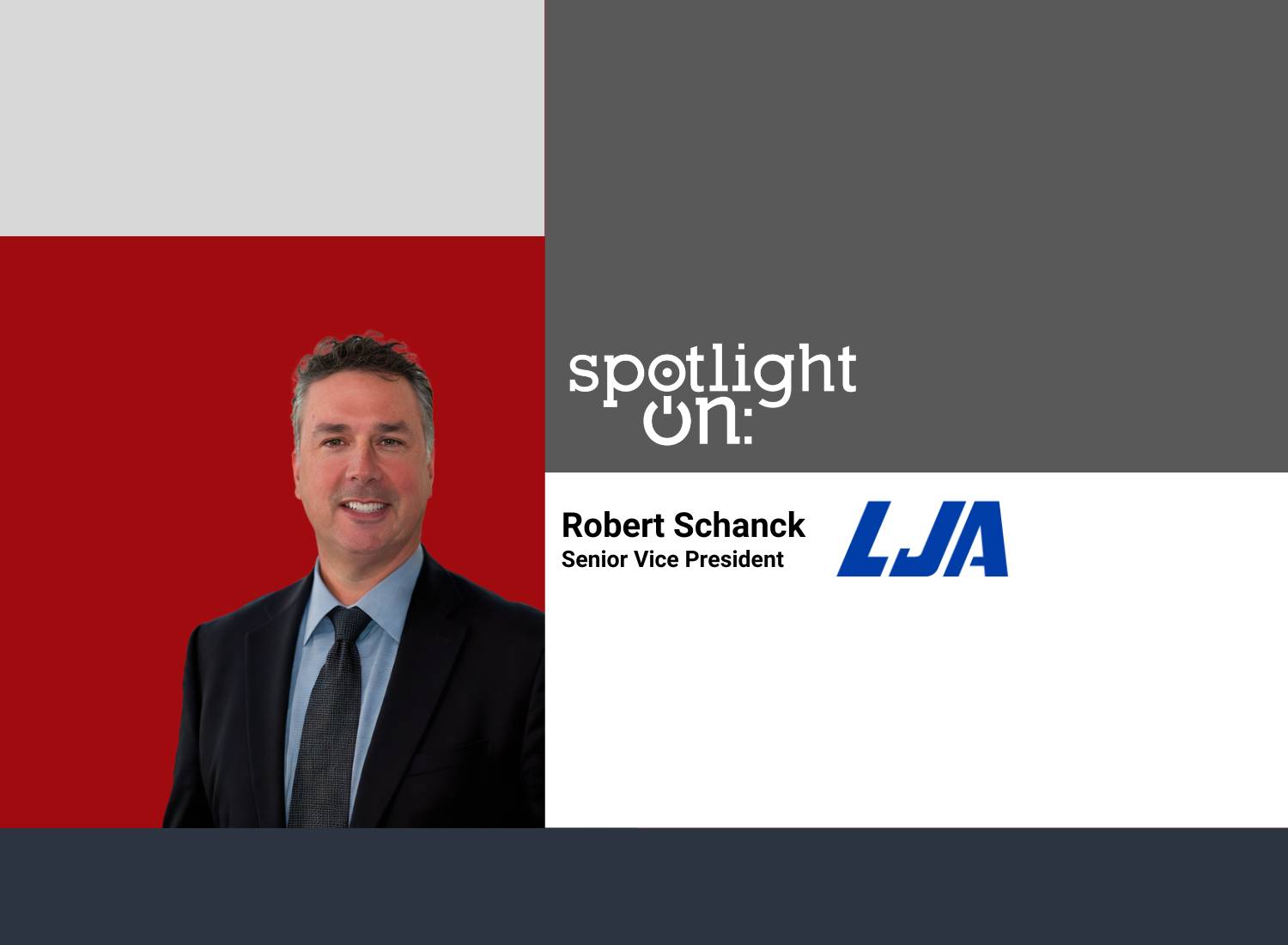
Robert Schanck spotlight onFebruary 2026 — Invest: spoke with Robert Schanck, senior vice president of LJA Engineering, about how a diversified service platform, employee ownership, and technology investments are helping the firm keep pace with Central Florida’s growth. “If you put bad data in, you’re going to get unreliable or bad data out,” Schanck said.


Join us at caa’s upcoming leadership summits! These premier events bring together hundreds of public and private sector leaders to discuss the challenges and opportunities for businesses and investors. Find the next summit in a city near you!


How would you characterize LJA’s role in the Orlando market, and what recent milestones best reflect your growth?

LJA is a full-service multi-discipline engineering firm, and we organize a lot of what we do around our eight service sectors so clients have access to specialists. We cover a wide range of services, including surveying, land development, power and energy, telecom, environmental, transportation, and other related areas.

Over the past year, growth has been a combination of strategic acquisitions and organic expansion. We’re up to about 17 offices in Florida now, and we’ve tried to keep that growth sustainable. You’ll see some firms acquire quickly, then they lose staff. We’re focused on building long-term capability and keeping teams intact as we expand.

Another important part of who we are is that we’re an ESOP. We’re employee-owned, and that matters for recruiting and retention, but it also matters for clients. It aligns incentives around quality and service, and it helps create continuity on projects.

Over the past decade, what shifts have most defined the engineering and infrastructure landscape in Central Florida?

Florida is cyclical, and Central Florida is no different. You’ll have periods where housing is booming, and a lot of firms chase that work. We do a significant amount of single-family residential and master-planned communities for large builders, so we understand that market well.

But the risk is relying too heavily on one segment. When the cycle turns, firms that are concentrated in one lane can struggle. Our approach has been diversification, both across services and across markets. We’ve expanded in areas like power and energy, transportation, industrial, and other categories that help balance demand. That diversification lets us retain staff through downturns and continue delivering at a high level, even when one part of the market cools.

Where are the most visible infrastructure pressures across Greater Orlando?

Transportation is one of the biggest pressures. Our transportation group is continuing to grow because the region needs more capacity to handle the population growth and the rooftops coming online across the metro.

Another part of the pressure is utilities. Development can only move as fast as water, sewer, and supporting infrastructure allow. Builders may want to go to certain areas, but if the infrastructure isn’t there, projects slow down or become more complicated.

From our side, we try to be positioned across the major markets in Florida and to stack services within offices. If an office is strong in transportation, for example, we’ll build out the land and surveying practices around it. That gives clients a full-service team that can support projects across the state with consistency.

What economic or development trends are shaping demand for engineering services, including mixed-use growth?

Demand is still strong overall, but it’s shifting. Multifamily hasn’t been as strong as it was in prior years, and you can see developers being more selective. Single-family remains active, but there are shifts in what’s being built, including a continued need for affordable housing.

On the infrastructure side, renewable energy is a major driver. We’re seeing a big push in solar, and that creates demand not only for the solar fields, but also for the supporting substations and transmission lines to move power to where it’s needed. We’re doing work with utilities in Florida and the Southeast, and that sector continues to be a growth engine.

We’re also seeing industrial growth, tied to logistics and warehousing, and that comes with infrastructure requirements of its own.

Data centers are becoming a bigger conversation statewide. What are you seeing in Central Florida?

It’s still developing, and it’s a little unclear exactly how the siting patterns will shake out long term. They’re popping up in different areas, and I don’t think everyone has it fully figured out yet.

I was the engineer of record on a data center in Central Florida that’s nearing completion, and the larger trend is real. Data centers bring significant demand for power and infrastructure, so they connect directly to the energy resilience conversation and to long-term planning for utilities.

Beyond energy, what other factors will influence Orlando’s competitiveness in the next few years?

Orlando has become a more diversified economy, and that helps its competitiveness. Tourism is still a major driver, and institutions like Disney and Universal continue to shape development and infrastructure needs. The region also benefits from higher education, including UCF, and that matters for talent and for long-term innovation.

But growth also creates pressure in relation to the workforce. Finding top talent in engineering is a challenge everywhere, and it becomes more competitive as regions grow. Orlando’s ability to keep strengthening its talent pipeline will influence how quickly and effectively projects can be delivered.

Permitting and entitlement complexity can slow timelines. How is LJA navigating those challenges?

Permitting, entitlements, and rezoning can always be a challenge, especially as markets get more active and agencies are balancing demand. One of the most effective things you can do is hire experienced people who understand the process and have strong relationships, because that helps projects move more predictably.

We’re also investing in efficiency. Our clients expect speed and responsiveness, coupled with the high quality we’ve always provided and that expectation keeps rising. To keep pace, you have to stay up-to-date on technology, software, and processes that reduce friction and improve turnaround.

We’re fortunate to have internal support teams that help enable that. We have a corporate services business solutions group that supports production operations, and that’s important for keeping teams focused on delivery while still modernizing tools and workflows.

What investments are you making in AI, both in software and in preparing your teams to use it effectively?

We have an AI committee that’s studying the space and trying to spearhead initiatives. We’re also integrating AI in practical ways across the business where it improves quality and efficiency.

Some of our core platforms already include AI integration, like accounting software and client resource management. We’re also using AI to support permitting and code compliance work. Those are real applications that can help teams move faster while maintaining standards.

The committee’s role is also to think about what’s next and where AI can add value without introducing risk. In technical fields, the goal is to use the tool responsibly and make sure it supports better outcomes.

How do you balance the excitement around AI with the need for accuracy in engineering work?

AI is absolutely powerful, but it still depends on what you feed it. If you put bad data in, you’re going to get unreliable or bad data out, so you have to teach it, provide good information, and make sure it’s being guided by people who understand the context.

We’ve always said the same thing about engineering models. The model is only as good as the assumptions and the data. AI is another tool, and it needs that same discipline, especially when you’re dealing with compliance, safety, and long-term infrastructure decisions.

Looking ahead two to three years, how do you expect demand for infrastructure services in Orlando to evolve, and what will be your priorities?

Transportation, power, and energy should remain strong. Data centers are another area that’s growing, and the infrastructure demands around them will continue to expand, particularly on the power side.

Residential can move in cycles, but Central Florida continues to grow, and that growth creates ongoing demand for community development and for the connectivity between housing, employment centers, and city cores.

A big differentiator will be municipal foresight. Builders may want to develop in certain areas, but if water and sewer infrastructure isn’t in place, development is constrained. Cities and municipalities that plan ahead and invest early in core utilities can shape growth more effectively and unlock better long-term outcomes.

For us, priorities are continuing to grow the right service lines, investing in efficiency, and staying aligned with what clients and communities need as Orlando’s development continues to accelerate.

Want more? Read the Invest: Greater Orlando report.

 

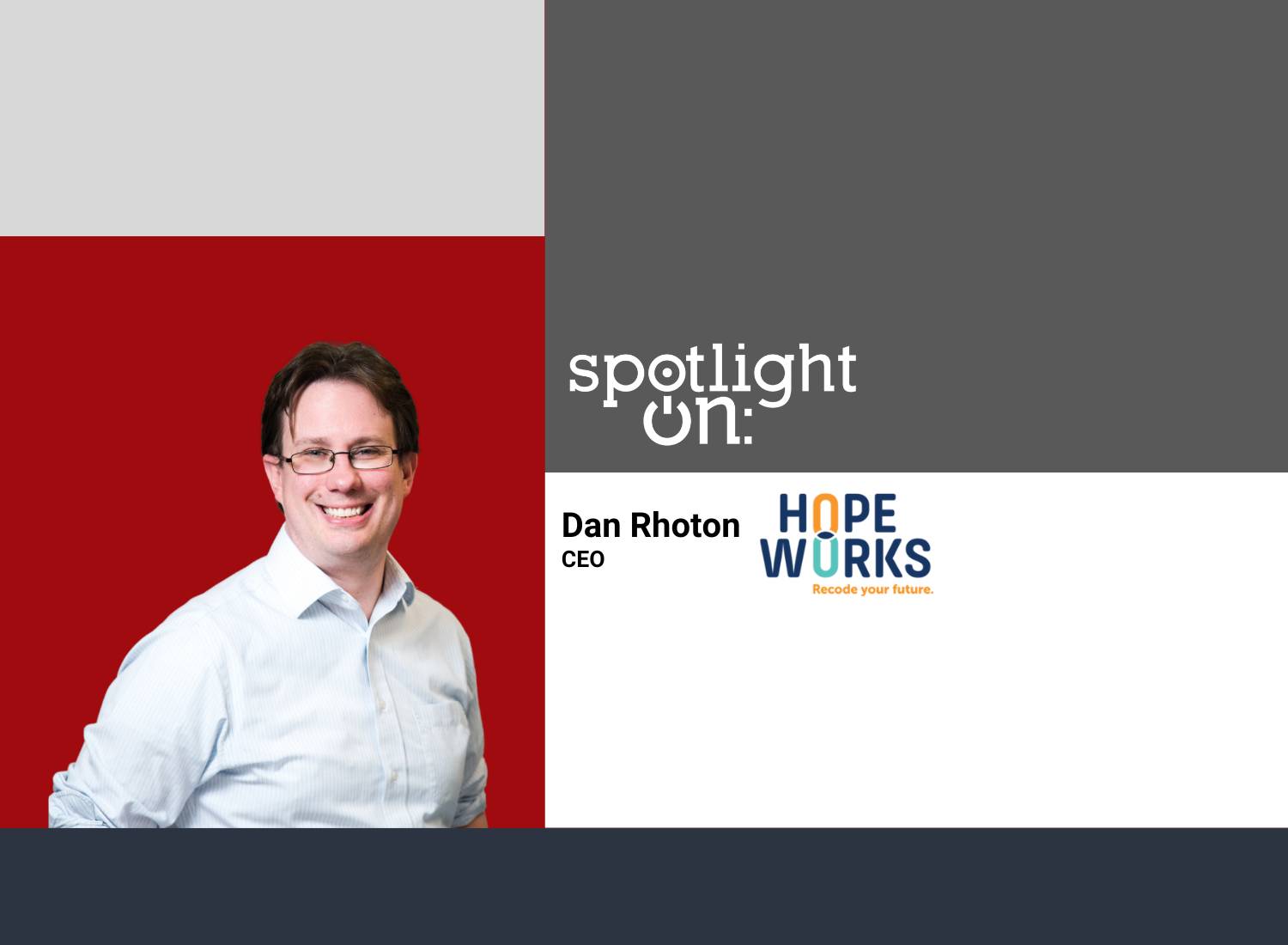
Spotlight On: Dan Rhoton, CEO, Hopeworks

Key points:

  • Hopeworks is using AI to fast-track underserved youth into high-wage tech jobs, accelerating job readiness dramatically.
  • •Expansion to Newark builds on its Camden and Philadelphia model, pairing trauma-informed care with workforce training.
  • The long-term goal is placing 700 young adults annually into $50,000 careers, driving economic independence at scale.

Dan Rhoton spotlight onFebruary 2026 — In an interview with Invest:, Dan Rhoton, CEO of Hopeworks, highlighted AI’s impact in accelerating job readiness for underserved youth. “It’s going to define workforce development,” Rhoton noted. With plans to expand to Newark, Hopeworks pairs trauma-informed care with tech training to help young adults secure stable, high-wage jobs.

Join us at caa’s upcoming leadership summits! These premier events bring together hundreds of public and private sector leaders to discuss the challenges and opportunities for businesses and investors. Find the next summit in a city near you!


What recent changes or milestones have most impacted Hopeworks’ mission and operations?

At Hopeworks, we work to place young adults into life-changing jobs through technology. One of the biggest developments has been the integration of artificial intelligence. We’re seeing that our young adults, who typically enter at the ground level, are now performing at the level of professionals with three to 10 years of experience. It’s been incredibly impactful.

How would you describe the workforce development landscape in Camden and across New Jersey?

There’s a lot of potential. New Jersey has a robust and growing economy, but it also has significant pockets of poverty, including places like Newark, Camden, and Paterson. These cities are full of the talent businesses need. The challenge is connecting that talent with the right opportunities. As business continues to grow, we need to do a better job linking employers to the workforce that’s ready and waiting.

Are most of your partnerships based in Camden, or are you expanding across New Jersey?

Right now, we’re in Camden, we opened in Philadelphia in 2022, and we’ll be launching a Newark location in 2026. Our focus is still on underserved communities, and Newark is a natural fit.

How has economic revitalization in Camden supported your mission?

As businesses expand, they need to hire beyond their traditional networks. Many of our young adults may not have a college degree or a conventional background, but they are ready to work. The more the economy grows, the more opportunities there are for these young people.

Have you observed a trend of older individuals returning to education or training?

Not really. Most of the young adults we work with are ready to enter the workforce. We haven’t seen a significant interest in returning to higher education, either from our participants or the companies hiring them. The focus is on ability and readiness to work, not on degrees.

Have economic fluctuations had an impact on your work or the market you serve?

Not in a major way. We don’t accept federal funding, so we’re insulated from some of the larger shifts. Our young adults are still finding jobs, though economic uncertainty does make things harder. We’re looking forward to more stability in the broader economy.

What employment readiness trends have you observed recently?

AI is the biggest shift. It allows entry-level workers to perform at a much higher level quickly. For experienced professionals, AI can offer marginal gains, but for new workers, the improvement is transformational. It’s going to define workforce development for the next five years.

Hopeworks emphasizes trauma-informed care. How does this focus shape your outcomes?

It’s foundational. Our goal is to help young adults succeed in the workplace, and that’s only possible if they’re mentally and emotionally ready. Trauma-informed care means giving them tools to manage their emotions and face challenges head-on. It might sound complex, but it’s about making sure they’re prepared every day.

We use tools like safety plans, which help regulate emotions, and systems checks, which guide productive conversations around difficult topics. These tools help young adults deal with stress and conflict, which are critical skills for any job.

What key partnerships help support your mission?

We partner with employers who hire our young adults and with organizations that provide housing, food access, and mental health services. We can’t do everything ourselves, so strong partnerships are essential.

Do you work with higher education institutions as part of your programming?

While we value those institutions, our young adults are typically not best served by that path. Many have found that school hasn’t worked well for them in the past. Our focus is on getting them into the workforce as efficiently as possible.

Hopeworks also works with geographic information systems (GIS). How has that evolved?

We provide digital mapping and data analytics for clients nationwide. For example, we’re helping the Philadelphia Airport track tree growth and assisting Camden with streetlight functionality mapping. We use tech not just for innovation, but to genuinely improve people’s lives.

Do you have concerns around cybersecurity or data protection in your work?

Keeping data secure and accessible only to the right people is a top priority. We have strong protocols in place and haven’t faced any significant threats. It’s something we’re always focused on.

What are the top challenges and opportunities in serving Camden and the broader New Jersey region?

The biggest opportunity is helping people move from dependency to independence. That means connecting them to jobs that offer stability, benefits, and the ability to support themselves and their families.

What is the main challenge young people face when entering the workforce?

Social capital. They have the drive and ambition, but they don’t always know what jobs are out there or who’s hiring. One of the most important things we do is make those connections, opening doors and building relationships that help them grow.

What are Hopeworks’ top priorities for the next three to five years?

By 2030, we aim to place 700 young adults into jobs each year. At an average salary of $50,000, that’s $35 million in wages going back into the community annually. That’s our vision, and we’re on our way to making it happen.

Want more? Read the Invest: New Jersey report.


Shawn St-Pierre, General Manager, Fairmont Pittsburgh

Shawn St-Pierre, General Manager, Fairmont PittsburghIn an interview with Invest:, Shawn St-Pierre, general manager of the Fairmont Pittsburgh, discussed the city’s collaborative spirit and the hotel’s role in its hospitality landscape. “We want to ensure that travelers coming into Pittsburgh are welcomed with authenticity at the Fairmont, that they can experience the local culture, while experiencing luxury hospitality at the same time,” St-Pierre said.

What have been your key takeaways from living in Pittsburgh over the past two years?

I moved to the city in March 2023, and I immediately loved the city and the dynamics of it. There is really a desire from all Stakeholders to make downtown and the greater Pittsburgh area a dynamic force. That is what I like. I have worked in other markets where the priorities might be a bit misaligned between different levels. Here, I have found that private industry, public government, and everyone else seem to want to ensure that if you are coming here for either a vacation or a business trip, you feel safe. They want you to enjoy the city so that you return on your own time, whether for vacation, a concert, or a sporting event. I have been very impressed with the way the city and its different stakeholders are pushing in the same direction.

Given that Fairmont in Pittsburgh is celebrating its 15-year anniversary this year, how does the Fairmont contribute to Pittsburgh’s hospitality and hotel landscape?

Fairmont is the only true luxury hotel in the city. We are fortunate to welcome high-profile guests to the hotel. Different companies and organizations select the Fairmont to host their visitors because they want to showcase the best of the best. We are in a fortunate position. We are celebrating our 15th anniversary this year, and the impact of the Fairmont has been significant since we opened in 2010. We want to ensure that travelers coming into Pittsburgh feel welcome with authenticity, as if they are locals, while also experiencing luxury at the same time.

How has Fairmont’s collaboration with the Fifth Avenue Club by Saks Fifth Avenue enhanced the guest experience at the hotel?

Sometimes, luxury hotels can feel exclusive, but the Fairmont has done an excellent job of welcoming locals since day 1. We have a coffee shop in the lobby where the majority of our guests are locals. Our health club has many local members, and our spa is primarily frequented by locals. Our restaurant and bar also have a strong reputation as a place to be and be seen in the city. The partnership with Saks Fifth Avenue is no different. Saks used to be present in Pittsburgh but eventually had to depart. They have been looking to re-enter the market, and partnering with luxury hotels like ours allows them to do so. This partnership offers private shopping in a luxury setting by appointment, whether for hotel guests or locals. It is another amenity that enhances the experience. Guests can enjoy private shopping in the morning, followed by a spa treatment, lunch at our restaurant and enjoy a full day of wellness right in the heart of the city. We are very excited about this offering.

What are some of the key challenges that you and other industry leaders are seeing, and what strategies are being implemented to address them?

We are hosting the NFL Draft in April 2026, and as I mentioned earlier, all stakeholders are aligned in making the city safe and attractive for both locals and visitors. We are located on Market Street, so the revitalization of downtown and Market Square directly benefits our guests. 

We are very happy to be part of these efforts and recognize how important it is to get the community involved as well. We want to ensure that downtown is attractive and welcoming for visitors, whether they are here for business or leisure. We have been working with different stakeholders to contribute to this effort by keeping sidewalks clean, improving safety, and enhancing the overall experience. The city has done a great job addressing these issues, especially after the challenges many major cities faced post-pandemic. The steps taken have been appropriate and effective.

How have guest expectations for hotel stays evolved in recent years, and how does your team adapt to meet those changing demands?

Personalization is key. Guests are looking for experiences that allow them to engage with local culture. In our restaurant and bar, we design our menus to reflect the taste of Pittsburgh and western Pennsylvania. For example, we offer pickled cocktails year-round, inspired by one of the best food festivals in the country, Picklesburgh. Luxury is about personalization, which comes down to making people feel special. At the Fairmont, that is our goal with every interaction.

How has the Fairmont integrated technology, such as AI, into operations to enhance the guest experience?

Technology is important, and we strive to stay at the forefront. We recently integrated an internal platform for better colleague communication, streamlining guest requests through mobile instead of traditional communication. We also introduced mobile ordering for in-room dining and guests can now also select their meal, and choose a delivery time at their convenience. However, we still offer the option to speak to someone directly if they prefer. True luxury is about choice, and we aim to provide both convenience and personalized service.

How are you developing different partnerships or programs to involve the Fairmont with the local business community as much as possible?

The health club is a good example where we have partnerships with different organisation in downtown Pittsburgh. These organizations receive special offers for their employees, allowing them to use our facilities. The hotel features a steam room and a sauna, which many appreciate. Proximity plays a significant role in these partnerships, as many people utilize the parking beneath the hotel to access nearby office buildings. It is very convenient as guests arrive early in the morning, park at the hotel, work out, proceed to their workplace, and return to the hotel to retrieve their cars.

Our location also provides many advantages. We are just one block away from the Cultural District and serve as the official hotel of the Pittsburgh Symphony Orchestra. Many locals use our valet service for ease of parking. They drop off their cars, dine at our restaurant, attend a concert, and return to collect their vehicles seamlessly. The Fairmont has been a cornerstone of downtown Pittsburgh for 15 years, and we remain committed to serving the community. Additionally, our coffee shop attracts many locals who value a safe and clean environment for their morning coffee. The hotel was designed with a sense of place in mind, offering more than just accommodations.

Do you believe this integration with the local community is a broader trend in the hospitality industry, or has it always been a focus for hotels?

I think this approach has existed for some time, but it is challenging for hotels that were not initially designed with this mindset. In some markets, attracting locals can be a challenge, The Fairmont in Pittsburgh was conceived with this vision from the beginning, and we are fortunate to continue fostering these connections.

Looking ahead, what developments would you like to see in downtown Pittsburgh, and how do you plan to further integrate the Fairmont brand into the city’s growth?

There are many synergies to explore, with the NFL Draft being one of them. Downtown Pittsburgh is undergoing renovations, including improvements to Market Square and other areas and I would like to see better access to our three rivers, and efforts are already underway to enhance waterfront development. This will benefit both visitors and locals.

The return of Picklesburgh on the Roberto Clemente Bridge this year highlights the city’s iconic bridges, which are a defining feature of Pittsburgh. Showcasing these attributes reinforces our unique identity. Additionally, there is a strong desire to convert office spaces into residential units, which will invigorate downtown beyond business hours. More residents will support local restaurants and create a vibrant atmosphere, making the area more appealing to visitors.

These developments will strengthen Pittsburgh’s sense of place and ensure the Fairmont remains an integral part of the city’s growth.

Mayela Garcia, General Manager, Hotel Indigo Pittsburgh East Liberty

Mayela Garcia, General Manager, Hotel Indigo Pittsburgh East LibertyIn an interview with Invest:, Mayela Garcia, general manager of Hotel Indigo Pittsburgh East Liberty, said that the hotel’s focus on community partnerships and renovation is reshaping its role in the local market. “This needed change is going to attract more guests and bring in more business,” Garcia said. 

What changes have most impacted Hotel Indigo Pittsburgh over the past year, and in what ways?

I would say that the biggest thing that we’ve focused on over the past year was preparing for the U.S. Open, which brought in 100,000 people to the area. We’re not typically used to events on that scale. 

I stepped into my role at the beginning of the year, and we focused on hiring and training. We wanted to make sure that we’re bringing in the right local talent and setting up a strategy for maximizing our revenue for the year. 

What adjustments made have been most significant during this phase?

One of the things we’ve really been focusing on is working with the East Liberty Chamber of Commerce. With the Hotel Indigo brand, it is all about fitting into the neighborhood as well as bringing people in. Partnering with local vendors complements our brand and does the job for us. People already know they want to stay at an IHG hotel, but it’s my job to make sure they feel like they’re experiencing East Liberty. Over the last six months, we’ve been exploring different local vendors. There’s a company down the street that does local pierogies, rugs, and we get them from there to have a local touch to our menu. It’s our way of supporting small businesses while giving guests a true taste of the neighborhood. 

How might this change affect guest experience and your positioning in the Pittsburgh market?

This needed change is going to attract more guests and bring in more business. We’ve been doing a lot more in-person marketing. The management team has been promoting the hotel through flyers and signs to highlight what guests can look forward to at the hotel. 

We’re also reaching out to nearby hotels and reminding them that we are always there for them. If there’s any business they can’t take, send them over to our soon-to-be renovated hotel. Building those relationships between hotels really helps us. 

For guests, it’s so important that they know when you come back next time, it’s going to be a completely different stay. Right now, we’re focused on the Kelly Strayhorn Theater and event space we have right here, but within the next year, it’s going to be different. 

What makes Pittsburgh a great place to live and do business?

Coming from Dallas, which is so large, you feel like you fit in here. Even for people visiting for a short time, there’s something to do every day. I’ve never been to a city where there’s so much interaction and a drive to build, while still giving you that feeling of being at home. 

Seeing how much has changed in the last five years, you can expect more in the next five. If I look around and see two new buildings have popped up along a street, I can tell you that the street is going to be packed in five years. The same thing goes for East Liberty. This is going to be a community hub where companies are choosing to be. I already know it’s going to be a booming city. 

What are your key goals and priorities for Hotel Indigo Pittsburgh for the next two to three years?

One of our key priorities is finishing the renovation without negatively affecting the guest experience, while continuing to maximize revenue and reminding people that we’re open and ready to welcome them. Also, in preparation for the renovation, we’re keeping major upcoming events in mind, like the NFL Draft — similar to how we did for the U.S. Open. We were one of the first hotels to open our rates for booking, even a year in advance.

It’s also important to keep our community presence. If anyone has family coming to town, they should know Hotel Indigo is the place to stay. That’s why continuing our relationship with the East Liberty Chamber of Commerce is very important to me and making sure that we are building with the community and keeping our neighborhood story alive. 

Janet Falotico, Executive Director, Visit Lawrence County

Janet Falotico, Executive Director, Visit Lawrence CountyIn an interview with Invest:, Janet Falotico, executive director of Visit Lawrence County, detailed the strategic and operational philosophies guiding the organization. She also emphasized the critical importance of youth leadership and community investment. “Lifelong residents can be either very passionate whether it be negative or positive. Therefore, we have focused on rallying the community and conducting more activities locally,” Falotico said.

What changes over the past year have most impacted Visit Lawrence County, and in what ways?

Each year brings a new director or a changeover within the board of directors, which can often shift the overall vision according to the individuals brought into those roles. Every year, we develop a strategic plan to decide our priorities, what we wish to see happen, and how we will make it happen. Without a map to guide you, the chances of reaching your destination are very slim. You must know where you are going or where you want to be. That is our primary focus. 

One of our key initiatives has been to highlight all the positive aspects of Lawrence County. We have been engaged in this effort off and on for years. This year we produced a video featuring Sean Kanan, a two-time Emmy Award-winning actor from our area. He has appeared in “Cobra Kai,” “The Bold and the Beautiful,” “General Hospital,” and “The Karate Kid.” We are a very small community, one of the smaller counties in the state, but we believe we present ourselves exceptionally well. We make the most of what we have. The video has received significant promotion and is widely shared. It has been well received, even among local residents, and has helped to build morale. The objective was not only to inform visitors about the positive attributes of our community but also to help residents recognize them. Lifelong residents can be either very passionate and negative or very passionate and positive. Therefore, we have focused on rallying the community and conducting more activities locally. Historically, most of our budget was spent outside the county, so people might not have been aware of our efforts. We have found that investing in our community is also beneficial. We allocate small grant funds to support local events so they can continue to occur. 

In addition to the video, we have altered our marketing strategy significantly since 2016. We now focus more on travel writers, content creators, social media influencers, and digital marketing. 

What strategies are you pursuing to support workforce needs in the tourism and hospitality industries, and how are you collaborating to prepare future talent?

While workforce development is somewhat outside my direct purview, I believe our community investment efforts contribute to this goal in a roundabout way. Several years ago, we initiated a program inspired by Flat Stanley, a character from a children’s book. Stanley is a paper doll mailed to various locations, and then he returns with stories about his travels. We created Flat Larry for Lawrence County and brought him into local schools. We used a cardboard cutout, discussed the community with students, and had them color their own Flat Larry to mail and share stories. Local businesses, such as pizzerias, would display the children’s artwork. This may seem like a small effort, but it helps young people appreciate the beauty of where they live from an early age. We have expanded this program significantly. We now create bucket lists for residents, tailored for elementary, junior high, and high-school students. For high-school and college students, we offer a digital version. Most activities on the list can be done at no cost, ensuring that families facing financial challenges can still participate. The goal is to foster community pride and engagement by highlighting all the positive aspects of Lawrence County.

From a tourism perspective, our role is to ensure that not only are visitors welcomed, but residents are also knowledgeable and enthusiastic about their community. In terms of workforce development, it is important to remember that before someone opens a business, takes a job, or moves to a new place, they are first a visitor. We also provide materials to real estate agents to give to new families moving into the community, as these resources are a wealth of information and help promote a positive image. It is about creating a sense of community and a vibrant county that attracts visitors, who may then become business owners, students, and long-term residents, all contributing to the success of Lawrence County.

What are some of the challenges that Lawrence County tourism is navigating, and how are you working to turn those into opportunities?

Having the right people in place at all times is always a challenge, and things do not always work the way you want them to work. We are all limited in the progress that we can make. I am thankful that the job I have allows a lot of leeway to make changes. 

On the development front, the city of New Castle, the county seat of Lawrence County, is also trying to determine how to bring more business into our downtown. New Castle and the surrounding townships/municipalities have tried many different ways and are still working on it. We are finding beautiful, sustainable parks and recreation for our downtown, for example. 

We also have a local airport and I know that it is trying to find a way to increase the landing strip because we need to be able to bring people into this airport and not just accommodate a local two-seater plane. It needs to open up. That is a challenge we are working on for the future, and hopefully if things go well, we will be able to make that happen. 

Another challenge would be that we do not have a full service hotel yet. We have some hotels, thankfully, and we have a ton of bed and breakfasts and Airbnbs. But not having a full service hotel and not having an expanded airport hinder you from having conventions that you might otherwise be able to host. 

I personally like to think that if you build it, they will come. If we keep trying, it is going to stick at some point. We have not given up. We are still trying. 

What are your top priorities moving forward, whether in marketing, partnerships, or visitor engagement, that you believe will define the organization’s next chapter?

We do have a strategic plan and that is the most important part of this whole thing. You have to have a plan. We set that up every January. Right now, it is to share all things good with our community, and to continue what we have found to work, which is to work with travel writers, content creators, influencers, and digital marketing. 

We plan to do more around group tours by working with Pittsburgh. We are going to group tour shows and encouraging people to come back here and not just stop in Pittsburgh or not just stop in Lawrence County, but to come around and see all that we have in this area. Group tours have not been around for years, but they are starting back up, which is a pretty big deal. We have had a couple over the past year, so we are looking forward to that picking up. 

In general, we will just continue on the road we are on and spread the good news. I personally expect our agency to perform even better when I retire next year because of the investment that has been put into our assistant director and the sustainability of our group. I believe she can make a bigger difference because her ideas are fresher and newer.

Nicholas Dragga, Executive Director, Pittsburgh Ballet Theatre

Nicholas Dragga, Executive Director, Pittsburgh Ballet TheatreIn an interview with Invest:, Nicholas Dragga, executive director of Pittsburgh Ballet Theatre, discussed the company’s direction and collaborations built from a vision of a more accessible ballet for all. “The long-term effect of our initiatives is hard to track, but we are seeing the interests and growth with those labors,” Dragga said. 

What are the recent key milestones for Pittsburgh Ballet Theatre?

Previously, the company’s 2023-2024 season was our highest-grossing season. We broke that record again this season by setting two new revenue records: this year’s Nutcracker became our highest-grossing production ever, and May’s Wizard of Oz achieved the highest gross for any non-Nutcracker show in our history.

We can now move beyond pre-pandemic conversations and look at new levels of growth. 

Ticket sales are strong and we have large audiences, from which 45% are from outside the metro area. Our productions bring a lot of cultural tourism into the city and help build downtown revitalization, including for the restaurant scene.

How do past seasons’ performances reflect the company’s evolving artistic direction?

Adam W. McKinney, our artistic director, has a vision of a more accessible ballet for all, where everyone can see their story and find their place through ballet. He wants to celebrate the classics and introduce new works, proving that it’s not necessarily a binary choice. We can do new interpretations of classic stories and still have blockbuster storybook ballets. The Wizard of Oz, Peter Pan, or Cinderella can still be classics, but also be very artistically adventurous. It’s possible to have cultural vibrancy and artistic expression with something that is popular and loved by everyone.

How is PBT adapting to emerging trends in ballet?

Due to the PBT School and some of our very intentional programming beyond the stage, our audience tends to be on the younger side. Our programming is frequently family-friendly, such as The Nutcracker, and we have a very robust school with over 400 students. Community

Engagement programming makes up the third pillar of the company, with a thousand students we’re meeting outside the studio for classes and events every week. Those connections pay dividends for a generation. We are educating tomorrow’s audience every day.

The audience also expects high production values, which were reflected in the success and feedback of Cinderella, Peter Pan, and certainly, The Wizard of Oz. The Wizard of Oz was brought to life using an effective combination of projections and practical elements, rather than just a video screen. The familiar titles have their draws, but we must invest in production value to meet the audience’s expectations, deliver even higher-quality productions every year, and add that surprise element every time.

What initiatives are in place for the company’s educational pillar?

Aside from Pittsburgh Ballet Theatre School, we have community education and engagement. Its primary program, among many, is the creative movements residencies at elementary schools. We were involved with 105 classrooms this past year, from pre-kindergarten to third grade, and we are adding fourth grade as we build longer relationships with the students. They learn about dance and the ballets performed that particular season, which usually culminates with tickets to the performances. The long-term effects of our initiatives are difficult to track, but we are seeing increased interest and growth as a result of our efforts.

How have recent collaborations affected the company’s direction?

To borrow the words of our artistic director: “More magic happens when you put more artists together.” We have a tremendous partnership with the local school districts through our community engagement programs. Our programs work because they all highly involve participants. On the artistic side, the choreographers and designers make all the productions possible. We are fortunate to work with stellar artists. With the artistic director’s vision, there are diverse choreographers and artists’ works presented on stage. These diverse voices add richness to the ballet experience in every way, and Pittsburgh is now benefiting from that. Pittsburgh’s art scene is rich, vibrant, diverse, and thriving. There are more amenities and arts organizations in Pittsburgh than in any other city of our size. The music, theater, and dance scenes work well together. We collaborate with the Pittsburgh Symphony Orchestra every other year.

We’re in continuous collaboration with the opera and the theater, both for productions on the stage and even mundane things such as sharing lighting equipment. The arts and culture scene has become a catalyst that brings people downtown and keeps the restaurant scene, as well as the retail scene, alive. It’s also preventing brain drain by creating a place where people want to live, work, and play.

What is the biggest challenge facing ballet companies like PBT?

Similar to any corporation, it‘s the rising costs of doing business. Particularly in the performing arts, there’s a productivity gap. We can’t get more efficient at rehearsing a ballet, and there’s a limited number of seats are available for each performance. As labor costs reasonably rise and inflation increases, there is higher pressure on the business model, especially since we are subsidizing the cost of the tickets. We try to make them accessible, hence we’re relying on contributed revenue or donations to bridge the gap. In America, there’s currently uncertainty in the sociopolitical environment that every corporation must navigate. As this environment changes, so do the funding priorities.

What are the company’s key priorities for the next few years?

The three-year budgeting process has been finalized, which includes productions through 2028, allowing us to put our priorities on the table and dream big. We will premiere a brand new Nutcracker production in 2027, comprising all new sets, costumes, choreography, and projections. Another priority is to increase the hospitality of ballet, so more audiences can experience the magical feeling it creates. PBT’s exciting programming will ensure that the audiences get to experience both familiar and new ballet stories, as well as see artists who look like them on stage, and feel at home in the theater.

Shanna Carrick, Executive Director, Film Pittsburgh

Shanna Carrick, Executive Director, Film PittsburghIn an interview with Invest:, Shanna Carrick, executive director of Film Pittsburgh, said that inclusive storytelling is central to the organization’s mission as it expands its cultural impact in the region. “We believe film is for everyone, and we aim to create that inclusive, ephemeral experience of being in a theater together, watching independent cinema as a community,” Carrick said.

What is your overview of Film Pittsburgh, including its purpose and mission in the Pittsburgh area?

Film Pittsburgh originated from the JFilm Festival, founded in 1994 by the Jewish Federation of Greater Pittsburgh, beginning as a volunteer-run event. We now also produce Pittsburgh Shorts, ReelAbilities Pittsburgh, and the Three Rivers Film Festival, which has been running since 1981. It was originally part of the Three Rivers Arts Festival that takes place every summer, and while it’s changed hands over time, we’re now honored to steward that legacy.

In addition, we have an educational outreach program called Teen Screen. Though these programs differ, they are united under the common mission of presenting diverse perspectives and building empathy through film. We believe film is for everyone, and we aim to create that inclusive, ephemeral experience of being in a theater together, watching independent cinema as a community.

What are your immediate priorities as you begin this journey of fostering empathy and connection through film?

I’ve been in this position for just a few months. I come from a background in operations and arts management, so my initial focus was on strengthening our operational infrastructure and modernizing our systems. I introduced SaaS tools like Slack for internal communication, Monday.com for project management, Google Workspace for collaboration, and Brex for expense tracking. It was a lot of tech all at once, but it was all in service of improving efficiency and connecting our hybrid workforce.

We’re a small team — just eight employees — so my first priority was to support them. I wanted to understand their vision for the organization, their priorities, and how they hope to evolve Film Pittsburgh. I began with an employee-first review and have continued to focus on listening and learning. We also have an incredibly engaged board, which is a rare and wonderful asset. While I haven’t run a film festival before, I’ve managed a lecture series, which is quite similar in many ways, so I feel well-prepared and excited to lead.

What strategies are you implementing to support and sustain an independent workforce in Pittsburgh?

I hold an MBA in Sports, Arts, and Entertainment Management, so I’m well aware of the high cost of turnover, especially when you lose institutional knowledge. That’s why I’ve prioritized taking care of our employees, whether they’re part-time, hourly, or full-time.

For example, I introduced unlimited sick leave. Previously, we didn’t have a separate sick time policy. Now, staff don’t have to choose between canceling a well-earned vacation or coming in sick, which is especially important with COVID and the flu still circulating.

The goal is to make sure everyone feels supported, valued, and secure in their roles, especially in today’s unpredictable nonprofit arts landscape, where grant funding is shrinking and individual giving is decreasing. That shift means we’ll need to emphasize earned revenue more going forward.

As for broader workforce development in the filmmaking space, that’s outside of our direct purview. We’re at the tail end of the creative process — we receive submissions from filmmakers and evaluate them with our volunteer judges and programming team. The Pittsburgh Film Office is the main player in workforce development for local filmmakers, but we fully support and celebrate our independent creators especially for Pittsburgh-made films.

How would you describe the contribution of the film industry to the regional economy in Pittsburgh?

The film industry here is definitely on a growth path. Take Row House Cinema, for example. It started as a single-screen theater in Lawrenceville and has now expanded. They’ve acquired a 99-year-old legacy theater in Dormont — a Pittsburgh neighborhood — and are transforming it into an atmospheric theater. It’s actually the first atmospheric theater built in the United States in over 40 years.

Their investment is a powerful signal. At a time when streaming is more convenient than ever — watching movies on laptops or even phones — Row House is betting on the value of shared, in-person moviegoing experiences. People are still seeking opportunities to gather and engage with film as an event rather than passive consumption.

Atmospheric theaters bring the outdoors inside, and Row House will be featuring elements like a starlit ceiling and Art Deco architectural designs inspired by 1920s movie palaces. I toured the new space and am incredibly excited about what it represents, not just for film but for local economic and cultural development. It’s an investment from a local business, not a major chain, which is important for building community-rooted growth.

What do you see as the biggest investment opportunities in the film industry today?

It’s really all about the audience experience. The global trend in experiential cinema is growing, especially in Asian markets. For instance, 4DX — originating in South Korea — has expanded into the U.S. market specifically in Regal Cinemas. We don’t yet have one in Pittsburgh, but it’s a fully immersive experience: the seats move, there are wind and fog effects, even scents. I watched Fantastic Four in 4DX, and when Johnny Storm ignites, you can actually smell something burning.

Another example is the Sphere in Las Vegas, which wraps the audience in a dome screen for full immersion. They’re producing a Wizard of Oz experience where you’re in the tornado with Dorothy, feeling the wind. Then there are smaller ventures like Cosm in Los Angeles and Dallas, with wraparound ceilings and walls to make you feel like you’re inside the film.

And let’s not forget Metro Private Cinema, which is taking a different route by creating micro-cinemas for small groups, paired with gourmet dining. It’s all about transforming film into a full sensory experience that people want to pay for — not just a night out, but a memorable event.

How does Film Pittsburgh support educational opportunities for emerging filmmakers?

We engage with schools through our Teen Screen program. It provides educators with free access to curated films that align with and supplement their curriculum. The program is funded by a mix of donor and foundation support and revenue from our festivals. Beyond just screening films, we also create opportunities for students to interact directly with filmmakers — sometimes via Zoom — so they can learn firsthand about the filmmaking process and see it as a viable career path.

What programs or efforts are in place to ensure diversity, accessibility, and inclusion within the community through film?

This is something we take very seriously. One of our guiding principles is: Nothing about us without us. That means involving the communities represented in our programming. For example, we’re showing a Spanish-language film titled DEAF, about a deaf mother and hearing father raising a child and in a particular scene during childbirth navigating the challenges of medical care without access to Spanish Sign Language.

To deepen the impact, we’re hosting a talkback featuring professionals from the Sign Language Interpreting Professionals organization, a deaf mother of a hearing child, and one of our staff members who is a hearing parent of a deaf child. These conversations create powerful educational moments.

In general, we ensure our programming is diverse and one way that we can do this is by endeavoring to have our volunteer screeners — the ones selecting and rating the films — reflect that diversity as well. Inclusion has to be built into every stage of the process.

How are you measuring the success of those efforts, and where do you see opportunities for further improvement?

We’re focused on both qualitative and quantitative data. Of course, personal impact matters: if people leave a screening feeling moved or transformed, that’s a success. However, we also track metrics like ticket sales, survey responses, and contributions. We ask if attendees felt welcomed, if they see themselves as part of our community, and if they’d return next year.

We’re also doing a major brand relaunch for the Three Rivers Film Festival (3RFF). Brand-based marketing is crucial for building recognition and long-term loyalty, and we’ll be using Net Promoter Scores and other feedback tools post-festival to evaluate progress and refine our approach. 

What are Film Pittsburgh’s main goals for growth over the next few years?

Our biggest goal is to position Pittsburgh as a destination city for film. I often reference the “Paris to Pittsburgh” initiative, where downtown restaurants brought dining outdoors to create a more European atmosphere. In the same spirit, we want Pittsburgh to be seen as the Cannes of Appalachia, or the Sundance of Pennsylvania.

We envision people traveling here from around the world to attend our festivals, watch incredible independent films, stay in our fantastic downtown hotels like our partners at IHG’s  EVEN hotel and the Kimpton, and enjoy our amazing local dining scene. With events like the NFL Draft coming to Pittsburgh in April, there’s a tremendous opportunity to increase tourism and make sure those visitors come back year after year, not just for sports but for film as well.

Chris Johnson, Area General Manager, Renaissance Pittsburgh Hotel

Chris Johnson, Area General Manager, Renaissance Pittsburgh HotelWith the pandemic woes in its rearview, the hospitality industry is making every effort to course-correct and enjoy an even greater future after what was an extremely rough couple of years for the industry. In Pittsburgh, the iconic Renaissance Hotel is hard at work preparing for a key renovation that will cement it as among the best lifestyle hotels in downtown. “We are very committed to what is going on in the city,” Chris Johnson, general manager for the Renaissance Pittsburgh Hotel, said in an interview with Invest:. “We are going big on the renovations because we are very confident in this market and this community and believe the ROI on this investment will be there for us.”

What is your general outlook for the Pittsburgh market?

My relocation here was by choice. In my previous position, I was the vice president of operations for a hotel company managing 15 hotels along the Midwest, and I had three properties located in the Pittsburgh market. The more that I started coming to Pittsburgh, the more I really started to fall in love with the city. I love the rivers, the sports, the people, the topography. I brought my team together for a regional meeting in Pittsburgh, and when I was here, I said to my boss “I want to move to Pittsburgh.” I spoke with my wife and we were here 30 days later. I absolutely love it. It is a great restaurant city and there are so many things to do. I have lived in 13 cities, and this is my third stint in Pennsylvania. It is home now and where I plan to live after retirement. 

What are your top priorities to continue the success of the Renaissance Hotel?

My focus since I have been here revolves around service. It is about creating a service-first culture. Coming out of COVID, many hotels still have not added back those key functions that we provide, such as bell service and daily housekeeping, for example. It is all about creating that service culture within our team and developing that. We are just at the beginning stages of a complete renovation and repositioning of the hotel. We will be starting renovations this September. We will be bringing down our restaurant, Bradex Rebellion, and converting that into a mixed use space. We are really looking to transform into a lifestyle hotel. We will stay in the Marriott family, but we will transition to an autograph collection hotel. That will encompass a complete renovation of all the public spaces, our Bradic streetside bar, and our guest rooms will be upgraded. This will be a significant renovation. There are a lot of opportunities in the market. The Renaissance Brand really puts you at a threshold. We feel the renovations will take the hotel further up the market and provide unique experiences for travelers coming to the city. We are really excited about it. 

What is the thought process behind the planned renovations?

Our whole thought process behind the renovations is that it is OK for local folks to pop in. Part of the autograph collection is that every property of this kind needs to have what is known as a mark. Something unique and individual about the property. We are in the process of generating something that will have the same feel of the Bellagio fountains in Las Vegas, for example. When you go to Las Vegas, you do not have to stay at the Bellagio to see the fountains. We are not ready to unveil what will be the name or the distinguishing feature of the hotel just yet, but it will be something that I am confident that people will come by to check out. We also do the concessions and food catering for Heinz Hall. As such, we want to grow those relationships with the downtown theater district and the cultural district. We want to be the spot that people think of when they come downtown. We want to create a place and host events that families can take advantage of because our property is really unique and iconic. 

What will be the net positive effects of the ongoing downtown revitalization efforts?

We are here to support the revitalization of downtown in any way we can, whether that is hosting events or just being a good neighbor and a good partner in that process. Looking at our downtown, what would truly be beneficial is a higher density of residential options. The residential presence that is happening just outside of downtown will be nice to see within downtown. This will have a ripple effect and catalyze the businesses in the area. 

What goes into accommodating the different events happening in the region?

It is a lot of work. There are some great properties here and the market is competitive. We have seven weddings scheduled through the end of September. We are going to be busy. I believe people are shifting back to wanting more traditional experiences. Professionals help handle every bit of the wedding experience. We can handle all the big, and smaller, details. Hotels provide a more professional infrastructure. And for us, our wedding specialist is incredibly talented. He has been doing it his whole life. Couples-to-be partner with someone who has great experience and is acutely in tune with their vision and who wants to execute it at a very high level. We are seeing the benefit of this and that’s where we feel like the planned renovations will really pay off once completed. Once completed, we will have a unique look and really catch people’s attention. 

What challenges are most prominent in the hospitality industry today?

One of the hardest aspects remains filling open positions. We look for people who have experience, but most importantly, passion. Our industry has lost many professionals since the pandemic. Our perspective is that we will hire for personality and train for skills. If someone is truly passionate about taking care of guests then we will be successful. The biggest challenge is finding and retaining those really passionate people. 

What have been changes related to guest experience?

People are looking for all the services they were used to before COVID. Additionally, it feels that people are hungry to be connected to the city they are visiting and to the local culture. They want to know where the locals go. People are really wanting to experience those hidden gems and not necessarily go to that chain restaurant or do something they can get in any other city. Part of our primary focus is to listen to guests while they stay with us and make those great, unique recommendations. A lifestyle hotel gets in front of this by being that local expert. Our team members are ambassadors of the city and really can make those great recommendations. 

What is the outlook for your operations in the next couple of years?

We want to make sure we are supporting the direct efforts of the Convention Bureau to bring citywide business to the market. We need to make sure we can grow that revenue stream in the market, which helps us all. We need to support all the efforts that will make Pittsburgh a destination market. We are very committed to what is going on in the city. Our ownership is going to put a significant investment into this property. We are going big on the renovations because we are very confident in this market and this community and believe the ROI on this investment will be there for us.

Jeremy Goodman, President & CEO, Pittsburgh Zoo & Aquarium

Jeremy Goodman, President & CEO, Pittsburgh Zoo & AquariumIn an interview with Invest:, Jeremy Goodman, president and CEO of Pittsburgh Zoo & Aquarium, discussed the developments supporting a 20-year master plan to improve the facility. “We’re going to be doing a lot of fundraising to get these projects off the ground, including providing better visitor amenities, and better homes for our animals,” Goodman said.

What recent changes have impacted Pittsburgh Zoo & Aquarium? 

A recent major accomplishment for us was rejoining the Association of Zoos and Aquariums (AZA), after leaving over a decade earlier. AZA is often considered the gold standard of zoos and aquariums. We have started some new events, as well, which are going to be huge draws. The very popular winter Wild Illuminations is a walkthrough holiday event with everything from reindeers, lanterns to carolers. The Jack O’Lantern Extravaganza is an October-long event with tens of thousands of people, over 3,000 hand-carved pumpkins, music, and theatrical displays.

On the animal front, there’s always new births and things along those lines. One of the challenges we certainly face is climate change. Severe weather is becoming more frequent, and weather patterns are changing. Being a mainly-outdoor facility, we are starting to feel the effects. Besides designing new exhibits with potentially more indoor spaces, we are looking at weather insurance, and moving events around to make sure they’re in the best possible season. If we have great weather, our attendance is through the roof. 

With the zoo receiving a $10 million gift, how do you see that impacting planning? 

It is a game changer for us. When I first started, we developed a new strategic plan, followed by a new 20-year facility master plan. When we add up all the projects in today’s dollars, it amounts to several hundred million dollars worth of investment into the zoo over the course of that time, in order to not only meet the ever-changing standards, but also to exceed the standards. We want to have state-of-the-art exhibits that inspire our visitors and become great homes for our animals. To build zoo exhibits properly is an expensive endeavor, but we are committed to excellence here, and a gift like this helps kick off all the projects in our master plan. 

Our new giraffe barn is going to exceed all of the standards, and be incredible for the well-being of our animals. It will give them so much more space, and allow our visitors to see them in the winter, which they’ve never been able to do. It will allow us to expand our giraffe population, as well. That is going to have an immediate impact on our visitors. I’m also super excited about the Expedition Indonesia project. This will, by far, be the largest immersive exhibit this region has never seen. We’re planning on having close to a dozen endangered, or critically endangered, animals featured. We’ll have not only incredible experiences around every corner, but it’ll also be the absolute best for the animals. It will incorporate education and conservation throughout the entire story. This gift allows us to start the design process, because an exhibit like that usually takes a couple of years to design, and costs several million dollars. This also allows us to raise money for the exhibit itself. People see this kind of support and they want to be part of it, so hopefully it’ll stimulate other very generous gifts from the community. 

How does the zoo’s 20-year master plan align with Pittsburgh’s desire for inclusive, accessible green spaces?

Our master plan is divided into three phases. The projects in the first phase we’ve committed to are the new front entrance, which is already under construction; and making a fully-accessible route from the currently steep, non-accessible gravel walkway. We are going to be doubling that in length, and paving it. At our front entrance, we’ll have restrooms at the ticketing plaza for the first time ever. That’ll include inclusive restrooms with adults changing tables, so special needs adults or large children can feel very comfortable coming here. The letters we’ve gotten from people who actually need them and use them bring tears to our eyes. We’re one of the few places in the entire region that has something like that. It’s incredible that people who are incredibly limited can come to the zoo every week because we have this facility. 

The giraffe barn project will improve the welfare for our animals, and the experience for our visitors. That will help set up phase two of the projects. It will serve as holding for a number of animals which will be part of our African rainforest exhibit. We’re already getting ahead of the game. The orangutan habitat is the same thing as our Expedition Indonesia. Orangutans are going to be the stars of the show, but we’ll have tons of other animals from Asian hornbills, Malayan tapirs, tomistoma, giant bats, clouded leopards, and siamang. 

Our education center expansion is part of phase one as well. Education is at the core of everything we do. We definitely want to make sure that we are fully accessible to our community, and provide them with what they need. The three-story expansion onto our current education building will allow us to have even better homes for our ambassador animals that go out to schools, and senior centers. We’ve been hiring so many more educators recently that we’re running out of office and work space for them. We are also looking at putting in a full-time, licensed nature preschool based out of the zoo, as well as putting in a studio for cyber school work. 

What are your key priorities for the zoo and aquarium for the next few years? 

We’re going to be doing a lot of fundraising to get these projects off the ground, including providing better visitor amenities, and better homes for our animals. We try to keep it fresh and provide our visitors with new experiences each time they come, whether it’s an event like Jack O’Lantern Extravaganza, or a new exhibit like the giraffe barn. Everything we know is constantly changing, and no two visits are ever alike. The animals are always doing something different, and there’s always something new going on here. The goal is to build that momentum, and get people excited.

David Morehouse, Executive Vice President for Strategy, Pittsburgh Steelers

David Morehouse, Executive Vice President for Strategy, Pittsburgh Steelers	In an interview with Invest:, David Morehouse, executive vice president of strategy at the Pittsburgh Steelers emphasized the team’s role in the city’s revival through events like the upcoming NFL Draft, which is expected to generate up to $200+ million. “Hosting the NFL Draft will be the biggest event Pittsburgh has ever had,” he said. He also noted the Steelers’ global media impact and Acrisure Stadium’s evolution into a year-round destination beyond football. 

What changes over the past year have impacted the Steelers and Acrisure Stadium, and in what ways?

Like most cities, we’re coming out of a post-COVID economic environment. The city and the region are working to build back to what things looked like before the pandemic and to emerge stronger. That includes our  business community. Because of these efforts, we’re seeing a lot more investment coming into the city and region. 

For the Steelers, we’ve focused on evaluating the impact we have on the region as a baseline for how we can support this growth. We had PricewaterhouseCoopers  analyze  our economic footprint. To complement that work, we just finished a research project with a company called Trajektory. They performed an impressions analysis — essentially looking at how many times Pittsburgh was mentioned in the media ecosphere over the course of a year and the percentage of those mentions tied to the Steelers 

So off the field, we’ve been focused on better understanding the role we can play as an  economic engine . On the field, we’ve been focused on getting back to the Super Bowl.

Pittsburgh has always been a region  built on innovation. At the turn of the 20th century, it was steel and how steel was made. That innovation helped build the country. Now, that same spirit of innovation is being directed toward AI/robotics, life sciences and healthcare, energy and advanced manufacturing. A lot of that is driven by the universities here. We try to support that momentum however we can.

One major way we’ve done that is by bringing the 2026 NFL Draft to Pittsburgh. It’s one of the two biggest events the NFL holds each year, the other being the Super Bowl. 

What role do the Steelers and Acrisure Stadium play in the current economic landscape of Pittsburgh?

Art Rooney, our president, felt strongly that the Steelers should do what we can to give the city’s economy a boost. One major way we’ve done that is by bringing the 2026 NFL Draft to Pittsburgh. The Draft draws about 50 million television viewers, with many more watching through social media and digital platforms. Cities that have hosted the world-class event have seen between 500,000 and 800,000 visitors in recent years.

Hosting the Draft in Pittsburgh has created a lot of economic activity even before the event itself. Projects that were on the books from the city, the county, and the state are being accelerated to get ready for April 2026. And geographically, we’re well-positioned. We’re within driving distance of 11 NFL cities and 35 Division I college football programs.

The projected economic impact is $200M+. Beyond that, it gives us a national and global platform to showcase how Pittsburgh has evolved, especially with the growth in robotics, AI, energy, life sciences and tech broadly.

Beyond the Draft, the Steelers and Acrisure Stadium generate regular economic impact throughout the year. Over a four-year period, the Steelers created $3.4 billion in economic activity in Allegheny County alone. There are 3,000 permanent jobs supported by the Steelers and Acrisure Stadium. And on game weeks, about 58% of fans in the stadium come from more than 75 miles away. That results in a $61 million spending uplift per home game week.

We’ve been sold out since the 1970s, and that sellout streak continues today. That consistency drives major value for the local economy.

What kind of visibility do the Steelers bring to Pittsburgh, both nationally and globally?

The NFL is one of the most powerful marketing platforms in the world. The Super Bowl remains the most-watched television event in the country, and NFL programming dominates television ratings year-round.

Pittsburgh benefits from that. The impressions analysis we did with Trajektory showed that 50% of all global mentions of the word “Pittsburgh” are tied to the Steelers. That means half of the time someone sees or hears “Pittsburgh” in the media, it’s in the context of our team. If you removed the Steelers from the equation, that’s how much global visibility Pittsburgh would lose.

That shows the role we play in telling Pittsburgh’s story. Our audience reach through TV, digital, social media, and live attendance is significant. That’s something we work hard to maintain and grow.

What are your goals and priorities for the next three to five years?

Our focus is to improve and expand on what we’ve already been doing. We’ve had success as a team, as a brand, and as a development partner in the city. We want to build on that momentum.

That means continuing to bring in big events, generating attention for Pittsburgh, and using that attention to bring in new investment.

A good example is the Dublin game. We didn’t just go over there to play football. We also took  a group of business executives through the Allegheny Conference. There, they met with Irish business leaders to discuss potential synergies and opportunities to invest in Pittsburgh.

The Dublin game was about more than just football. It was about building international relationships that can benefit the region long term.

How does the organization engage with the Pittsburgh community off the field?

The Rooney family has owned and operated the Steelers for three generations. They’ve always believed that giving back to the community is one of the most important responsibilities of owning a sports team. We see it in big moments, like bringing the NFL Draft to Pittsburgh. But it also happens every day, in smaller ways, through our philanthropic partnerships and community programs. That commitment has been a part of the franchise for decades, and it continues today.

How is Acrisure Stadium being used beyond football, and how does that tie into your long-term vision?

Where the stadium sits today used to be a junkyard. Then Three Rivers Stadium was built, with parking lots all around it. Since then, the area has been transformed. The city’s central business district has essentially expanded across the river to the North Shore.

Now, the stadium is surrounded by restaurants, music venues, bars, office space, and retail. It’s a mixed-use district, and it’s where people come to gather year-round.

Taylor Swift’s concert is a great example. People were sitting on the hill at Point State Park across the river, listening from a distance. There were tens of thousands of people outside the stadium just enjoying the music. Inside, we had about 80,000 fans. That event showed how the stadium has become much more than just a sports venue. It’s a destination.