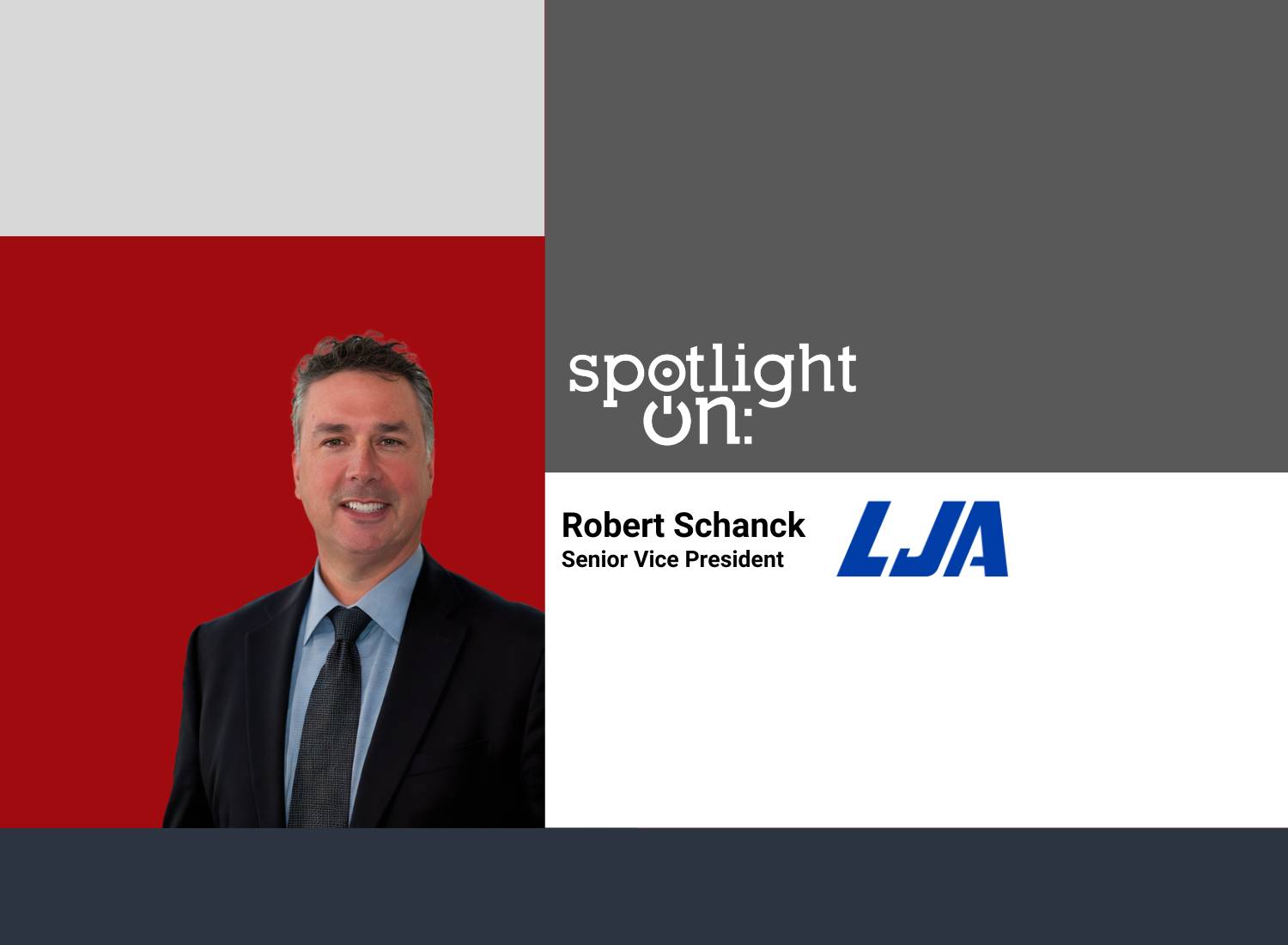




Pete Beasley Senior Campus Executive Director Rasmussen University
Pete Beasley, senior campus executive director of Rasmussen University, talked to Invest: about the institution’s focus on nontraditional students/adult learners looking for career growth or career changes. He also underlined how the university is leveraging technology to train students in the skills needed for today’s workforce and highlighted the expansion of the university’s Ocala and Orlando campuses.
What were the main highlights and key milestones for Rasmussen University in the past year?
We had a significant year in terms of physical expansion based on the needs of our student population. Our focus on the Orlando and Ocala markets created an opportunity for two exciting things to happen last year. We improved the Orlando campus and added several more classrooms, meeting rooms and an upgraded simulation suite. This expansion increased the campus’s academic learning space by nearly 50 percent and included spaces designed to meet the growing need for healthcare professionals throughout the region. We did the exact same thing at our Ocala campus, where we doubled the size of the facility and added nine new classrooms, several new skill labs, and new technology.
What significant trends are shaping the higher education sector in Florida?
Higher education is always evolving, driven by both the local and national workforce needs. In our nearly 125 years of existence, Rasmussen University has had to evolve from traditional, lecture-only courses to online modalities, competency-based learning, and enhancements to the learning environment. In the case of Orlando, we are focused on our healthcare programs – including varying kinds of nursing professions. We know there is a strain on the healthcare workforce in Florida and are focused on educating the next generation of nurses. For instance, an analysis of the Florida Hospital Association published in 2021 estimates that the state will face an overall shortage of 59,000 nurses by 2035. Needs like this drive Rasmussen University and college systems across the country, but especially within Florida and Orlando.
How does Rasmussen University ensure that its curriculum stays innovative and updated with market demands?
In the current education environment, curriculum can have a short shelf life, so it must evolve continually. You may not change some of the didactic and theoretical components, but rather, the way those components are delivered. The skill scenario for healthcare will constantly evolve based on the better practices in different sectors and teaching areas.
The applied skills necessary for students to get into hospitals and other healthcare facilities have changed, so we also need to be prepared to educate students in that way. We want students to see and learn on the same technology that they will see in healthcare environments. Rasmussen students can test their ability in a certain skill using real-life technology through our simulation labs and courses. They can go to a simulation lab that is outfitted with advanced real-life mannequins that are controlled by faculty in another room and practice the application of skills they are already learning in the classroom. These mannequins can simulate flatlining, death, pain, or coughing, and students must work their way through situations while simulating a real patient encounter. Then students take those learned skills and apply them during their clinicals.
We also rely on our Clinical sites and close relationships with local healthcare organizations to help us understand the workforce needs, as well as feedback from our local Advisor Board.
What are the main growth opportunities for Rasmussen University in terms of its academic offering?
One of the key points of Rasmussen University’s mission is focusing on the needs of our global communities. We make the decisions on the programming we roll out for students based on that. For instance, we identify the needs of the workforce in the Orlando market and then decide what we can implement to support that community, focusing on what programs can we provide students where there are current career opportunities for them after graduation. By analyzing the needs of the Orlando area, for example, we have found that most of those needs on our residential campuses are tied to healthcare.
How does Rasmussen University support the needs of nontraditional student populations?
Most of our graduates stay within their local market. That is in part related to where we locate our campuses and whom we recruit as students. Our students may not have wanted to go to a blue-chip university out of town. Rasmussen University provides a pathway to a career for students who may not have had an opportunity to be successful elsewhere or come from underserved communities. We recruit adult learners who have responsibilities and families but are interested in furthering their education and advancing their career opportunities. They are not necessarily individuals coming out of high school but students who come in for a career change or growth. Our student population tends to directly reflect the communities that surround our campuses, including in the Orlando area. They are already committed to the area, whether through a mortgage, their family or other factors, and are ready for a change that allows them to stay local.
What is the role that online and on-site programs play in Rasmussen University’s academic offering?
Our general education courses are offered fully online as that is the curriculum we are comfortable and confident in delivering that way. Those courses include English composition, math, and theory-driven chemistry courses. On the other hand, we have no didactic offerings online for our healthcare programs. These are only residential and can be completed in person with an instructor. All skills and all simulation in our healthcare and nursing programs, including the clinical side, takes place at our campus, a clinical site or at an externship site.
We also offer courses in a competency-based model for people coming back to the workforce so they can validate competencies and complete the courses at their own pace. That allows them to be better prepared for their future and save some money.
What key factors make Central Florida a strong hub for the healthcare sector?
There are amazing healthcare facilities within the Orlando market, such as Orlando Health, HCA, and Advent Health that are providing care to a growing local population. Whenever there is such exponential growth, like what Orlando is experiencing, the first thing that is needed is additional healthcare services and providers. The health systems we have in the Orlando area are phenomenal, and some are also research institutions that provide great opportunities for individuals – both those in need of care and students interested in a career in healthcare. Additionally, the massive VA hospital in South Orlando draws a large population of veterans, serving another important population.
What are the primary challenges for Rasmussen University in terms of training healthcare professionals?
The biggest challenge is fulfilling the needs of the workforce. The workforce shortages that healthcare is facing mean significant challenges, especially with the current restrictions on public education and capped programs. That is not our case, so we will provide every opportunity for every student who meets our enrollment criteria so that they can successfully achieve their degree as timely as possible. We are able to work with and alongside students throughout their educational journey to achieve their goals as we as an institution also work towards meeting the needs of the workforce locally. Nevertheless, meeting the needs of the healthcare sector is difficult because of the aging and growth of our population, especially within the Orlando area.
How is Rasmussen University leveraging new technologies such as AI in its curriculum?
AI is a big portion of the evolution of our programs, and it is being incorporated within our university’s curriculum, not just in Orlando but nationwide. Our curriculum may not change directly in terms of its didactic and theory components, but AI is being included in the learning experience. For instance, AI is being incorporated within student resources so that they know how to use it properly and in order to be successful and safe nurses or healthcare practitioners. We also aim to have a faculty that is prepared to educate students in the world of artificial intelligence that we live in today.
What changes have you noticed in demand for the healthcare programs that Rasmussen University offers?
There has been a lot of growth in demand for different specializations based on traditional degrees such as a registered nurse certification. For example, there is a demand for radiographic technologies, which is something that we offer at the Ocala campus, as a specialty needed locally. Similarly, medical assistants are a growing workforce need, so we see growth in those programs as well. Rasmussen University focuses on offering what we are good at, where we see career opportunities and delivering that successfully on our campuses.
What are the main priorities and plans for Rasmussen University in the next two to three years?
Our main priorities are expansion and growth. We will look for opportunities to truly support our communities, and the best way to do that is by expanding both physically and programmatically. Expansions take time, but they are always on our radar. We are constantly looking at where it would be an ideal location to grow down the road and what the needs within communities are in terms of physical locations and academic programs.