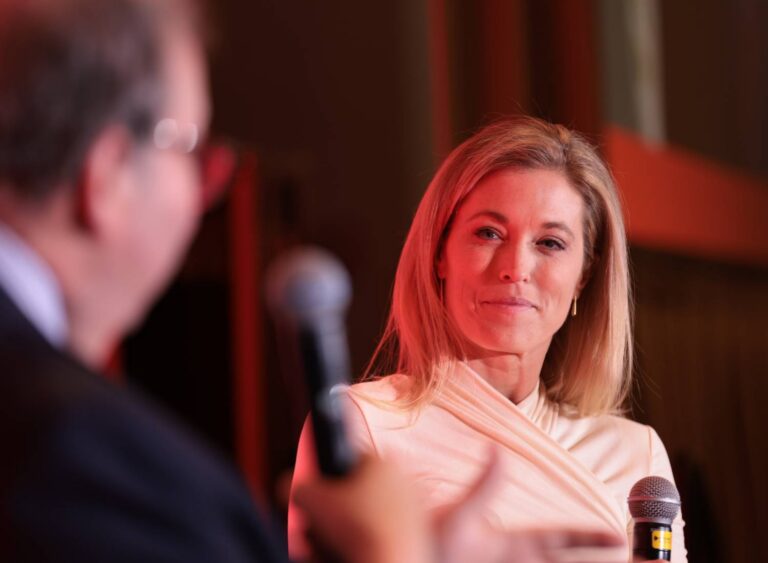







Ra’Chel Ford, Interim CEO, KIPP Atlanta Schools
 In an interview with Invest:, Ra’Chel Ford, interim CEO of KIPP Atlanta Schools, discussed literacy, academic equity, and the role of technology in education. “Technology should enhance instruction, not substitute for it,” Ford said. “It has never replaced excellent teaching, and it never will.”
What changes have had the greatest impact on KIPP Atlanta Schools, and how has the organization adapted to them?
One of the biggest drivers of our work has been our deep commitment to helping students, whom we call scholars or KIPPsters, reach their full potential. A few years ago, we made literacy our top priority, with the goal of having all scholars read on grade level. Literacy is liberation. It opens doors to opportunity.
We trained every teacher in the Science of Reading, and that investment is already showing gains in early literacy. At the same time, we sharpened our focus on mathematics to ensure scholars build a strong foundation in both core areas.
Another key milestone is our projected graduation rate of 96.65%which would be a record for us. That figure reflects the progress of our full Promise Scholars — students who began with us in kindergarten and graduated from our high school. It underscores the impact of providing a seamless academic experience from early childhood through graduation.
Our KIPP Forward program supports graduates in identifying the right college or career path and helps them persist through it. Last year’s graduating class earned more than $19 million in scholarships.
While our mission has always centered on academic achievement, what’s changed is the level of intentionality in how we pursue it. By investing deeply in literacy and math, we’ve seen real, measurable outcomes.
How do you ensure consistency in academic excellence and school culture across a large, diverse network?
In a previous role, we referred to this work as reducing variability. Across sectors, the goal is the same: to provide a consistent experience for the end user. For us, that means our scholars.
We begin with the environment. Our schools are warm, bright, safe, and joyful. The physical space is intentionally designed to support learning.
Operational excellence is essential. It provides the structure needed for high-quality instruction. Beyond systems, it’s the people who matter most. Our educators and staff are committed professionals, and we invest in maintaining their expertise. Teachers have dedicated time each week to plan, collaborate, and improve instruction.
We’ve also built a culture of feedback. Educators are observed by school leaders and peers, not as a compliance exercise but as a way to sharpen their craft. That continuous improvement helps sustain rigor in the classroom.
Another layer of consistency comes from our strong family partnerships. We communicate regularly about what we’re doing and why, especially when it comes to attendance. Like many school systems, we are actively addressing chronic absenteeism, both across metro Atlanta and within KIPP Atlanta Schools.
To help scholars attend regularly, we work closely with families and collaborate with partners like the Boys and Girls Club, Girls Inc., Study Hall Inc., and the YMCA. These organizations help extend learning and support beyond school hours.
In short, consistency comes from operational strength, a strong instructional team, and active engagement with families and community partners.
What does it look like in practice to translate educational equity into measurable outcomes?
I believe every scholar has a unique genius. Our job is to unlock that potential, not unintentionally diminish it, even when we mean well. One way we do this is by encouraging scholars to fail forward. Mistakes are not only expected, but they’re also essential to learning. Growth happens at the point of error. We aim to create classrooms, labs, and gyms where scholars feel safe enough to take academic risks.
That kind of confidence leads to creativity and independence. When scholars raise their hands without knowing if their answer is right, they begin to understand how learning works. Over time, those experiences help them grow into people who can lead, invent, and problem-solve in ways we may not even imagine yet.
This kind of learning environment requires trust. Scholars need to feel secure enough to show what they don’t know, so educators can help close those gaps. That process is how agency is developed. And agency is essential to equity.
What role does technology play in the classroom and how is KIPP Atlanta approaching AI integration?
I’m going to say this because it’s the truth: Technology will never replace a great teacher. Never.
There have always been innovations in education. Back in the day, we had projectors, which were once considered disruptive. When I was in college at Georgia State University, it was a big shift to get textbooks online instead of in print. Technology continues to evolve, but it has never replaced excellent teaching, and it never will.
Technology should enhance instruction, not substitute for it. That only works when teachers understand their content, know their scholars’ personalities and strengths, and curate tools that match those needs. When used intentionally, technology becomes a powerful support.
Right now, we’re leaning into instructional technology and AI, while also researching best practices. Our scholars are already immersed in tech; our role is to guide its use so it supports learning, not replaces it.
For teachers, the opportunity lies in how technology can expand their capacity by improving effectiveness and supporting differentiated instruction. We’re piloting AI tools to assist with tutoring and reteaching, helping to close learning gaps.
At the high school level, we’re testing tech with a social media component to encourage academic growth, positive behavior, and attendance, adding motivation and accountability in ways scholars already relate to.
We’re taking this seriously. Some universities now require freshmen to learn about using AI responsibly. My daughter, now in her second year of college, is navigating technology very differently from her brothers just four years ago.
By the time today’s kindergartners reach college, the world will look completely different. We need to stay ahead and work alongside technology.
What are the biggest opportunities and challenges ahead, and how is KIPP Atlanta planning to build on this year’s momentum?
This year, we are laser focused. Our academic results have been strong, and we’re proud of our progress. Our focus on literacy, math, and core content is yielding meaningful gains. In math, we’ve seen an 18-point increase since 2022 in the percentage of scholars who are at the developing level and above. In reading, 51% of scholars are on grade level, a consistent achievement for the past three years. Eighth grade showed especially promising growth.
Still, that’s not enough. Our goal is for 100% of scholars to read on grade level and perform at or above the developing benchmark in math. We believe they deserve that. It may sound cheesy, but they are our future. Preparing them means building strong foundations in reading, math, and all core subjects.
Academic excellence remains our priority. We want scholars to graduate at high rates and demonstrate their learning. We love seeing them earn scholarships, excel on the ACT and AP exams, and gain dual credits wherever possible.
Chronic absenteeism remains a challenge across all educational settings. We’re tackling it by removing barriers and providing wraparound services, including on-site medical support for scholars with chronic illnesses. This helps keep scholars in school and engaged.
We’re also building an ecosystem of support by partnering with like-minded organizations and involving families as active partners. That shared investment strengthens our school communities and supports long-term success.
Another challenge is managing external noise. Distractions from outside the classroom can pull attention from the core mission of teaching and learning. My team’s job is to protect that focus. As my husband, Glenn, a football coach at Georgia State University, likes to say, it’s all about the blocks and the tackles. Our job is to clear the way for teachers and principals so they can do the most important work.
I’m very optimistic about this year. I believe our scholars will not only demonstrate what they’ve learned on assessments but also see for themselves what they’re capable of achieving.