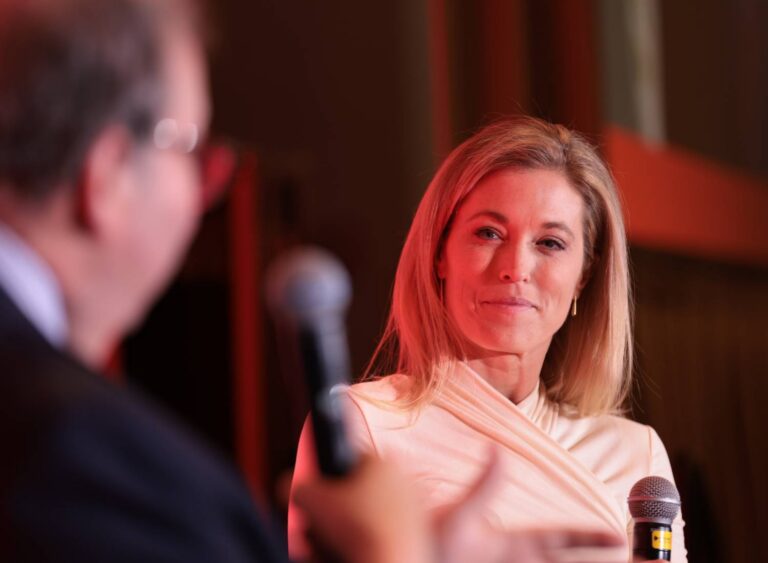







Santiago Marquez, CEO, Latin American Association
In an interview with Focus:, Santiago Marquez, CEO of the Latin American Association, discussed workforce development, youth empowerment, economic equity, and community advocacy. “Our goal is to continue doing this work for the next 53 years and beyond,” he said.
What were the key milestones for the Latin American Association over the past year?
This past year has been historic for us. Our overall budget reached nearly $10 million — more than double what it was five years ago when I started. That growth allows us to provide better services, which is our core mission. We also played a key role in addressing local crises. We partnered with the City of Atlanta and eight organizations to support new immigrants, whose arrival was placing stress on local resources. Being part of the solution was a meaningful milestone.
In partnership with DeKalb County, we distributed $1.9 million in leftover COVID relief funds to help residents behind on rent. We worked directly with landlords to keep families housed, and this support was available to anyone in need. Another highlight was raising $1 million at our annual Latin Fever gala — a first for us. These unrestricted funds are critical for covering operations and helping those who don’t qualify for restricted aid.
What trends are shaping your focus on workforce development?
Several factors are driving our approach. The Latino population in metro Atlanta is projected to nearly double over the next 25 years, while workforce shortages persist across sectors like construction, hospitality, and high-skilled trades. Our community is young and growing quickly. That creates opportunities to help Latinos earn livable wages through access to stable housing, food, and education.
We’re especially focused on youth. Many are U.S. citizens without immigration barriers, but they often face the pressure of supporting their families. Fortunately, there are now more pathways where individuals can earn while they learn. College was my route, but it’s not for everyone. Technical schools, vocational programs, and apprenticeships are strong alternatives, and many of these fields now involve advanced technologies and pay well. Some programs offer high school graduates starting salaries of $50,000 to $60,000, with room to grow. Our goal is to help Latino youth and adults understand these opportunities and pursue them.
How is the Latin American Association helping young people navigate career and education choices?
It’s essential to present clear, relatable information. For instance, explaining that someone with a STEM degree at Georgia Power earns $300,000 annually can be more impactful when broken down into hourly wages. Many young people understand and respond to financial realities.
My eldest daughter pursued music in college, and we supported her choice. But many of the youths we serve don’t have that luxury. They need to choose fields with immediate earning potential. Our role is to guide them, showing where opportunities lie. Many of these students are first-generation Americans whose parents may not have completed high school. School counselors are often overwhelmed, so organizations like ours can fill that gap. While we continue adult education programs like ESL and upskilling, we’re increasingly focusing on youth services and workforce development, anticipating the needs of the next 25 years.
How do you envision the Association’s future role in workforce development?
We’re at the beginning of what we hope is a broader movement. There’s growing recognition of the need for homegrown, high-skilled labor. Trades have historically carried a stigma, but with the rise of technology, those roles are becoming more attractive. College can leave students with debt and jobs that pay $35,000 to $50,000. Technical training, on the other hand, can lead to $60,000 jobs with no debt. We want to open doors for our youth, whether they want to be teachers, doctors, or entrepreneurs. Many come from families with small businesses, and they have the potential to modernize and grow those enterprises. There’s a strong entrepreneurial spirit in the Latino community. By supporting that, we can help the next generation strengthen their families’ legacies and contribute to a diverse and dynamic economy.
How does the Latin American Association approach advocacy?
Advocacy is central to our mission, and we approach it carefully because of our 501(c)(3) status. The most powerful form of advocacy we offer is providing consistent, high-quality services to the community. Beyond that, we collaborate with groups focused on issues like immigrant workforce advancement. One key effort has been supporting legislation to streamline licensing for professionals with foreign credentials, particularly in healthcare, where shortages are urgent.
We also advocate for in-state tuition for DACA recipients. In Georgia, many must still pay international rates, which puts college out of reach. We’ve taken a public stance on this because it’s a commonsense issue that most people support. We’re selective about when to speak out, but if legislation threatens our community, we respond. Our advocacy is also relationship-driven — we’ve built strong ties with leaders across the political spectrum, from the governor and mayor to local officials. These connections are based on trust, mutual respect, and open communication. Above all, we prioritize protecting our ability to serve the community. That’s the heart of our advocacy.
How is the economic landscape affecting Latinos, and how is the Association responding?
Uncertainty is the word that comes to mind. Early this year, we saw employers start letting workers go. Some individuals came to us after losing jobs due to issues like unverifiable Social Security numbers. It’s unclear what triggered these changes, perhaps a shift in E-Verify enforcement, but the result has been job loss and instability. The essential workforce, which includes many Latinos, was already struggling before COVID. They were the ones keeping things running, working in food production, grocery stores and other critical sectors, often without health insurance. They still haven’t recovered.
Now, on top of that, families are facing inflation and a worsening housing crisis. Affordable housing in metro Atlanta is virtually nonexistent. Many Latinos moved from the city to the suburbs for affordability, but now even those areas are out of reach. We’re seeing signs of homelessness that are not always visible, but real: encampments, couch-surfing, multiple families living together in small spaces. The core issue is livable wages. Our role isn’t to pressure employers, but to prepare our community to access higher-paying jobs. That means showing where the opportunities are and giving people the tools to get there.
Affordability isn’t coming back. Rents are rising, and demand keeps growing. In Grayson, where I’ve lived for 25 years, home prices have jumped from $150,000 to $550,000. Meanwhile, wages in our community haven’t kept up. The real work lies in preparing youth and adults to pursue sustainable careers. As more Latinos move far outside city limits, we’re expanding partnerships with organizations already in those areas. Our mission must adapt to serve a growing and dispersed population. The Latin American Association has supported this community for 53 years. Our goal is to continue doing this work for the next 53 years and beyond, as a vital part of the region’s long-term success.