






Spotlight On: Ashley Loute, Executive Director, Lake Nona Chamber of Commerce
Key points:
- • Lake Nona’s growth is driven by a dense ecosystem of health, tech, and innovation anchors.
- • Workforce development focuses on early pipelines, internships, and stronger education partnerships.
- • The chamber’s role centers on connecting businesses, talent, and institutions to sustain growth.
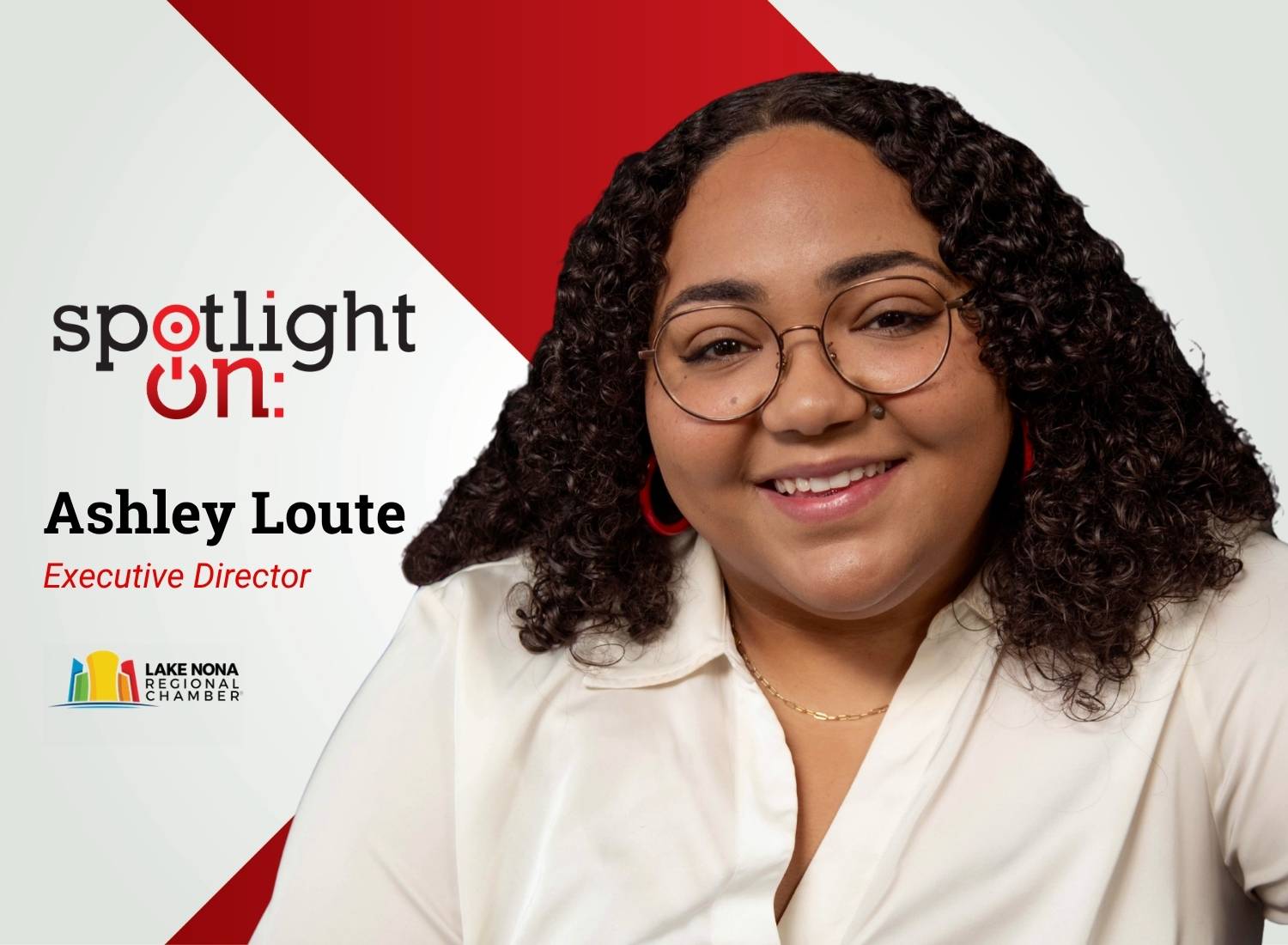 April 2026 — Invest: spoke with Ashley Loute, executive director of the Lake Nona chamber of commerce, about the community’s expanding innovation ecosystem and its long-term workforce strategy. “Our role is to be the connector,” Loute said.
Join us at caa’s upcoming leadership summits! These premier events bring together hundreds of public and private sector leaders to discuss the challenges and opportunities for businesses and investors. Find the next summit in a city near you!
How would you describe the economic momentum within the Lake Nona community?
Lake Nona is experiencing sustained and intentional growth. We have built a concentrated hub of leaders across health care, sports performance, technology and innovation, and that ecosystem continues to expand.
Significant commercial development is underway, including new retail and mixed-use projects led by Tavistock. As residential density increases, so does economic opportunity. More residents and visitors create stronger demand for small and mid-sized businesses, fueling a healthy cycle of growth.
What makes this momentum unique is that corporate expansion, entrepreneurial activity and community development are happening simultaneously and reinforcing one another.
What makes Lake Nona’s business ecosystem distinct from the wider Greater Orlando region?
Lake Nona has an unusually concentrated mix of global anchors and emerging innovators within a compact footprint. Siemens is establishing operations here. AdventHealth is expanding with a new emergency department. Nemours Children’s Hospital anchors pediatric care. KPMG’s Lakehouse, the GuideWell Innovation Center and the USTA National Campus are all located within minutes of each other.
That proximity matters. Education, health care, entrepreneurship and technology intersect daily rather than operating in silos. Companies view Lake Nona as a strategic location where collaboration happens naturally.
Quality of life is also a differentiator. Lake Nona blends business and lifestyle in a walkable, master-planned environment with trails, green space and integrated amenities. When professionals can live, work and engage within the same community, it strengthens both talent attraction and retention.
With Lake Nona’s reputation as a hub for innovation and healthtech, what trends are shaping the future of this mixed-use, innovation-driven community?
One major trend is demographic growth among young families and early-career professionals. College students and emerging talent are choosing Lake Nona intentionally, which influences demand for housing, services and community programming.We are also seeing stronger identity formation across specific business communities, including veterans, minority-owned businesses and emerging entrepreneurs. Our first Veterans Business Networking event sold out, demonstrating how much momentum exists when we create intentional spaces for connection.
The opportunity now is being intentional about convening. If we create more points of connection, businesses and community leaders can collaborate more easily and build prosperity together.
What recent developments have had significant influence on the region’s economic landscape for new businesses, especially startups and entrepreneurs?
Lake Nona has several innovation hubs that help companies test, build, and scale. One example is the MS2 Accelerator lab, which functions like a curated co-working environment for companies aligned with Lake Nona’s growth priorities. It attracts entrepreneurs focused on niche and applied technologies.
We also have the GuideWell Innovation Center, which houses Plug and Play Health. That model is solutions-based: large organizations bring challenges, and startups develop and pitch solutions through an incubator pathway. That structure helps strengthen the entrepreneurial pipeline and keeps innovation close to major health institutions.
From the chamber’s perspective, the goal is to connect those assets into a pipeline that starts earlier than college. If students begin building skills in high school, they are better positioned to launch startups, connect to incubators, and partner with major employers as they move through UCF or Valencia.
What industry sectors are driving the most activity and opportunity right now?
Technology, especially AI, and the medical space are driving a lot of activity. At the same time, we are seeing pressure on the workforce pipeline.
Across the region, leaders consistently raise shortages in health care roles, including nursing, and in professional services, including accounting. In tech, the challenge is helping students start early enough so they can advance quickly once they reach college or the workforce.
Access is a major factor. There are programs and career pathways available, but many students, especially those without exposure, do not know what options exist. When young people can see careers firsthand, whether in medicine, coding, or skilled trades, they can make more informed decisions and prepare earlier.
As workforce development remains a regional priority, how are you working with educational partners or employers to keep talent in the region?
We are building a clear approach around three priorities: visibility, internships, and advocacy.
First, we are focused on access and visibility. We are inviting local high schools to participate in Nona Fest as a showcase. The idea is to put programs like culinary, robotics, medical tracks, and Innovation High in front of employers, so business leaders can see what is being built locally and where talent is emerging.
Second, we are working to expand internship pathways with UCF, Valencia, and Crummer. When students can access meaningful experience close to home, it creates early buy-in and makes it more likely they will stay in the region after graduation.
Third, we are emphasizing advocacy. We launched a legislative series to focus on issues that matter most to Lake Nona, including education and transportation. We are neutral and do not lobby, but we do inform our members and create platforms where education partners and employers can share what they need and align around solutions.
How are you positioning the chamber to support both established employers and small businesses as the community grows?
Our role is to be the connector. Lake Nona has large anchors, but growth has to translate into opportunity for local entrepreneurs and service providers, too. We focus on convening decision-makers, sharing information, and creating programming where relationships can turn into contracts, mentorships, and collaboration.
That includes bringing people together around specific themes, like health innovation, veteran entrepreneurship, or emerging professional networks, and making sure small and mid-sized businesses have access to the same rooms and conversations as larger employers and institutions.
You have been in this role for a short time. What leadership priorities are you bringing to the chamber right now?
I stepped into this role with ambitious goals and a strong focus on generational leadership.
Executive transitions are accelerating across industries. When succession happens without intentional overlap, organizations can experience culture shock. There is an opportunity to improve that process.
As a Gen Z executive director, I am focused on bridging generational leadership styles. My priority is creating environments where Gen X through Gen Alpha can collaborate effectively, and where emerging leaders can build executive presence while maintaining authenticity.
Strong succession planning and cross-generational alignment will be essential as Lake Nona continues to grow.
Looking ahead, what are the biggest opportunities and challenges you see for Lake Nona’s next phase of growth?
The opportunity is continuing to deepen what already makes Lake Nona distinct: the concentration of health, education, innovation, and quality of life in one connected community. When those pieces stay aligned, Lake Nona can keep attracting investment and talent.
The challenge is managing growth responsibly, especially around transportation and infrastructure, and ensuring access to opportunity keeps pace. If we can keep building strong talent pipelines, connect generations of leaders, and keep the community engaged, then growth can be both sustainable and inclusive.
Want more? Read the Invest: Greater Orlando report.