



Spotlight On: Audrey Russo, President & CEO, Pittsburgh Technology Council
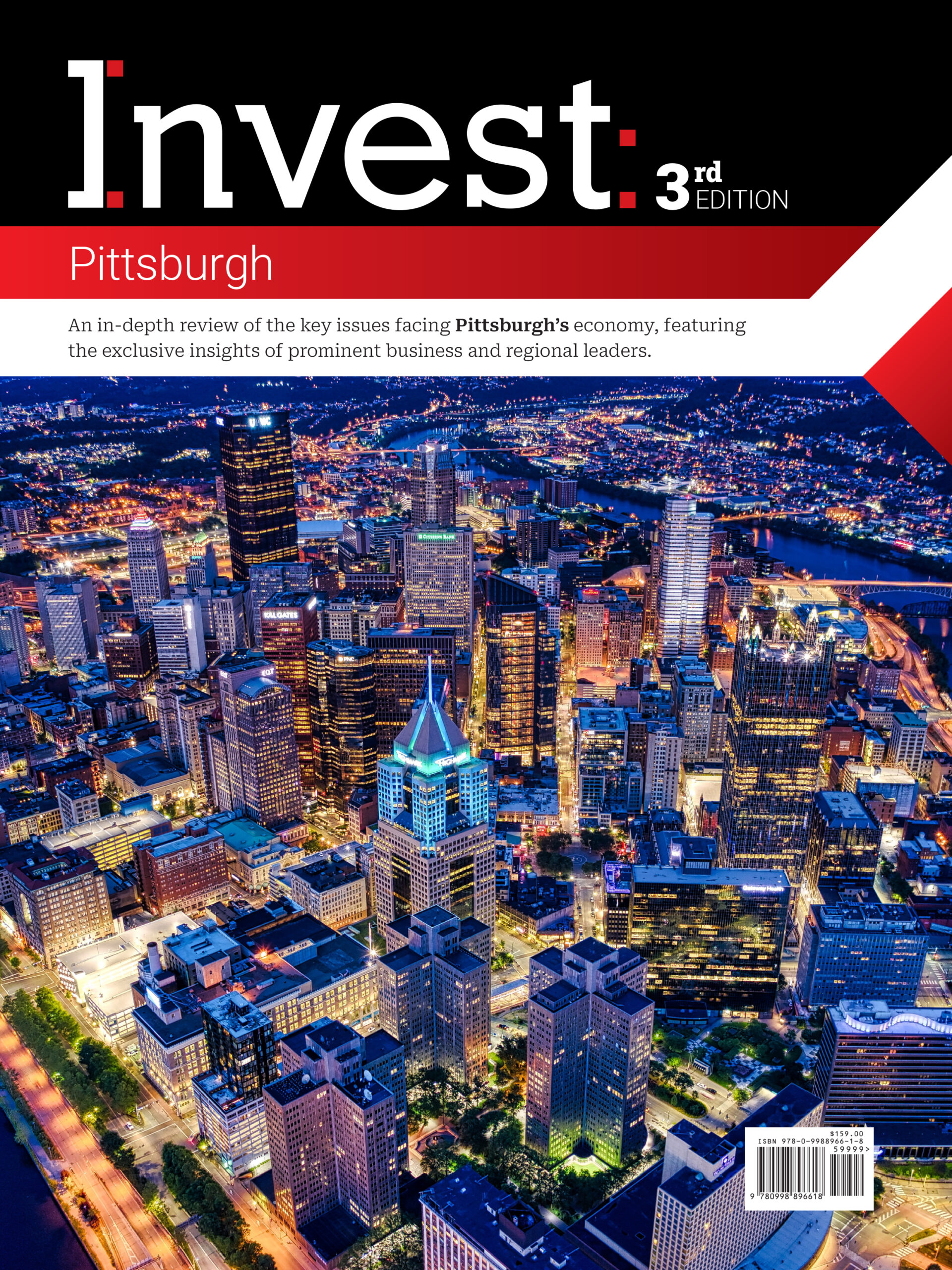
 July 2025 — In an interview with Invest:, Audrey Russo, president and CEO of the Pittsburgh Technology Council, highlighted the focus on AI integration, inclusive workforce development, and expanded federal partnerships, positioning the region as a leader in ethical innovation.
What were some of the major highlights for the Pittsburgh Technology Council in 2024?
2024 was a transformative year for us. As a tech trade association, we continued to grow in how we represent the full breadth of our region’s innovation ecosystem. Our focus is grounded in four pillars: public policy, business development, talent, and storytelling.
On the policy side, we’ve worked hard to address barriers to growth — from state-level legislation to federal R&D tax issues — and ensure companies have the right environment to innovate. We’re also deeply engaged in the ethics and compliance aspects of emerging tech, especially as integration of personal devices, data ownership, and security evolve.
We hosted major convenings, including the Cyburgh cybersecurity summit and the 10th annual AI/ML and Data Summit. These events bring together leaders in industry, academia, and public service to address everything from digital security to quantum computing. We’ve also continued to drive thought leadership around how AI and machine learning are reshaping workflows and decision-making.
How are emerging technologies like AI shaping your work and the region’s innovation priorities?
We’re clearly entering another era of integration, similar to when we first allowed personal devices at work. Only now, we’re talking about integrating AI into every facet of how we manage and analyze data. Tools that used to be intermediaries are no longer needed, and users can build their own workflows directly from data sets. That’s revolutionary.
I’m personally fascinated by this shift. Even as a CEO, I want to get hands-on with our data, to explore what’s possible without relying on third-party platforms. This moment requires new skill sets — not just technical, but ethical and analytical. We need to teach people how to question results, evaluate data critically, and understand the implications of how and where their data is used.
What is the Pittsburgh Technology Council doing to address talent development and workforce inclusion?
We’ve significantly grown our work around talent. Our Apprenti PGH apprenticeship program is designed to create nontraditional pathways into tech careers for people who often wouldn’t have access otherwise. It’s producing strong outcomes, and we’re expanding it to support more industries and roles as automation transforms the workforce.
We also run LAUNCH, a STEM-focused program for 10th and 11th graders, helping students build confidence and stay engaged during a critical developmental window. We’re adding a similar program for boys. On the education front, our Three Rivers Educational Technology Consortium brings teachers together across boroughs to explore new tools, innovations, and gaps in the classroom.
What’s clear is that anyone can be left behind in this era — not just those without degrees. People working in traditional tech, HR, or banking are all seeing their roles evolve. We’re thinking more broadly about what “being left out” really means and building programs to ensure no one is.
How does the Council help foster business development and federal engagement for tech companies?
Business development is a core part of our mission. We support over 1,000 member companies through partnerships, client connections, and access to opportunities they wouldn’t otherwise see, including within the federal government.
We’ve deepened our work with agencies like the Department of Defense, NASA, and FAA to help companies explore dual-use technologies and secure national security-related contracts. Our events and summits are designed to introduce startups and mid-sized firms to these pathways and demystify the process.
What role does storytelling play in your overall strategy?
Storytelling is our fourth pillar, and it’s more than marketing, it’s how we elevate the region. We produce podcasts, radio shows, and magazines that highlight companies and innovations in a way they can’t always do for themselves. We don’t tell stories like a press release. We dig deeper to help others understand what’s happening in southwestern Pennsylvania and why it matters.
How would you describe the state of Pittsburgh’s tech ecosystem?
Pittsburgh’s tech ecosystem continues to be defined by our academic institutions — Carnegie Mellon, the University of Pittsburgh, Duquesne, and Robert Morris among them. Each is contributing in a unique way. Duquesne’s new osteopathic medical school is one of the most exciting developments in local healthcare education. Meanwhile, CMU and Pitt are leading in AI, autonomy, and data science.
Companies like Duolingo, Gecko Robotics, and UPMC Enterprises show how local innovation is translating into global impact. We’re seeing deep investment in foundational areas — infrastructure, engineering, and materials — and a growing focus on unsexy but essential problems. That’s a strength.
We also can’t overlook the arts. Institutions like Point Park University and our local museums help reshape Pittsburgh’s image beyond just science and R&D. It’s all part of the broader narrative that this is a city of depth and culture.
What are some of the challenges the region still needs to address?
Immigration is a major concern. Historically, America has grown through immigration, and our region needs a renewed focus on attracting and retaining foreign-born talent. While foreign-born residents in Pittsburgh earn some of the highest wages, our overall foreign-born population remains very low. That points to a gap in how we’re building an inclusive, sustainable workforce.
We also face inequities in areas like Black maternal health and need to ensure that Pittsburgh is a place where people of color feel they can truly thrive. Access to venture capital is another ongoing challenge. We have great ideas and talent, but we need stronger funding pipelines to keep startups here and help them scale.
What are your top priorities for the next few years at the Council?
One major priority is helping companies tap into federal opportunities, from testing technologies to securing contracts. We want to make those pathways more accessible and visible, especially for small and midsized firms.
Another focus is energy. Pittsburgh has a diverse energy portfolio, from renewables to natural gas to legacy extraction. We’re looking closely at how to use that responsibly, particularly in support of emerging infrastructure like data centers. The goal is to lead without making the mistakes other regions have made.
Finally, we’re doubling down on apprenticeships. We expect that model to scale significantly in the coming years as companies rethink staffing for roles reshaped by automation and AI. Helping businesses navigate upskilling, reskilling, and inclusive hiring is central to our mission.
For more information, please visit: