






Spotlight On: Brian Bruess, President, College of Saint Benedict and Saint John’s University
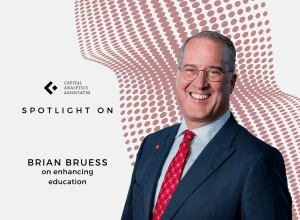 September 2024 — Invest: met with Brian Bruess, president of the College of Saint Benedict and Saint John’s University, to discuss the strategies to attract and retain top research talent, and how the college and university are preparing students to enter the workforce, and coordinating education across two schools.
What are some key highlights and successes for both the College of Saint Benedict and Saint John’s University over the past year?
We’re having a really good run right now as we face the same headwinds that all colleges and universities are encountering. We’re at an innovative juncture in our history. For the first time, despite having been in a relationship for well over 100 years, we have a single president for both institutions. We’re advancing a concept called “strong integration,” which is a bold strategic move for two independent, separately incorporated institutions with their own bylaws and missions. This approach is breaking new ground in American education.
This strong integration has involved comprehensive work across the entire ecosystem, from governance and structure to how we’re organizing and delivering our programs to students. Over the past couple of years, we’ve been doing something bold and innovative that’s countercultural in higher education, which is not typically known for being nimble, adaptive, or responsive. However, as demographic challenges, questions of affordability, and the value proposition intensify, we’re working hard to be more nimble, adaptive, and responsive.
This past year has been marked by some wonderful successes. It was a year of unity and coming together. For instance, in the fall, I had my inauguration, which was historic because it was the first time both schools had a single president. In October, we approved our first jointly constructed strategic plan, and we’re fully engaging with that plan now, confronting those headwinds with good success. Enrollment is strong, fundraising had a really good year last year, and the year before was also successful.
What strategies are in place to retain and attract high-caliber faculty in specialized research fields?
Both the College of Saint Benedict and Saint John’s University are teaching-focused liberal arts colleges, and both have managed to recruit increasingly high-quality faculty. One of the greatest compliments I’ve heard came from a retiring faculty member with over 40 years of service who expressed confidence in the future due to the quality of our new faculty. We seek scholars who are experts in their fields, exceptional teachers and committed to providing a high-impact experience for students.
One way we bring this commitment to life is through our Undergraduate Collaborative Research Program. This program facilitates high-impact practices, providing students with educational experiences that lead to meaningful outcomes. Faculty and students collaborate on scholarly work, creative projects, music, research, and more. Each year, we dedicate an entire day of the academic calendar to showcase this work, with presentations, poster sessions, and public displays. This spring, for example, over 700 students participated in this showcase.
These experiences not only enhance students’ educational journeys but also prepare them for graduate school, employment, and future careers. They teach communication, research, and scholarly skills, all while allowing students to engage in real-world applications.
What are some of the key partnerships you’re establishing, and how are they enhancing the universities’ offerings?
We strongly believe that healthy colleges and universities will have a long list of mutually beneficial partnerships in the future. For us, these partnerships are deeply connected to our mission and purpose. We see ourselves as being “of, with, and for” the community, and we have a wide array of partnerships with nonprofit organizations, community groups, and educational institutions.
These partnerships are essential in connecting our students to co-curricular experiences and engaged pedagogy, where faculty take their course content out into the community. For example, students might work with the YMCA, the Boys and Girls Club, local food pantries, or regional healthcare providers. Each year, 300 to 400 students rotate through CentraCare’s system, engaging in clinical work, narrative practices, and helping patients heal through storytelling. We also have partnerships with banks and financial organizations that provide deep internship experiences and often hire our students upon graduation.
We are focused on rural health in Minnesota, which is a focus for the region. We want to be a part of making rural Minnesota healthier, which in turn helps retain talent in the state. Minnesota private colleges, including Saint Ben’s and Saint John’s, are importers of talent in a state that generally exports talent. By focusing on rural health and other initiatives, we hope to turn the tide and help the entire state become an even stronger importer of talent.
Our partnership with the Minnesota United Football Club is another example of how we are extending our reach and impact. We believe that by being actively engaged in our community and beyond, we can create better outcomes for our students, healthier communities, and stronger relationships. This partnership, along with others, allows us to connect classroom learning with real-world applications, ensuring that our students graduate with not only academic knowledge but also practical experience and a sense of community engagement.
[fusion_images order_by=”desc” picture_size=”auto” hover_type=”none” autoplay=”yes” autoplay_speed=”3000″ flex_align_items=”center” columns=”1″ column_spacing=”0″ scroll_items=”” show_nav=”yes” mouse_scroll=”no” border=”no” lightbox=”no” margin_top=”” margin_right=”” margin_bottom=”” margin_left=”” hide_on_mobile=”small-visibility,medium-visibility,large-visibility” class=”” id=”” caption_style=”off” caption_title_tag=”2″ fusion_font_family_caption_title_font=”” fusion_font_variant_caption_title_font=”” caption_title_size=”” caption_title_line_height=”” caption_title_letter_spacing=”” caption_title_transform=”” caption_title_color=”” hue=”” saturation=”” lightness=”” alpha=”” caption_background_color=”” fusion_font_family_caption_text_font=”” fusion_font_variant_caption_text_font=”” caption_text_size=”” caption_text_line_height=”” caption_text_letter_spacing=”” caption_text_transform=”” caption_text_color=”” caption_border_color=”” caption_overlay_color=”” caption_align_medium=”none” caption_align_small=”none” caption_align=”none” caption_margin_top=”” caption_margin_right=”” caption_margin_bottom=”” caption_margin_left=”” parent_dynamic_content=””] [fusion_image image=”https://capitalanalyticsassociates.com/wp-content/uploads/2024/07/CAA24_Invest-Insights-S6-Web-Banners-7.jpg” image_id=”64377″ image_title=”” image_caption=”” link=”” linktarget=”_self” alt=”” /] [fusion_image image=”https://capitalanalyticsassociates.com/wp-content/uploads/2024/07/CAA24_Invest-Insights-S6-Web-Banners-10.jpg” image_id=”64380″ image_title=”” image_caption=”” link=”” linktarget=”_self” alt=”” /] [fusion_image image=”https://capitalanalyticsassociates.com/wp-content/uploads/2024/07/CAA24_Invest-Insights-S6-Web-Banners-9.jpg” image_id=”64379″ image_title=”” image_caption=”” link=”” linktarget=”_self” alt=”” /] [fusion_image image=”https://capitalanalyticsassociates.com/wp-content/uploads/2024/07/CAA24_Invest-Insights-S6-Web-Banners-8.jpg” image_id=”64378″ image_title=”” image_caption=”” link=”” linktarget=”_self” alt=”” /] [/fusion_images]
How are you preparing your students to join the workforce, and how are you adapting your programs to meet the needs of different industries in Minnesota?
Part of our approach involves engaged pedagogy, ensuring that our faculty and curriculum are connected to the real-world experiences students will encounter after graduation. We’ve also established what we call the “Experience Hub,” which brings together various administrative areas that are often separate in other schools. The Experience Hub combines collaborative research, career and professional development, and study abroad programs under one umbrella.
Our study abroad program is particularly impressive, with participation rates that were nearing 60% pre-COVID. Even now, as we rebuild post-COVID, we’re back in the mid-40s. That’s 40 to 50% of our students having a transformative international experience. By bringing these areas together, we offer a more integrated student experience, allowing students to see the connections between different aspects of their education and take full advantage of the opportunities available to them.
Engaging students in internships, study abroad, collaborative research, and other high-impact practices is key to our strategy. By intentionally constructing a rich and interconnected experience, we ensure that our students are well-prepared for the workforce. Our goal is to drive high graduation rates and strong retention rates and create a sense of community and affinity with our institutions. This integrated approach not only helps students develop professionally but also fosters a lifelong connection to the College of Saint Benedict and Saint John’s University.
Looking ahead, what are your top goals and priorities for Saint Benedict and Saint John’s?
Our three main strategic directions give the best insight into our goals and priorities for the future. First, we are deeply focused on enhancing the student experience. This involves innovation in our curriculum and the establishment of new academic centers of excellence. For example, we have a long history of strength in environmental education, and we are working on establishing a Center for the Environment that will build on this tradition. Similarly, we’re exploring new opportunities in healthcare education, principled business leadership, humanities, and other areas where we can make a significant impact.
Our second strategic direction is centered around strengthening and expanding our partnerships with community organizations, businesses, and other educational institutions. We believe that these partnerships are essential for providing our students with real-world experiences, creating opportunities for applied learning, and contributing to the overall well-being of our communities. Whether through healthcare initiatives, rural health programs, or other collaborations, we see these partnerships as a vital part of our mission.
Finally, our third strategic direction is focused on ensuring the financial sustainability of both institutions. We are committed to maintaining our financial strength so that we can continue to provide a high-quality education for generations to come. This involves careful financial management, strategic fundraising, and ongoing efforts to optimize our resources.
For more information, please visit: